
There is just something about ironstone in a farmhouse kitchen. It is quiet and sturdy, creamy instead of bright white, and it looks like it has been doing its job for a hundred years. But the same simplicity that makes ironstone so pretty also makes it easy to fake. If you have ever picked up a “vintage” pitcher at a flea market and wondered if you are holding the real deal or a newer lookalike, you are in the right place.
I grew up trailing my grandmother through dusty antique barns upstate, and ironstone was always the piece she lingered over. She would turn a platter over in her hands like she was reading a letter. That is what we are doing here: learning to read the clues.
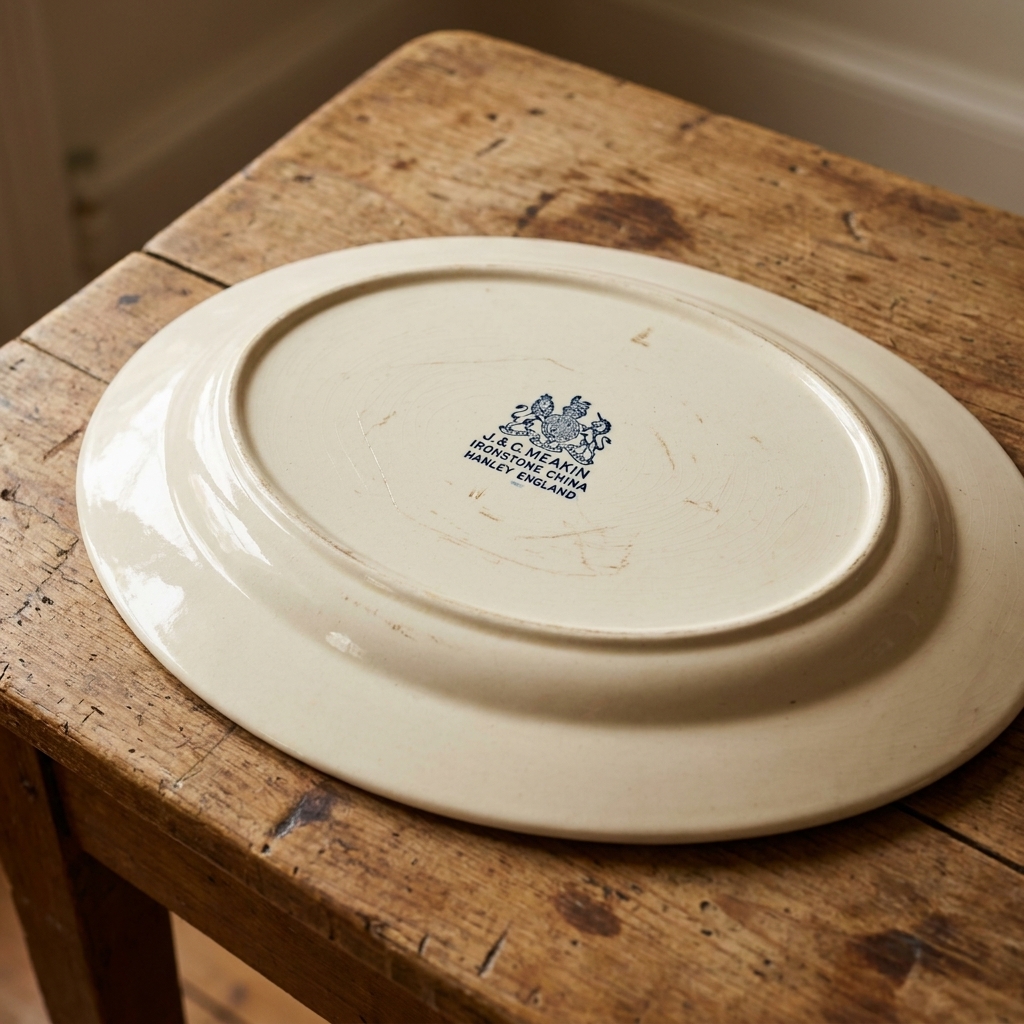
What it is and is not
Ironstone is a durable ceramic ware that took off in the 1800s, especially in England and the United States. Depending on the maker, you will see it described as “ironstone china,” “stone china,” “white granite,” or “semi-vitreous.” Collectors can debate the exact taxonomy, but in practical terms it was built for hard everyday use.
Despite the name, ironstone is not made of iron in any meaningful way, and it is not anything like a cast iron skillet. The word was marketing, a promise of strength.
In the wild, you will see “ironstone” used loosely. Here is the practical way I think about it when I am sourcing for a farmhouse kitchen:
- Antique ironstone is typically 19th century into the early 20th century, often heavier than it looks, and may show honest age like crazing, glaze wear, and soft discoloration.
- Vitreous china, hotelware, and restaurant ware can look similar and can be wonderful for daily use. Sometimes it overlaps with “ironstone” in listings because the vibe is similar, even when the original branding was different.
- Modern “ironstone style” pieces are often very uniform, and made to mimic age without actually having it.
If you love the look, you do not need a museum piece. But if you are paying antique prices, you deserve antique confidence.
The first pickup
Before we even flip a piece over to check the mark, your hands can tell you a lot.
Heft and balance
Many antique ironstone platters and pitchers have a satisfying heft. It is not always “heavy equals old,” but very light pieces can be a tip-off for newer ceramics.
- Pick it up with one hand. Does it feel sturdier than you expected?
- Set it down gently. Does it land with a dull, solid thud rather than a thin clink?
Color tells a story
True antique ironstone is often a warm white or creamy ivory. Some genuine pieces can be quite white too, depending on the maker, the clay body, and how it was used and stored. So treat color as one clue, not the whole case.
Look for:
- Soft, milky warmth rather than stark white
- Subtle variation across the surface, especially around raised details
- Natural aging like gentle tea staining in crazing lines (more on that below)
Glaze feel
Run your fingertips over the surface. Antique glaze often feels slightly softened, almost satiny in spots from decades of washing and handling. On platters, the center well can show a whisper of wear where utensils lived.
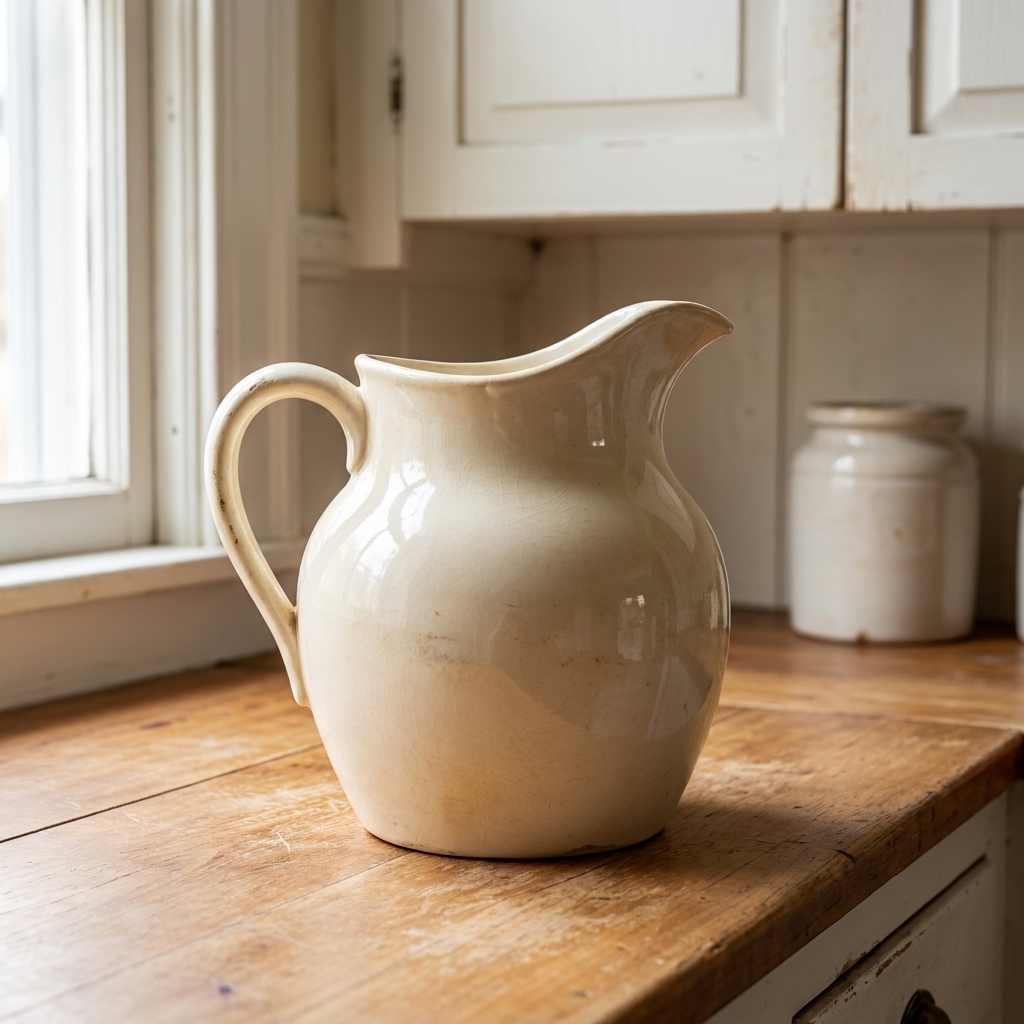
Reading maker’s marks
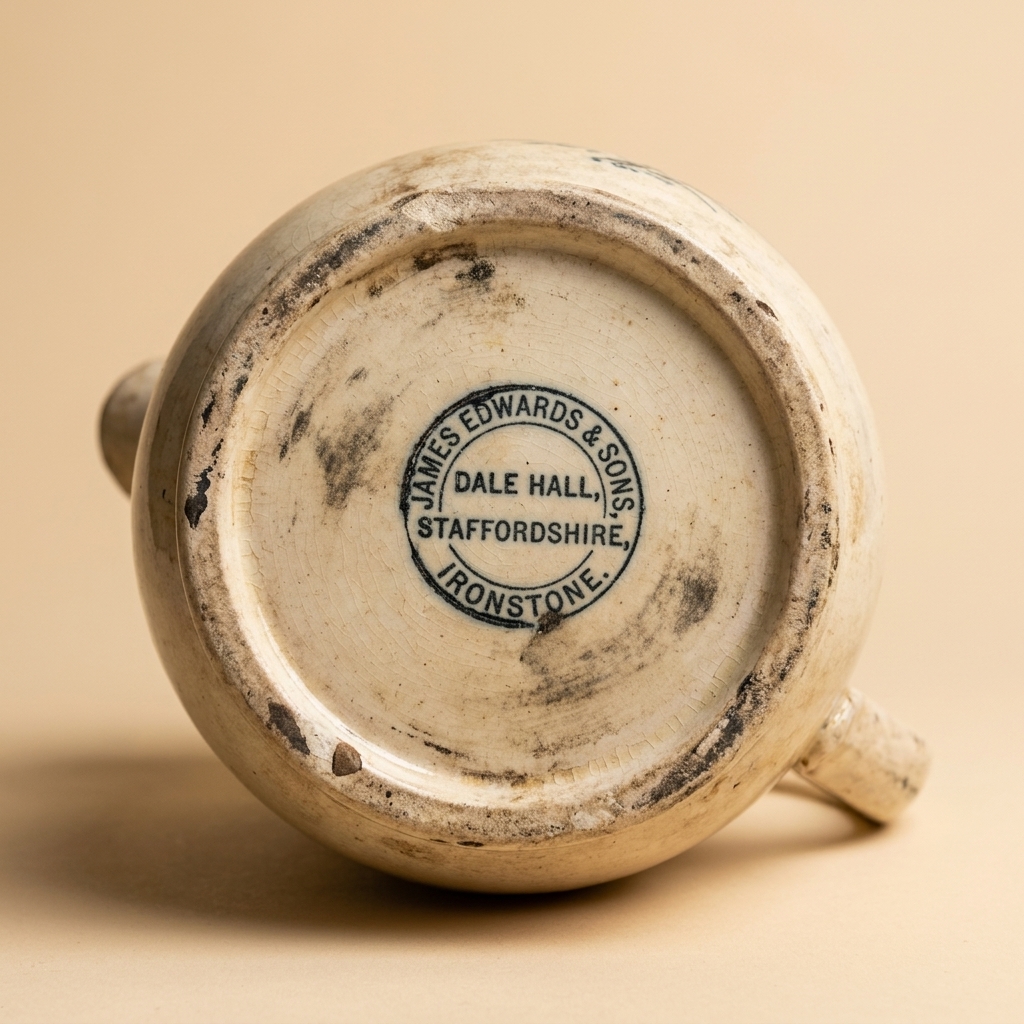
The underside is where the good gossip lives. Not every antique ironstone piece is marked, and not every marked piece is old. But learning the basics of maker’s marks will make you a smarter buyer fast.
Where to look
- Flip platters and plates to find stamps or impressed marks near the center or along the rim.
- On pitchers, look on the bottom and sometimes along the lower side.
- On tureens, check the underside of both the base and the lid.
Types of marks
- Transfer-printed stamps in black, brown, blue, or (less commonly) green or red.
- Impressed marks pressed into the clay before firing.
- Registration marks and pattern marks, sometimes with numbers.
Words that matter
These details can offer big clues, especially when combined with other signs of age:
- “England” and “Made in England”: Import and export marking rules shifted over time, and makers did not all change marks on the same schedule. In general, “Made in England” tends to show up later than “England,” but there is overlap. Use it as a clue, not a date stamp.
- “Ironstone China” or “Stone China”: Common phrases for ironstone and related wares.
- Royal arms and crests: Often used in branding. A very crisp, perfect crest on a very bright white piece can lean modern, but some antique marks are crisp too. Look at everything together.
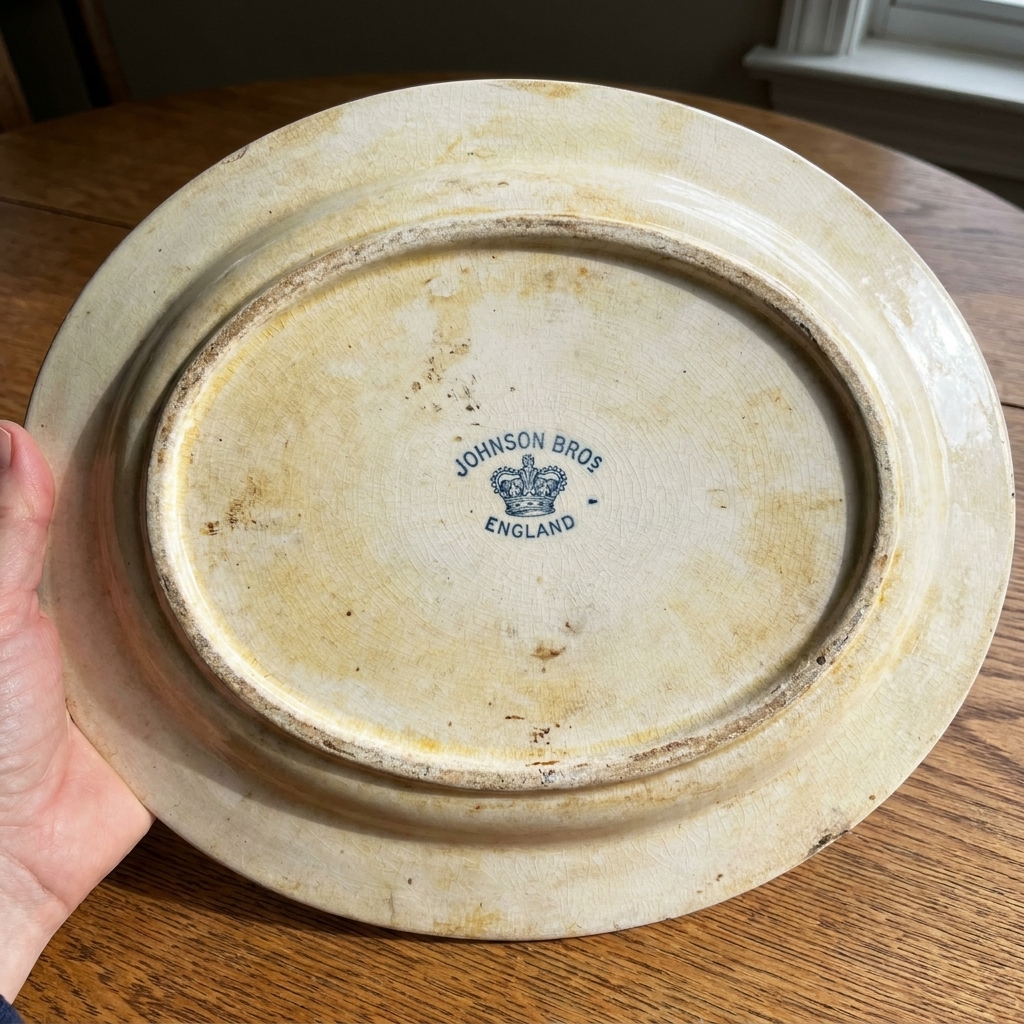
- Full maker name: Examples collectors often run into include Johnson Bros, J and G Meakin, Alfred Meakin, W H Grindley, Edward Clarke, and Mason’s. There are many more.
A flea market method
I like to use a simple three-step scan:
- Is the mark worn in a believable way? Genuine age often shows softened edges to the stamp, not sharp ink sitting on top of the glaze like it was applied yesterday.
- Does the wear pattern match the use? On a platter, you expect wear on the foot ring and center, not random scratches on the underside only.
- Does the body match the era feel? If the mark says “ironstone” but the piece is snow-white, ultra glossy, and feather-light, keep asking questions.
If you fall in love with a piece, snap a quick photo of the mark and do a deeper check when you are home. A five-minute follow-up can save you a lot of regret.
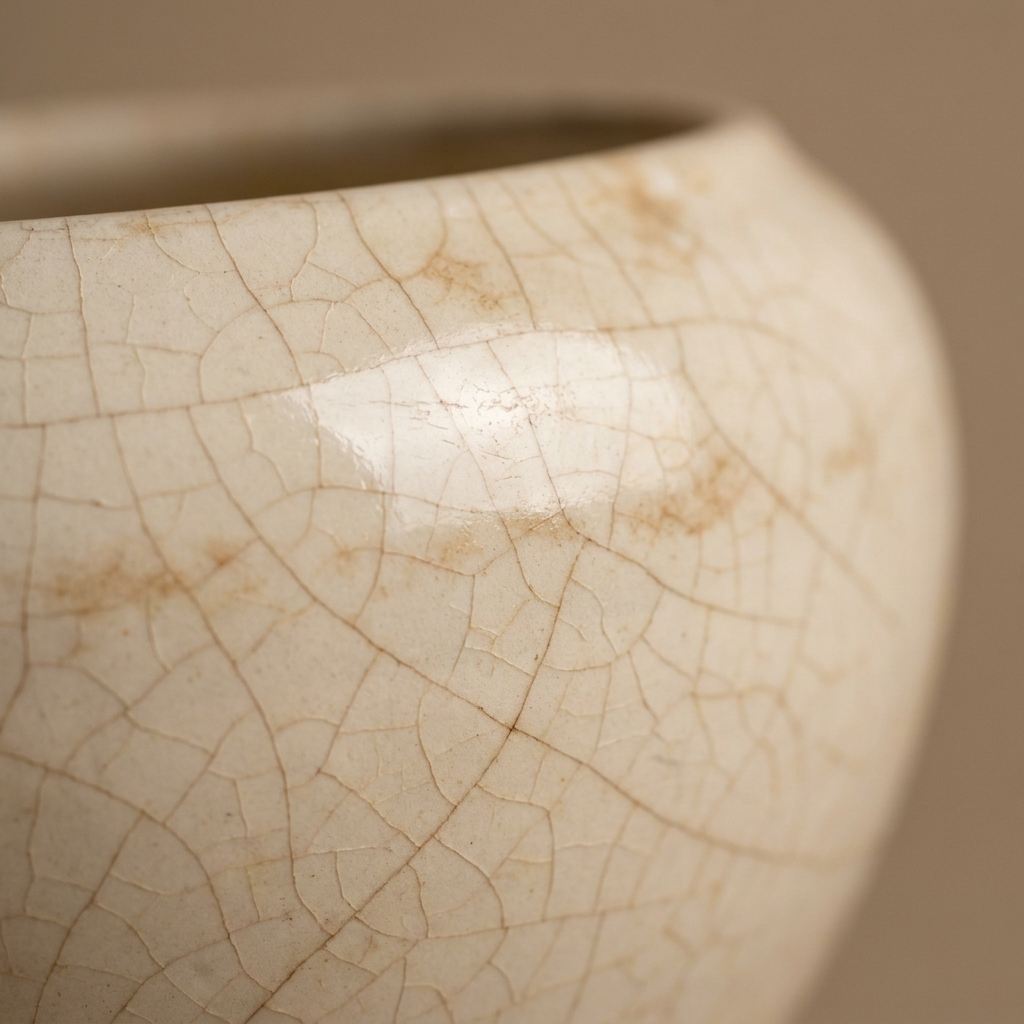
Crazing
Crazing is that fine web of hairline lines in the glaze. It happens when the glaze and the clay body expand and contract at different rates over time. In antique ironstone, crazing is common, and it can be a beautiful sign of age, especially when it has gently darkened with time.
How to check
- Hold the piece in natural light and tilt it slowly.
- Look across broad surfaces like platter wells or the belly of a pitcher.
- Run your fingernail lightly across the glaze. Crazing usually cannot be felt, but you can often see it.
When it supports authenticity
- Fine, irregular network that looks organic, not stamped or uniform.
- Light tea staining settled into the lines, especially on pieces that lived hard lives.
- Wear that matches: crazing plus worn foot rings and softened edges often tells a convincing story.
When to be cautious
- Artificial “antiquing”: Some modern pieces have intentionally stained crackle patterns that look too even or too dark, especially if the rest of the piece is pristine.
- Structural cracks: Crazing is in the glaze only. A true crack in the body may widen, catch your nail, or run through to the other side.
- Food use questions: Heavy crazing can hold onto residue over time. And with any antique ceramics, you may not know what is in the glaze or decoration. If you are unsure, reserve older pieces for styling or dry serving, and use modern food-safe pieces for acidic or wet foods.
Ironstone pitchers
Pitchers are a farmhouse favorite for good reason. They are useful, sculptural, and they make even grocery store stems feel romantic. They are also a category where reproductions show up a lot.
Spout and rim
- Softened rim edges can indicate age and use.
- Glaze wear at the lip is common on antiques that were actually poured from.
- Very sharp, crisp edges with no wear at all can suggest newer production, especially if paired with a bright white body.
Handle joins
On many antique pitchers, the handle join points show subtle imperfections. Not sloppy, just human. Perfectly identical joins and a very uniform finish can lean modern.
Foot ring clues
Flip the pitcher and look at the foot ring:
- Antique pieces often show darkened wear on the ring from sliding across wood and stone counters.
- You may see tiny glaze skips or roughness where the piece sat in the kiln.
- Be wary of manufactured scuffing that looks like sandpaper in one spot only.
Common red flags
- “Vintage” pitcher with printed decorative text or modern typography
- Perfectly even crackle with dramatic brown staining but zero wear elsewhere
- Bottom stamp that looks laser-sharp on an otherwise “aged” piece
Ironstone platters
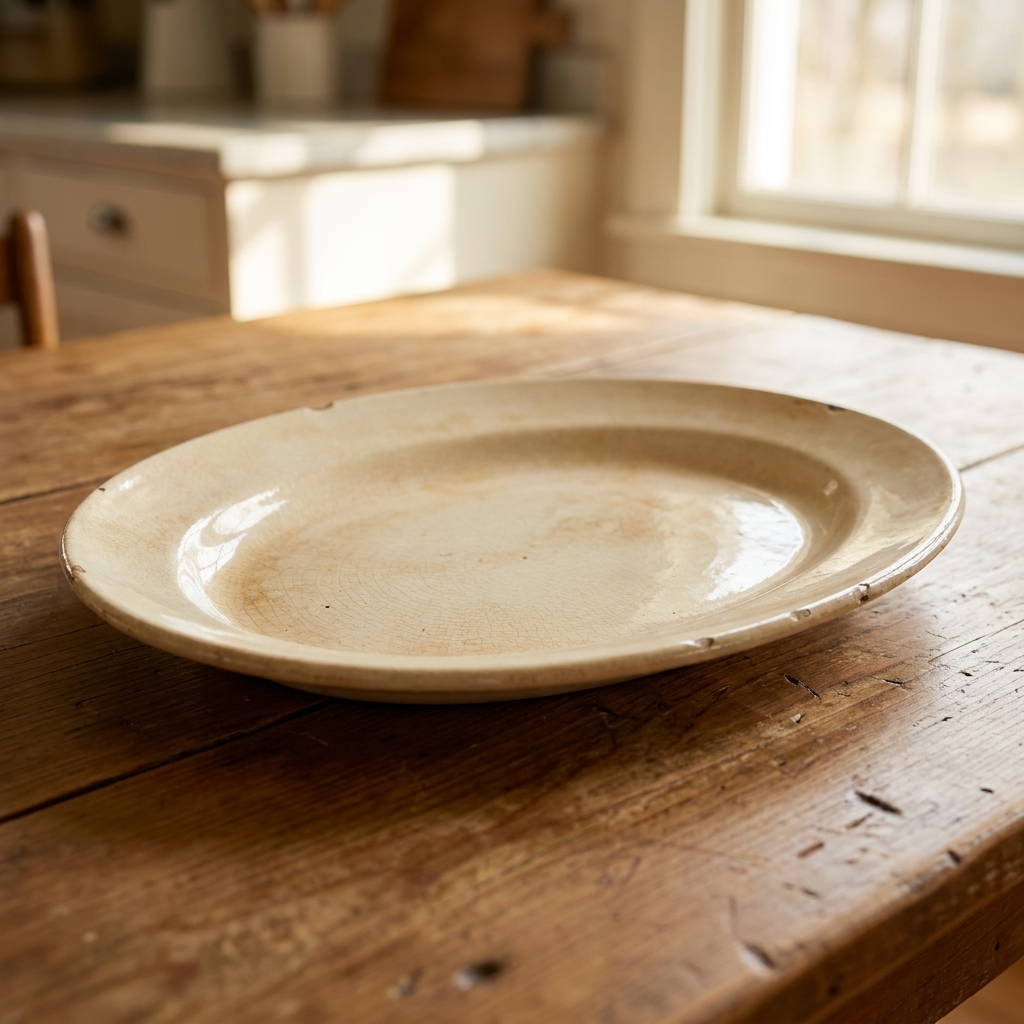
If you want one ironstone shape that earns its keep, let it be a platter. I use them for cornbread, stacked cookies, centerpiece bases, and that “something’s missing” moment on open shelving.
Utensil marks
Light gray utensil marks and surface scratches in the center well are common on antiques. The key is that they look layered and natural, not like one aggressive scuff session.
Warping and quirks
Many antique platters are not perfectly flat. A slight wobble does not automatically mean damage. It can simply be age or firing variation. Extreme rocking, however, can be a practical annoyance if you plan to use it often.
Foot ring wear
- Rounded wear over time is a good sign.
- Darkened patina can develop where dust and handling meet porous unglazed areas.
- Bright white, untouched rings can be modern, especially if the piece is marketed as “antique.”
Reproduction tells
I do not say “fake” to be dramatic. Some reproductions are lovely and honest when they are priced and labeled correctly. The trouble is when newer pieces are sold as antique.
Common signals
- Uniform bright white with a high-gloss glaze that feels slick like glass
- Perfectly even crackle that looks decorative instead of organic
- Very crisp stamps with no softening, fading, or glazing over time
- Artificial tea staining that collects in odd places, like only around raised details but not in scratches or foot-ring wear
- Too-clean bases with no patina, no shelf wear, no kiln marks
A quick sanity check
Ask yourself: Does the whole piece tell one consistent story? A genuinely old platter usually shows age in more than one way: a bit of crazing, a bit of base wear, a softened feel, maybe a faint discoloration. When only one “antique” feature is present and everything else is pristine, I pause.
Condition
Ironstone is meant to be used, so a little wear is part of the charm. Still, there are a few condition issues that can affect safety, function, and value.
Usually fine
- Light crazing
- Minor utensil marks
- Softened edges and gentle glaze wear
- Small manufacturing imperfections like pinholes or tiny glaze skips
Proceed with caution
- Hairline cracks in the body, especially on pitchers near the handle or spout
- Repairs: Look for glue lines, uneven shine, or areas that sound different when lightly tapped with a fingernail
- Chips on rims: A small chip may be fine for styling, but I skip chipped rims on pieces I plan to serve from
Usually a no for daily use
- Cracks that go through the piece
- Heavily crazed interiors on serving pieces you plan to use with wet foods often
- Musty odors that do not lift with gentle cleaning, especially on porous unglazed bases
Shop smarter
You do not need special tools, just a calm moment and good light.
Simple habits
- Use your phone flashlight to check for crazing, repairs, and hairline cracks.
- Run your finger along the rim to find small chips.
- Look for consistency: base wear, glaze feel, and mark should all make sense together.
- Ask the seller directly: “Do you know the age?” “Has it been repaired?” An honest seller will not be offended.
A gentle sound check
This is not foolproof, but it can help: lightly tap the piece with your fingernail. Many intact ceramics ring clearly, but thickness and shape change the sound too. A sudden dull spot where you expect a ring can be a hint of a crack or old repair. Be respectful and careful, especially in a booth full of breakables.
Quick checklist
- Weight: feels substantial for its size
- Color: warm white or natural variation, not just “perfect white”
- Surface: softened glaze, layered utensil wear where you would expect it
- Crazing: organic pattern that matches the rest of the piece
- Base: real foot-ring wear and a little patina
- Mark: believable age, and wording used as a clue, not a guarantee
- Story: everything matches, nothing feels staged
Cleaning
If you bring home a dusty treasure, you can clean it up while still keeping that soft, timeworn look.
My go-to method
- Wash with warm water, a mild dish soap, and a soft sponge.
- For gray utensil marks, try a gentle paste of baking soda and water, rubbed lightly.
- Rinse and dry completely, especially the unglazed foot ring.
What I avoid
- Harsh abrasives that can scratch glaze
- Long soaks for pieces with heavy crazing
- Very hot dishwasher cycles for fragile antiques
If a piece has deep staining, I am cautious about “over-brightening.” That creamy patina is part of why antique ironstone plays so nicely with wood, linen, and stone in a farmhouse kitchen.
Styling
If you are building a small collection, here is the secret: vary the shapes, keep the palette quiet.
- Stack platters and plates by size, leaving a little breathing room.
- Tuck a pitcher beside a cutting board so the warm wood breaks up the white.
- Add one natural texture nearby, like a linen towel, a bundle of dried herbs, or a handled basket.
Ironstone looks best when it does not feel precious. Let it live with you.

FAQ
Does ironstone have to be marked to be antique?
No. Many genuine old pieces are unmarked. In those cases, rely more heavily on weight, glaze feel, wear patterns, and overall construction.
Is crazing always a sign of age?
Not always. Crazing can happen on newer ceramics too, and some modern pieces are made with decorative crackle. In antique ironstone, crazing is common, but you want it to make sense with the rest of the piece.
Can I serve food on antique ironstone?
Often, yes, especially on pieces in good condition with minimal crazing. If the piece has heavy crazing, cracks, or repairs, I reserve it for styling or dry foods. And if you do not know the glaze history, be cautious with acidic foods and very hot liquids.
What is the easiest ironstone piece to start with?
A medium to large platter is my pick. It is versatile, easy to store, and you can use it constantly even if you only own one.