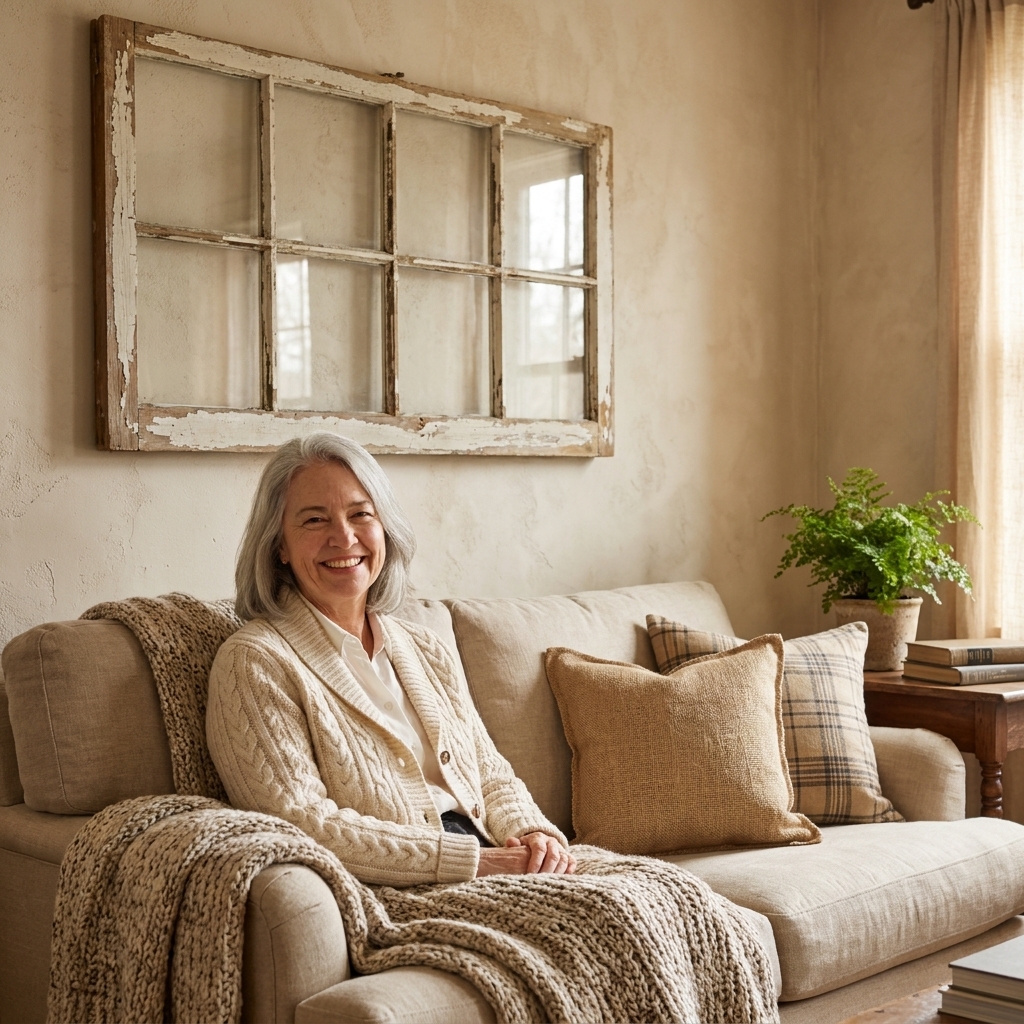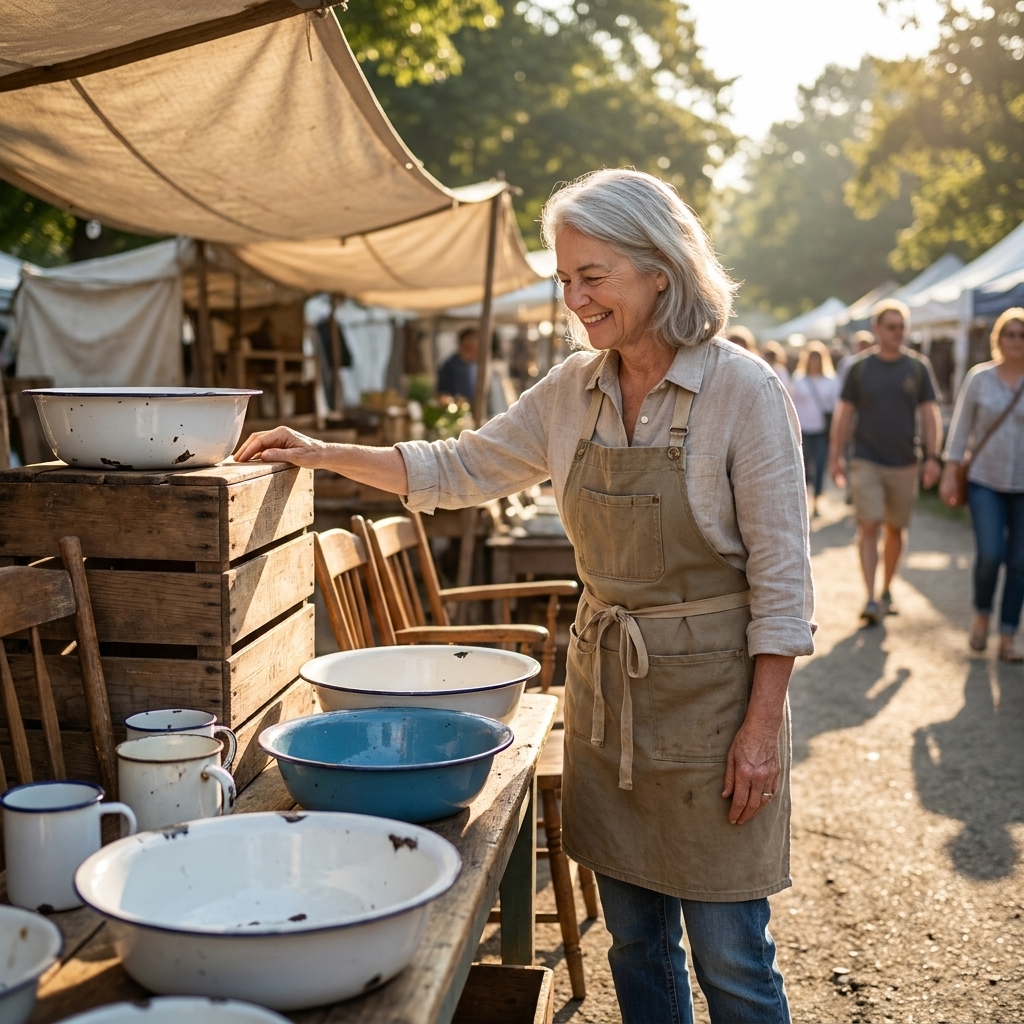
There is something about old wood that instantly softens a space. The little dents, the worn edges, the paint that has seen a few generations, it all reads as comfort. Architectural salvage is one of my favorite ways to add that honest, collected-over-time feeling to a modern farmhouse, especially if your home is newer or has cleaner lines.
The trick is to use salvage like seasoning, not the whole meal. One or two pieces used with purpose will look like a thoughtful design choice. Ten pieces tossed in a corner look like you are storing someone else’s renovation.
Before you decorate: a quick check
Antique salvage can be wonderfully sturdy, but it is still old building material. Before you bring it into everyday spaces, do a fast once-over so it is safe and actually usable.
- Look for rot and active pests: Press a screwdriver into soft spots. If it crumbles, feels spongy, or smells musty, skip it for indoor decor.
- Think lead paint, especially in older homes: Homes built before 1978 may have lead-based paint. Chippy paint is beautiful, but if you are not sure what you are dealing with, use an at-home test kit as a first step and remember they can be imperfect. For high-risk situations (kids, pets, heavy deterioration, or pieces you will handle often), consider professional testing or guidance on proper encapsulation.
- Stabilize the pretty flake: If the patina is worth saving but the paint is shedding, seal it so you keep the look without leaving flakes on your floors. Follow the sealer manufacturer directions, and avoid sanding or scraping old finishes unless you are using proper lead-safe methods.
- Clean gently and let it dry: A soft brush, vacuum, and a barely damp cloth are usually enough. If a piece came from a barn, basement, or dusty salvage pile, clean it, then give it a full dry-out before you seal or bring it into a high-traffic room.
- Plan for weight and mounting: Corbels, posts, and old windows can be deceptively heavy. Anchor anything mounted to studs, use the right masonry anchors for brick, and consider a French cleat for heavier wall pieces. If you feel unsure, this is a good moment to ask a contractor.
- Source ethically: Make sure salvage is being sold with permission (especially from demolitions), and never remove materials from historic sites.
1) Corbels for open shelves
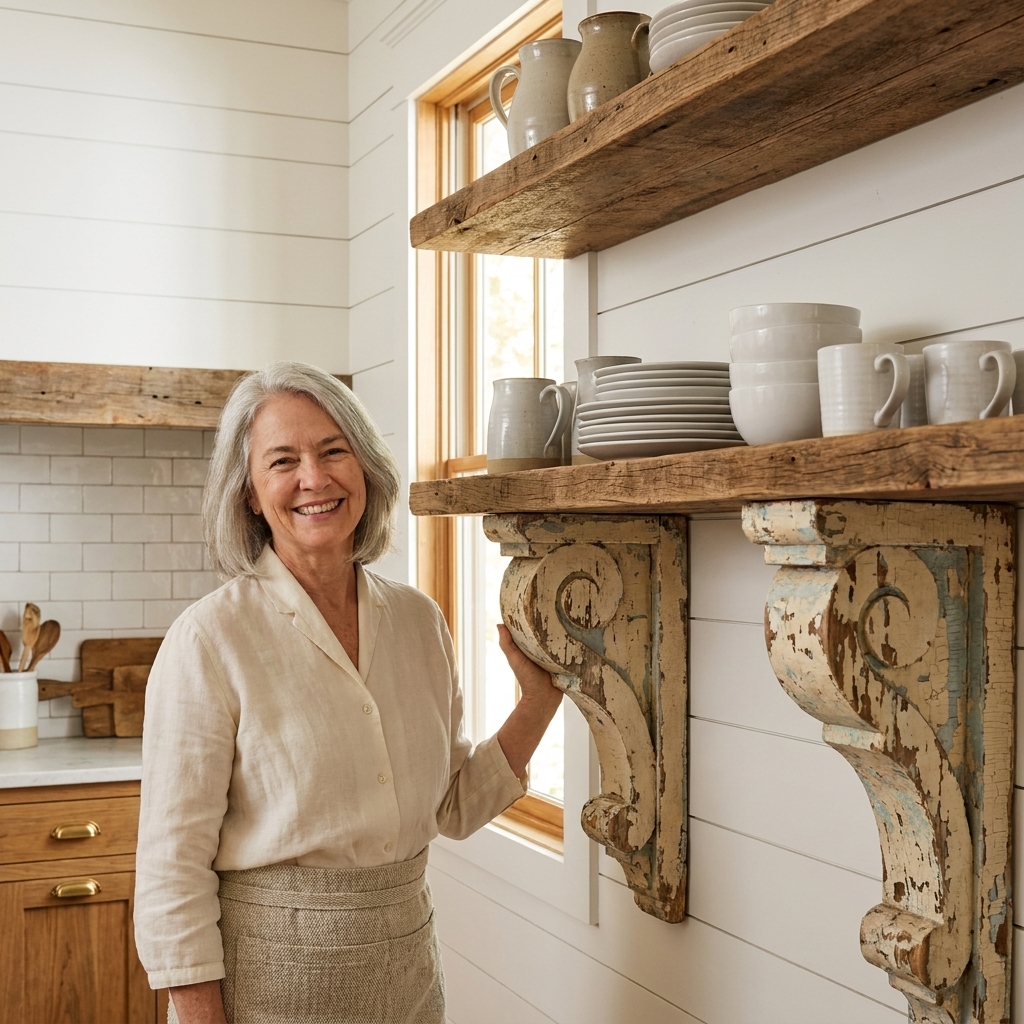
Corbels were made to hold weight, so they naturally look right supporting something. In a modern farmhouse kitchen or pantry, a pair of antique corbels instantly adds character to clean floating shelves.
How to style it
- Pick a pair that matches in scale, not necessarily in finish. Similar size reads cohesive even if one is a little more worn.
- Keep the shelf simple. A thick pine plank or stained oak looks intentional with chippy paint.
- Use them where your eye already lands. Over a coffee bar, beside the range hood, or at the end of a run of open shelves.
My favorite mix
White walls, warm wood shelf, and corbels with a little age. Then keep what you display calm: stoneware, a stack of cutting boards, one small crock of wooden spoons. Let the corbels be the story.
2) Porch post as lamp or pedestal
Old porch posts are one of the most overlooked salvage pieces, and they are so versatile. Their height and shape make them perfect for adding a vertical moment in rooms that feel a little flat.
Idea A: a porch post lamp
If you love the look of cozy, layered lighting, convert a shorter porch post or newel post into a lamp base. You get that hefty, grounded farmhouse feel without needing a huge budget for oversized lighting.
- Choose a post with a wider base so it feels stable.
- Use a lamp kit with UL-listed components, including proper strain relief.
- If you are unsure about drilling, wiring, or stability, have it assembled or checked by a qualified electrician.
- Top it with a linen shade to keep the overall look soft and modern.
Idea B: a simple hallway pedestal
Not everything has to be a full DIY. Set a porch post on a low wood plinth or a thick slice of reclaimed lumber and use it as a pedestal for a crock, a plant, or a small framed photo. It reads like collected architecture, not clutter.

3) Chippy window frame on the wall
Chippy window frames are magic because they add texture without adding visual heaviness. You get the lines and history of architecture, but it still feels airy, especially in a modern farmhouse that leans bright and neutral.
Three easy placements
- Behind a sofa: Center a large window frame and flank it with simple sconces or smaller frames.
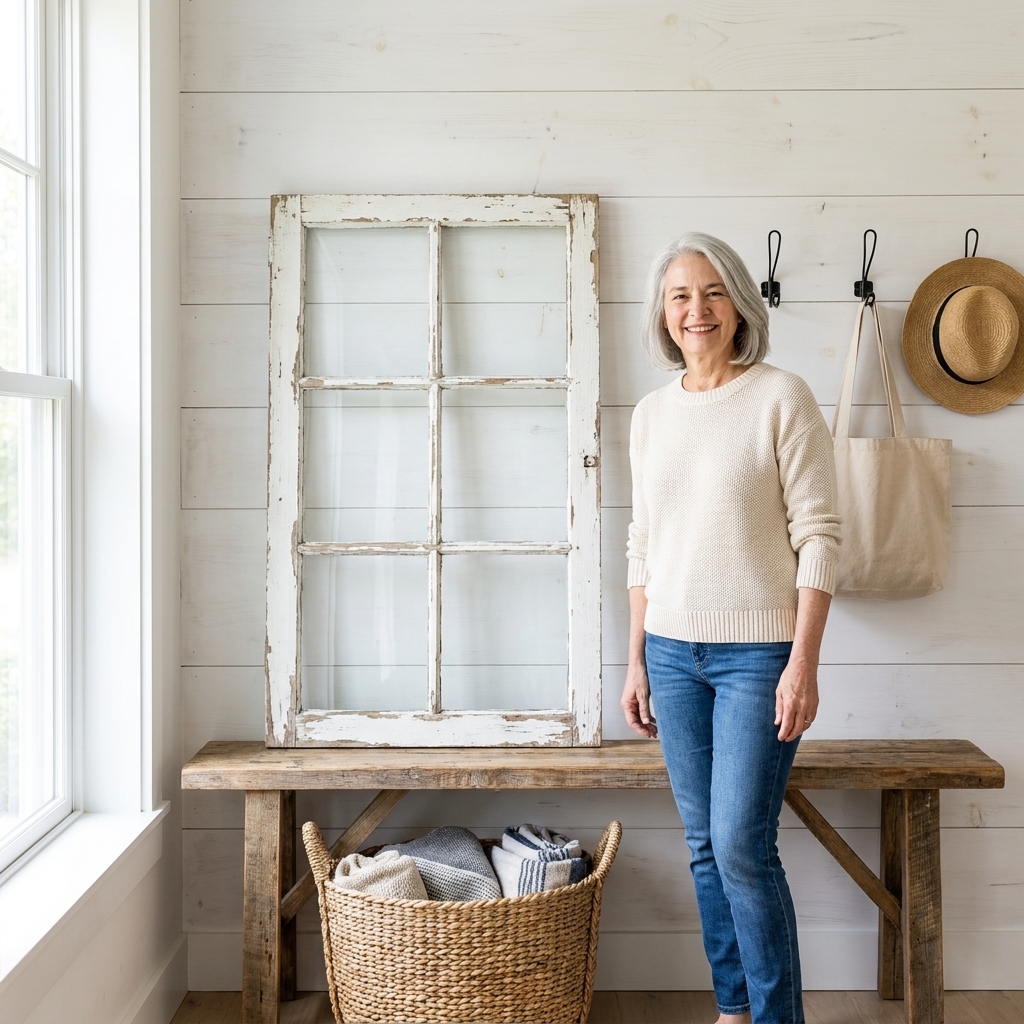
- Over a console table: Lean it instead of hanging if you want a relaxed, cottage feel.
- In a bedroom: Prop it behind nightstand decor, or hang it above a low headboard as soft architecture.
Scale tips that help
- Over a console: Aim for about two-thirds to three-quarters of the console width so it feels grounded.
- Behind a sofa: Go bigger than you think, especially with tall ceilings. A too-small frame reads like a random thrift find instead of a statement.
- If it feels awkward: Layer it. A larger frame behind, a smaller modern piece in front, and suddenly it looks intentional.
Layering tips so it looks curated
- Add one modern piece in front. A round mirror, a minimalist wreath, or a black metal sconce keeps the salvage from feeling too country-kitschy.
- Repeat the wood tone somewhere else. A tray, a bench, or picture frames in a similar warmth makes it feel intentional.
- Keep the color story tight. Chippy white, warm wood, black accents, and greenery is a classic modern farmhouse combo.
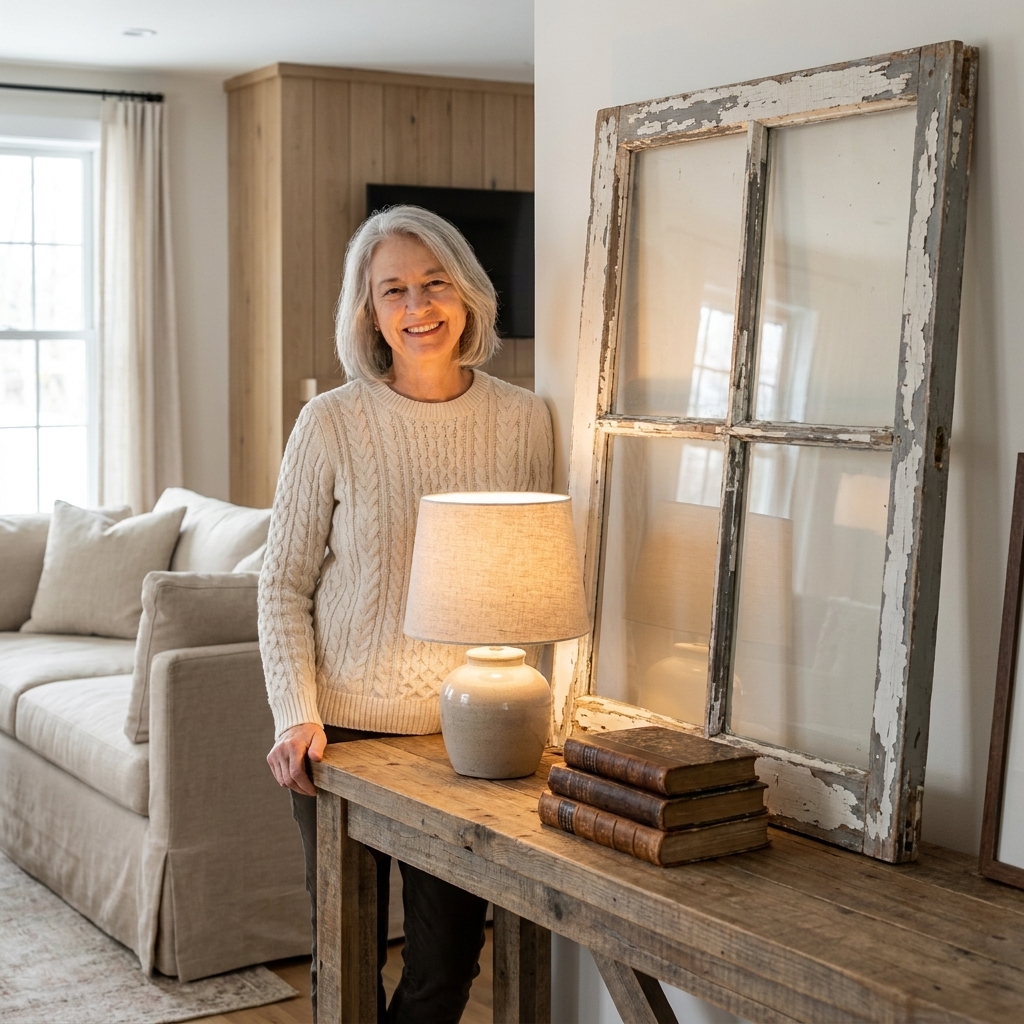
4) Salvage for a built-in feel
One of the smartest ways to use architectural salvage is to create the feeling of custom millwork. Corbels, small brackets, and trimmed-out frames can make basic furniture look like it has always belonged in the house.
Easy ways to fake built-ins
- Corbels plus a countertop: Add corbels under a simple wood top on a freestanding hutch or sideboard to mimic a built-in buffet.
- Trim a doorway opening: Use salvaged casing or plinth blocks to give a plain opening more presence, especially between kitchen and dining.
- Frame a basic mirror: Build a chunky frame from reclaimed wood, then add small corner blocks or carved details for an old-house feel.
If you are in a newer build, this is the kind of detail that adds that quiet, charming factor almost instantly.
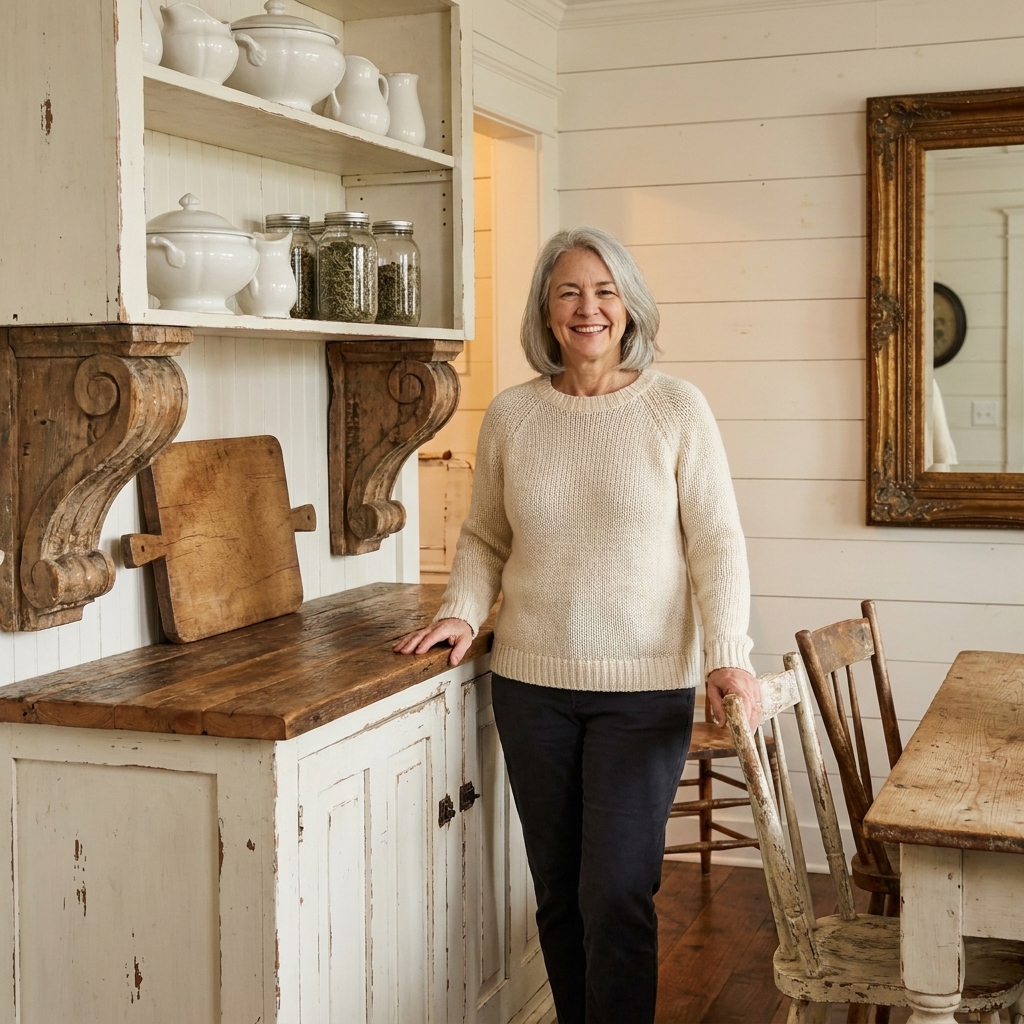
5) One bold piece, one calm vignette
If you are just starting out with salvage, begin with a single statement piece and build a little moment around it. This keeps your modern farmhouse from tipping into antique store aisle and helps you learn what patinas you love.
Vignette formulas that work
- Window frame + basket + greenery: Lean a chippy frame, place a lidded basket in front, and add one tall branch in a crock.
- Corbel + stack of books + candle: Use a corbel as a sculptural object on a console. Add two to three books and a beeswax candle.
- Short porch post + tray styling: Place the post at one end of a mantel or sideboard, then anchor the other side with a tray and a lamp.
My rule of three
Mix one timeworn piece, one smooth modern element (glass, black metal, or a clean-lined lamp), and one natural texture (linen, rattan, or greenery). That balance is the sweet spot.
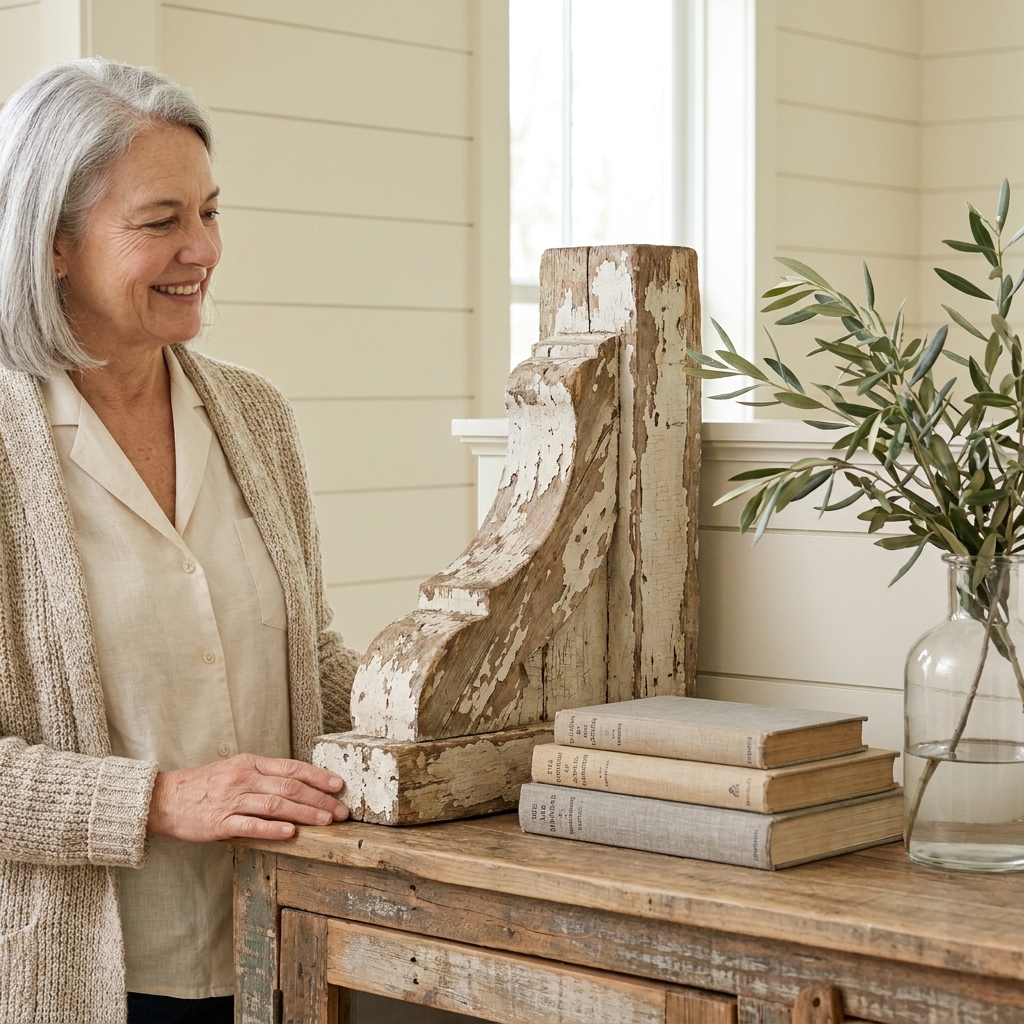
Where to find the good stuff
You do not need a fancy source to find architectural salvage. Some of my best pieces came from unglamorous places where you have to be willing to dig a little.
- Salvage yards: Best for volume and variety, especially corbels, posts, and doors.
- Habitat ReStore: Great for budget finds, and you can stumble on real gems.
- Estate sales: Look in garages, barns, and basements. That is where the old trim tends to hide.
- Demolition and renovation listings: Local classifieds often have leftover columns, windows, and trim bundles. Confirm it is being sold legally.
- Flea markets: Go early for the architectural booth, then loop back near closing for better prices.
Quick FAQ
How do I keep chippy paint from making a mess?
Vacuum with a brush attachment, then seal flaky areas with a clear, matte sealer that is appropriate for old finishes. Follow label directions closely, and avoid sanding or scraping older paint unless you are using lead-safe methods.
Can I use antique corbels for real support?
Sometimes, yes, but assume decorative unless you know the wood is sound and you are anchoring properly into studs. If you need true structural support, use new brackets behind the scenes and let the antiques be the pretty face.
What if my home is more modern than farmhouse?
Lean into contrast. Choose one dramatic salvage piece with great lines, keep the rest of the styling minimal, and repeat one color from the salvage elsewhere in the room so it feels integrated.
A final thought
Architectural salvage has a way of making a house feel like a home with a past, even if you moved in last year. Start small, choose pieces you genuinely love touching and looking at every day, and let them bring a little quiet history into your modern farmhouse.