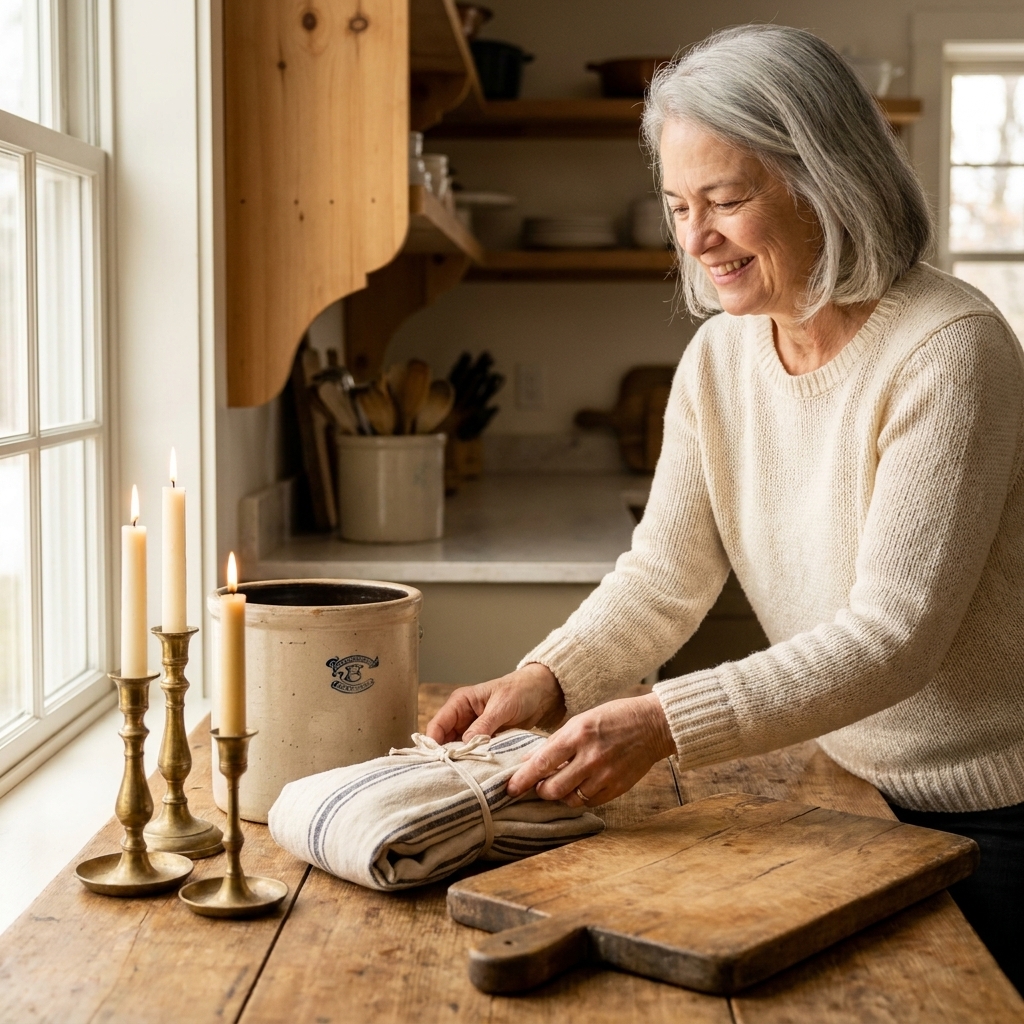
There is something about a good old stoneware crock that just feels like home. The worn rim, the soft gray body, that glassy, slightly pebbled salt-glaze texture that catches the light like a worn river rock. I have carried more than one heavy crock out of a barn sale with arms wobbling, telling myself, “This is the last one.” It never is.
If you are shopping for antique stoneware crocks for a farmhouse kitchen, pantry, or entryway styling moment, the trick is learning what the numbers and marks really mean, how to judge the glaze, and what makes one crock a $45 find versus a $450 investment piece.
One quick note up front: crocks are wonderfully consistent in some ways and full of odd exceptions in others. Many are numbered and marked in predictable ways, but not all. When in doubt, let the whole piece tell the story, not just the number on the front.
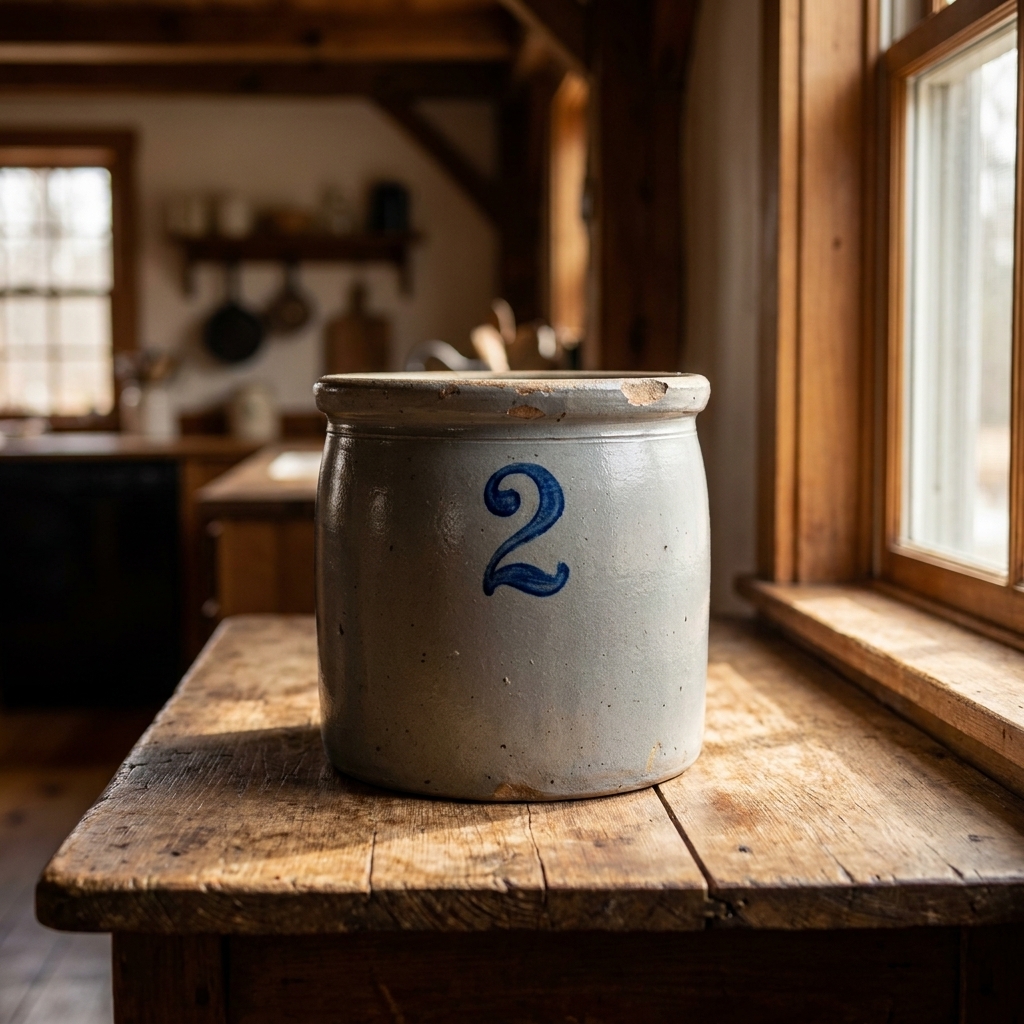
What the number means
Most antique American utilitarian crocks you see in shops and estate sales are marked with a large number on the front, often in cobalt blue, black, or a darker slip. In many cases, that number is the crock’s capacity, measured in gallons.
- “1”, “2”, “3”, “4”, “5”, “6”, “8”, “10” are the most common capacity marks.
- Some numbers are stamped, some are painted, and some are impressed into the clay before firing.
But here is the collector truth: numbers are often gallons, not always. Depending on the maker and region, an occasional number can be a shop mark, a model, or part of an internal system. If the form looks unusual or the number placement feels odd, treat the number as a clue, not a guarantee.
Common sizes in real life
Here is the practical, decorating-friendly way I think about sizes when I am standing in a dusty booth trying to picture it at home:
- 1 to 2 gallon: Easy to place on open shelving, counters, and hutches. Often the best starter size for styling because it does not overpower a vignette.
- 3 to 5 gallon: The classic farmhouse workhorse. Great beside a hearth, under a console table, or as a utensil crock on a big island if you have the space.
- 6 to 10 gallon: Statement pieces. Gorgeous, but heavy and more likely to have damage from real use.
Do higher numbers mean higher value?
Not always. Bigger crocks can be more expensive because they are harder to find and cost more to ship, but value also depends on maker, decoration, condition, and whether the mark is original and crisp. A clean, undamaged 3-gallon with pretty cobalt can outrank a rough 8-gallon with a repaired crack.
Marks and stamps
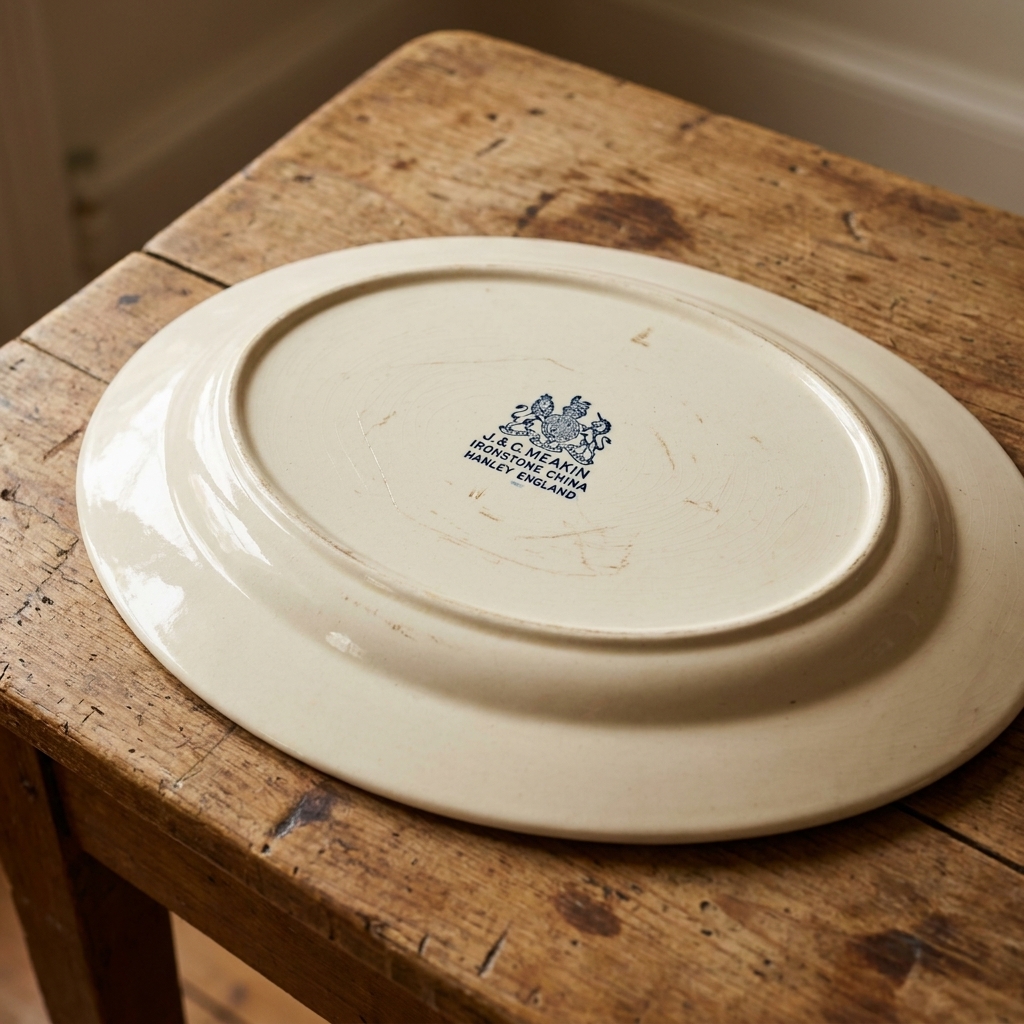
Besides the number, many crocks have additional markings. Flip it around and look at the back and bottom, and check the shoulder area just under the rim.
Common markings
- Pottery name or town stamp: Often impressed or stamped, sometimes in an oval or rectangle.
- Decorator marks: Cobalt brushwork like flowers, leaves, birds, or simple stripes.
- Incised lines: Simple rings around the body can be purely decorative or part of how the vessel was thrown.
- Merchant marks: Less common, but some pieces were marked for a store or distributor.
If you see a clear maker stamp, you have a stronger starting point for value. If you do not, that is okay. Plenty of beautiful, honest crocks were made regionally and never marked beyond a number and maybe a simple flourish.
When you do find a stamp, take a quick phone photo and look it up later. Even a basic search can point you to a region and date range. Some names you may run across in reference guides include well-known American stoneware potteries such as Red Wing, Western Stoneware, and Ransbottom, along with many smaller regional shops.
Once you have looked at numbers and marks, glaze is the next big “tell” for age, use, and how a crock will wear at home.
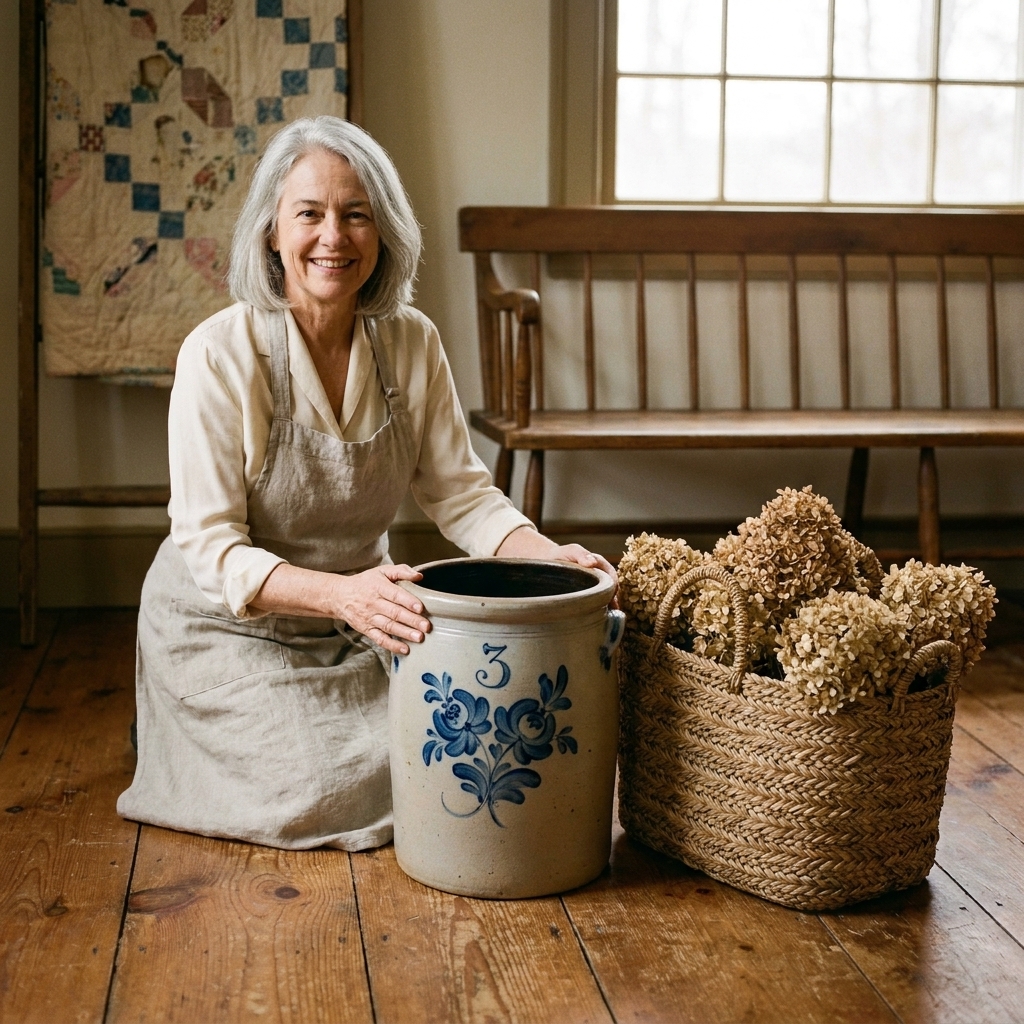
Glazes and finishes
Glaze tells you so much about a crock: when it was likely made, where it may have been produced, and how it will age in a real home.
Salt glaze
Salt-glazed stoneware has that signature orange-peel, lightly dimpled texture. Traditionally, salt was introduced into the kiln at high temperatures, creating a glassy surface on the clay body.
What to look for:
- Texture: Subtle dimpling, not perfectly smooth like modern ceramics.
- Color: Often gray to light tan with warm variation, especially around the shoulder and rim.
- Natural drips or flashing: Small runs or darker patches can be normal and even desirable.
Red flags: A surface that looks overly uniform and slick can be a hint you are looking at a newer reproduction, especially if the interior looks too pristine for its supposed age.
Albany slip
Many crocks have a dark chocolate brown interior known as Albany slip. It was widely used as a liner for utilitarian wares because it created a durable, easy-to-clean surface that held up to real work.
What to look for:
- Color depth: Rich brown that may pool darker at the bottom.
- Flow and brush evidence: Often you can see where it moved during firing, especially near the rim.
Other finishes and a quick era note
Most of the classic salt-glazed, utilitarian crocks people decorate with today were made in the mid-1800s through the early 1900s, but there are plenty of later pieces, too. You may also run into Bristol-style glazes and other finishes depending on the maker and era. Canadian and European stoneware can follow different marking habits than typical American crocks, so if something feels “off” in a good way, it might simply be from a different tradition.
Painted and decorated later
You may come across crocks that have been painted on the outside, sometimes long ago and sometimes recently. A properly old surface will show uneven wear, soft edges, and grime settled into tiny texture. Fresh craft paint on a “primitive” crock can still be cute for decor, but it should lower the price because it is no longer in original condition.
Condition checks
If you remember nothing else, remember this: condition is the quickest way to lose or gain value. I always do a slow, methodical check before I buy.
A quick inspection routine
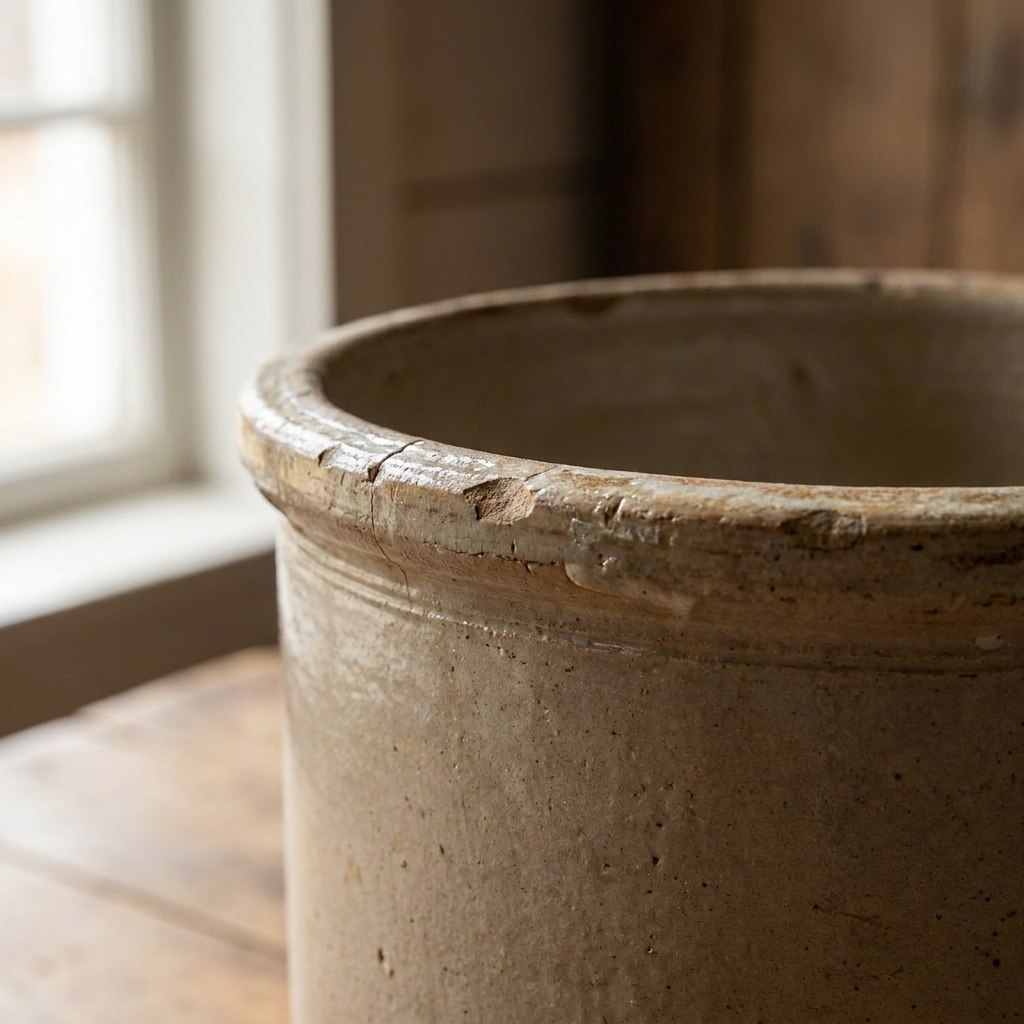
- Rim: Run your fingertips around the lip. Small nicks are common. Big chips can be deal-breakers for collectors, but still fine for styling if the price reflects it.
- Hairline cracks: Look closely, especially near handles and along the base. If you have light, angle the crock and let reflections help you spot lines.
- Handles and lugs: Check for repairs and cracks where the handle meets the body. This is a stress point.
- Base: Turn it over. Look for grinding marks (normal) and check for a base crack that runs across the bottom.
- Sound test: A gentle tap with your fingernail can sound clear and ringing on an intact piece, while a dull thud can hint at a crack. It is variable by thickness and firing, so treat it as a clue. If you can, lightly support the crock and compare the sound to another crock of similar size.
Repairs
Old repairs are part of antique life. The question is whether they are stable and whether the price reflects them.
- Old staple repairs: Those little metal stitches can be historically interesting, but they usually reduce value for most buyers. Still, they can look amazing in a rustic, timeworn kitchen.
- Glue repairs: Often messy, sometimes hidden under paint. These should significantly lower the price.
- Filled chips: Look for areas that feel smoother than the surrounding glaze or have a different sheen.
Decoration and price
Stoneware decoration is where crocks can jump from everyday antique to collector piece.
What usually adds value
- Cobalt designs: Flowers, birds, and bold freehand motifs are commonly more valuable than plain crocks.
- Strong contrast and crisp lines: Clear, confident brushwork tends to be more desirable.
- Unusual motifs: Animals, patriotic themes, or rare patterns can increase value.
- Multiple design elements: A number plus a large motif plus striping can be a value booster.
That said, the right crock is also the one that fits your home. A plain 2-gallon crock with a soft gray glaze can be the perfect quiet anchor on open shelving.
What they cost
Prices vary by region, maker, condition, and season, and online pricing can be inflated by shipping. But for a realistic starting point, here is the range I most often see for common, unsigned crocks in the current market.
Typical price ranges
- 1 gallon, plain: about $35 to $90
- 2 to 3 gallon, plain: about $60 to $150
- 4 to 5 gallon, plain: about $100 to $250
- 6+ gallon, plain: about $175 to $450+
Add decoration, a crisp maker stamp, and excellent condition, and those numbers can climb quickly. Add cracks, repairs, heavy chips, or a later paint job, and the price should come down.
What pushes value up
- Clear maker mark tied to a known pottery
- Bold cobalt decoration with strong color
- Uncommon sizes or forms, especially in great condition
- Original lid present (rare, and worth a closer look)
What pushes value down
- Structural cracks, especially through the base
- Loose repairs or heavy glue residue
- Over-cleaned surfaces that look sanded or stripped
- Modern repainting meant to “antique” it
Spotting reproductions
I am not anti-reproduction. If you want a crock to hold umbrellas by the door and you love the look, buy what works. But you should pay reproduction prices for reproduction pieces.
Signs it is newer
- Too-perfect finish: Very uniform color and sheen, no kiln variation.
- Artificial distressing: Sanded spots that look planned rather than naturally worn.
- Perfectly crisp numbering: Many old numbers have slight wobble, brush texture, or unevenness.
- Modern country-of-origin mark: Not always present, but a giveaway when it is.
If you are unsure, ask the seller what they know about it. A reputable dealer will usually tell you if it is vintage style rather than truly antique.
Using crocks at home
Once you bring one home, you will find it wants to be useful. I love pieces that earn their keep.
Favorite styling ideas
- Kitchen: Wooden spoons, rolling pins, or a bundled bouquet of dried herbs.
- Pantry: On the floor for potatoes and onions, lined with a simple cloth bag.
- Entry: Umbrella stand or a drop zone for tall branches in winter.
- Bathroom: Rolled hand towels, especially in a 1 to 2 gallon size.
- Porch: A fern in a nursery pot tucked inside, with a saucer hidden underneath.
If your crock has cracks or old repairs, I treat it as decor-only. It can still be absolutely charming, just not something you want holding water.
A quick safety note
Many people want to use old crocks for food, drink, or fermenting. Unless you know the history and have had it properly evaluated, it is safest to assume an antique crock is for decorative use only. When it comes to food contact, err on the side of caution.
Buying checklist
- Confirm the number and size feel right for your space.
- Check rim, handles, and base for chips and cracks.
- Look for maker marks and photograph them for later research.
- Evaluate the glaze for natural variation and age-appropriate wear.
- Decide whether you are paying for decor value or collector value, then negotiate accordingly.
FAQ
Is the number always gallons?
Often, especially on classic American utilitarian crocks, the number indicates gallon capacity. But it is not universal. Some crocks are unnumbered, and some numbers can mean something else depending on maker or region. Use the number as a strong hint, then back it up with form, glaze, and any maker marks.
Are crackled glazes okay?
Fine surface crazing can happen and is not always a structural issue. The concern is a true crack through the clay body. When in doubt, treat it as decorative and price it accordingly.
Should I clean an antique crock?
Gently, yes. I stick with warm water, a little mild soap, and a soft brush. Avoid harsh chemicals and abrasive scrubbers that can dull the glaze and remove the aged surface collectors love.
Does a lid make it more valuable?
Usually, yes. Original lids are harder to find than the crocks themselves. Make sure the lid actually fits well and looks period-correct to the piece.
If you want, tell me the size and any markings on the crock you are considering, plus a quick description of condition (chips, cracks, repairs), and I can help you sanity-check a fair price before you buy.