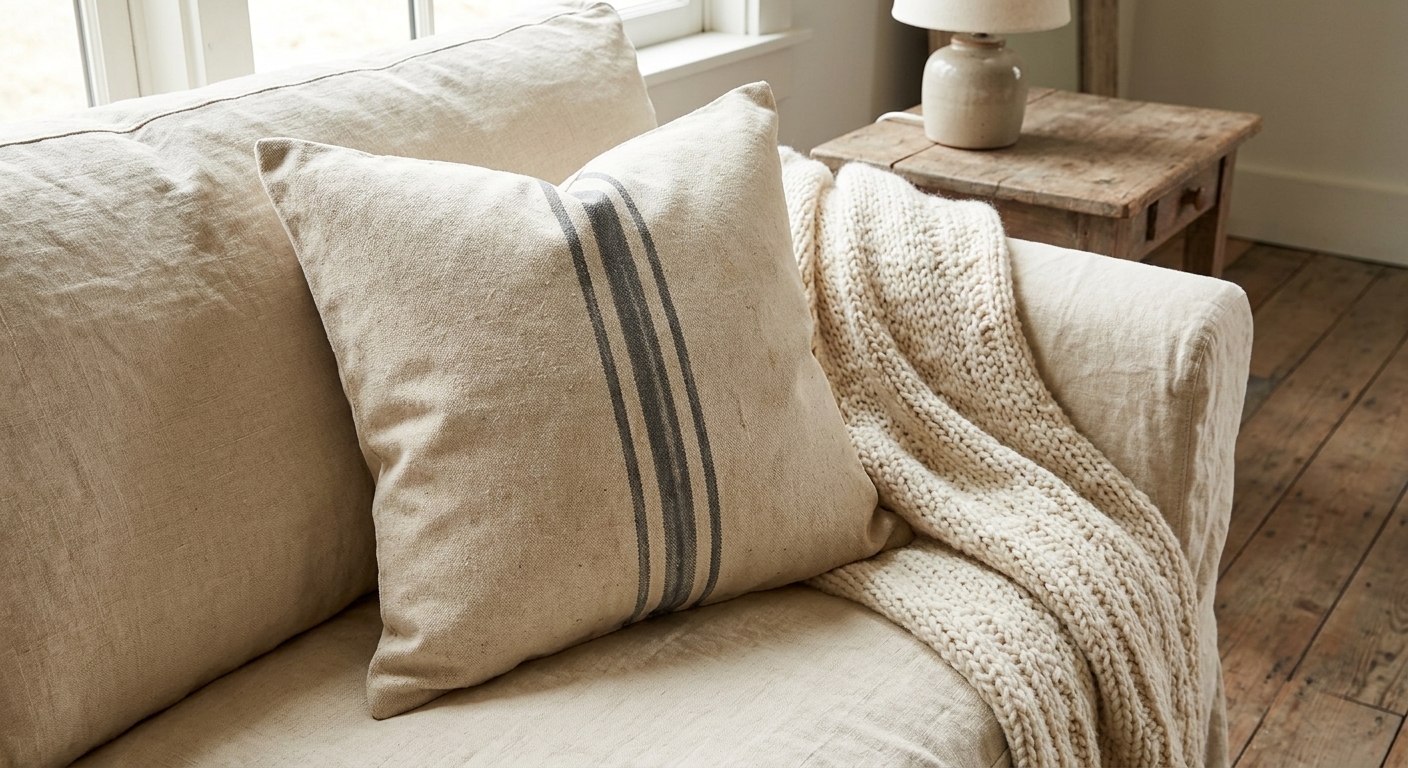
There is something about old European linen that just feels honest. It is sturdy but soft, a little rumpled, and never trying too hard. A true vintage French grainsack has lived a whole working life before it ever becomes a pillow on your sofa, and I think that is exactly why it makes a home feel grounded.
In this guide, I will walk you through how to source authentic grainsacks and cottage linens, what those classic stripes can (and cannot) tell you, and how to wash and prep them so you can actually use them for upholstery, pillows, and everyday farmhouse living.
What a French grainsack is
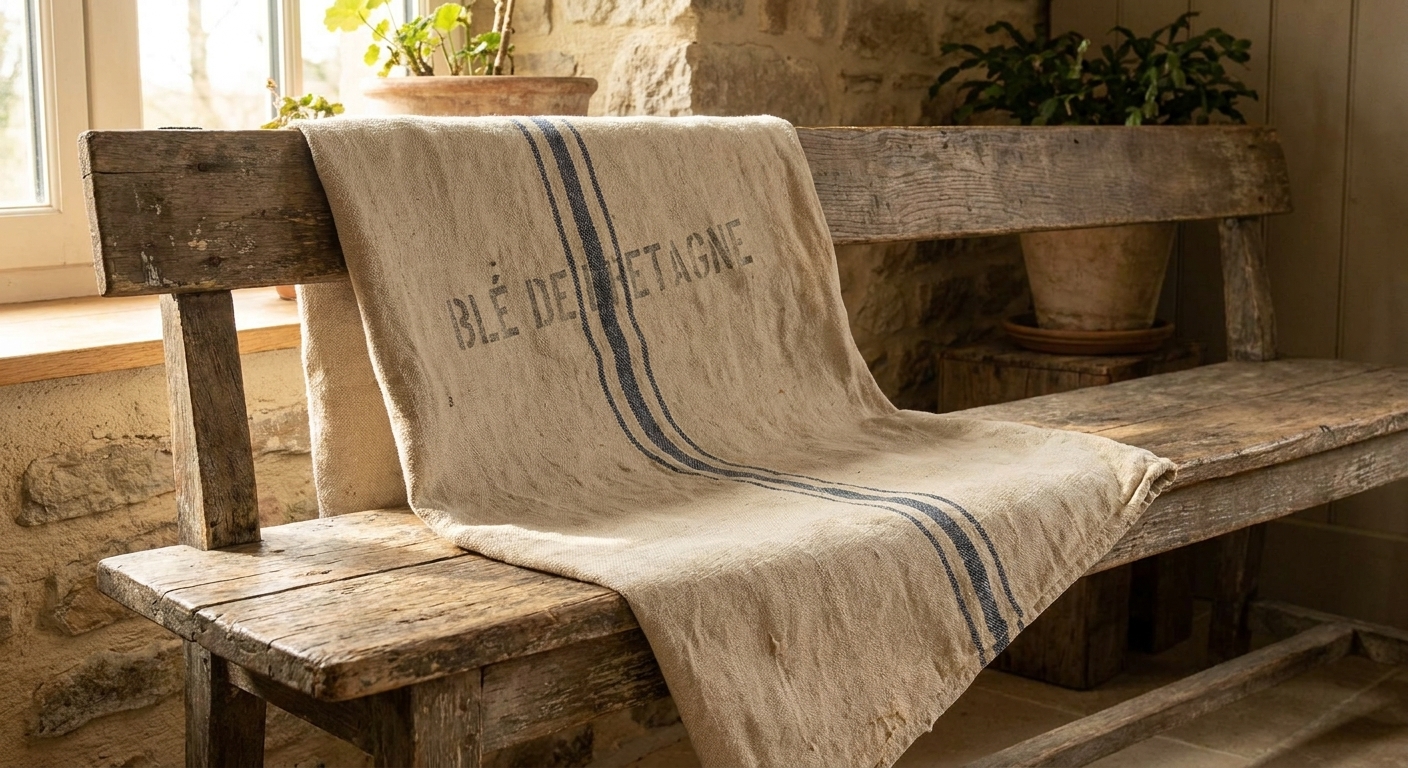
French grainsacks were heavy woven linen sacks used to store and transport grain, flour, and other farm goods. Many were made and used from the 1800s into the early to mid 1900s, and exact dating can vary by region and mill. They were built to take a beating, which is why so many are still around.
Most true grainsacks you will see today are:
- Homespun linen with visible slubs and a slightly irregular weave
- Large panels that were once stitched into a tube sack, often with a seam running lengthwise
- Marked with stripes and sometimes stenciled initials or numbers for identification
You will also run into other vintage “cottage linens” sold in the same breath: hemp sheets, lin métis (often written métis, typically a linen and cotton blend), torchons (French kitchen towels), and old grain or coffee sacks from neighboring regions. Many are wonderful, but they behave a little differently when you wash and sew them, so it helps to know what you are buying.
Where to source grainsacks
I grew up roaming antique barns with my grandmother, and I can tell you this: the best vintage pieces are usually found through patient, consistent searching, not one big perfect shopping trip.
Antique dealers and importers
If you are buying online, look for sellers who specialize in European textiles and can answer questions about origin, age range, and condition. The upside is curation and access. The downside is price, which is often fair for the work of sourcing, importing, and storing large textiles.
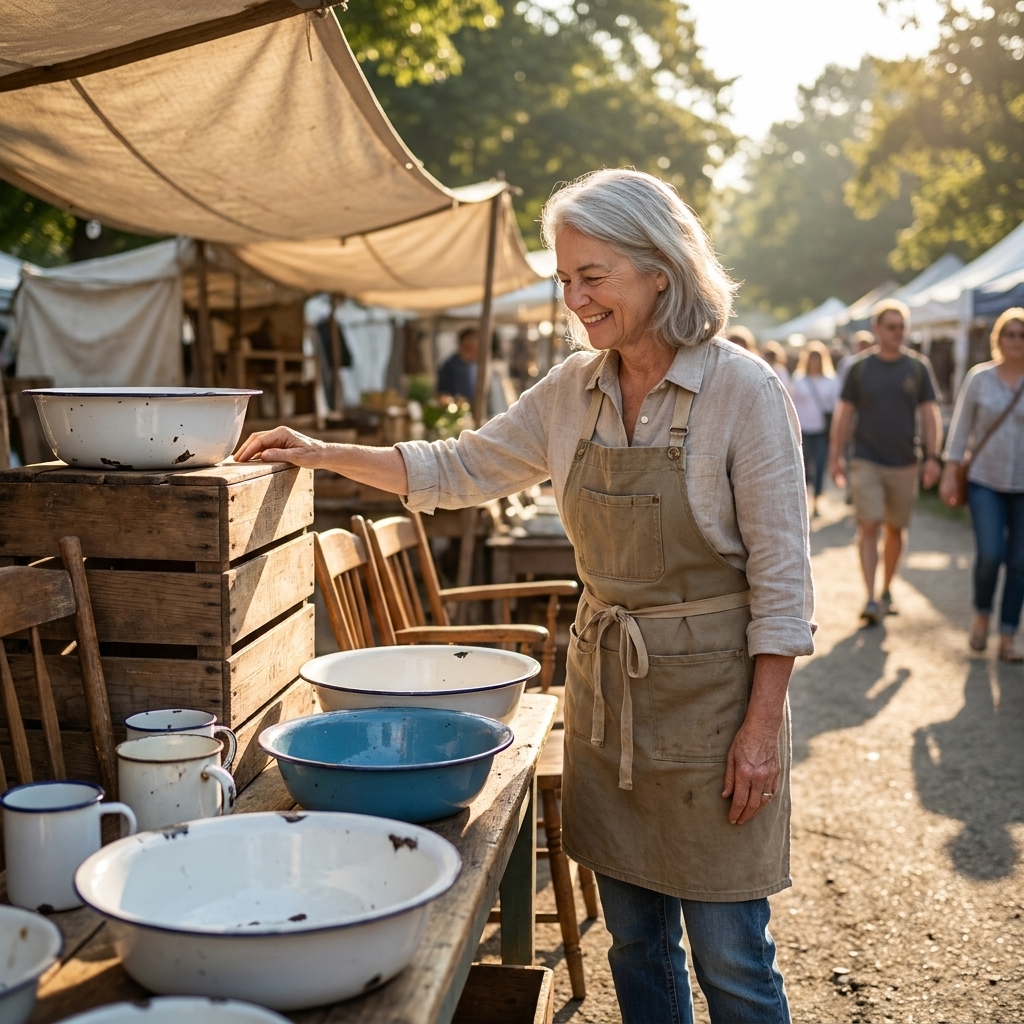
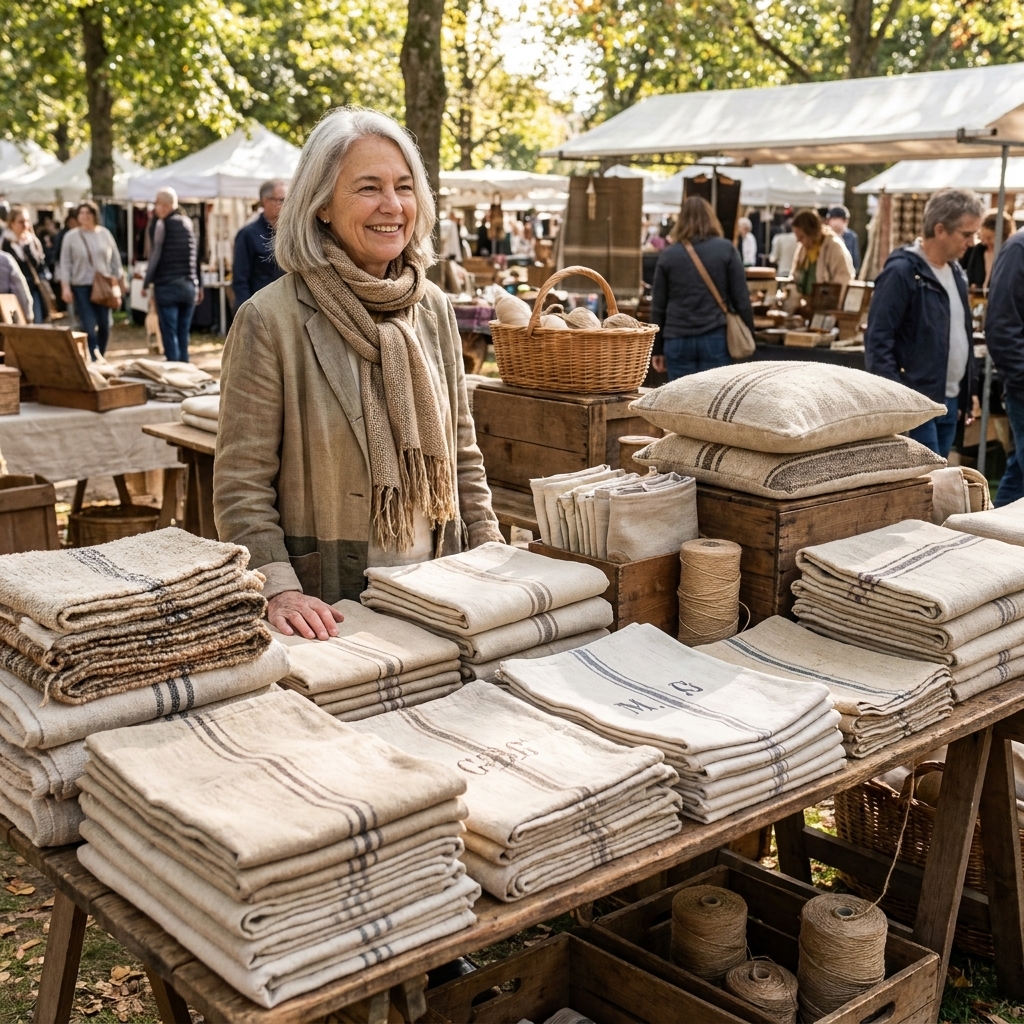
Flea markets and antique shows
If you can touch the fabric, you can learn so much in a minute. Bring a small measuring tape and do not be shy about holding linen up to the light to check for weak spots and repairs.
Estate sales and barn cleanouts
In the US, true French grainsacks are less common at local estate sales, but it does happen, especially in collections. More often, you will find comparable old linens like hemp feed sacks, grain bags, or heavy linen yardage that can give a similar look.
What to ask before you buy
- Is it linen, hemp, cotton, or a blend?
- Has it been washed already?
- Are there repairs, patches, or thinning areas?
- What are the measurements (including usable fabric after seams are removed)?
- Are there stains or odors (mildew, smoke, storage funk)?
Size and measurements to expect
Dimensions vary, but many grainsacks open up into a generous panel that is often enough for a couple of pillows, a runner, or a chair back. I always ask for the flat, opened measurements, plus a note on how much fabric is compromised by seams, thinning, or stains. In other words, do not shop by the “overall” number. Shop by what is truly usable.
Pricing, and what drives it
Prices are all over the map. Condition, width, softness, stripe color, and interesting markings all move the needle. Wide panels in strong condition with beautiful, evenly faded stripes tend to cost more, and that is usually where your money should go. If the fabric has heavy thinning, strong mildew odor, or large weak areas, it should be priced like a display textile, not upholstery yardage.
How to spot real grainsacks
Let me say this gently: not everything with a stripe is a grainsack. Some modern textiles are made to mimic the look, and some sellers use “grainsack” loosely as a catch-all term. There is nothing wrong with buying a reproduction if you love it, but you should not pay vintage prices for modern yardage.
Signs it is vintage
- Weight and body: Authentic grainsacks feel substantial, not flimsy. They have structure even when folded.
- Weave irregularity: Homespun linen has slubs and tiny inconsistencies that read as texture, not defects.
- Seams: Many sacks have a long seam, sometimes with hand stitching or early machine stitching. Some have an opening that was once the sack mouth.
- Fading that makes sense: Stripes often look softened, not crisp like a brand-new fabric.
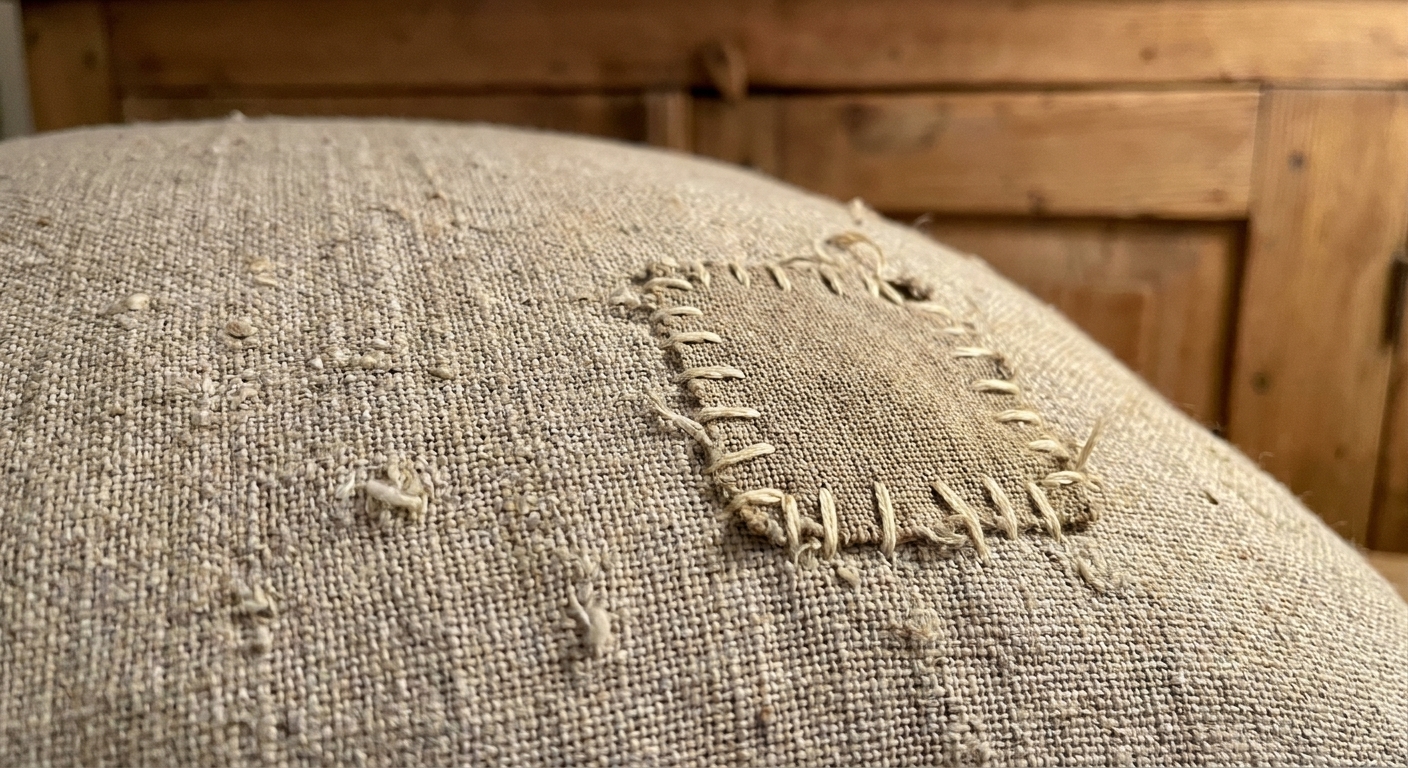
- Signs of a working life: Small darns, patches, or faint storage marks are common.
Red flags
- Perfectly uniform printed stripes that sit on top of the fabric rather than being integrated into it
- Ultra consistent texture that looks like modern decorator linen
- Artificial distressing that feels forced, especially suspicious “random” holes
- No real details from the seller on fiber content, seams, or dimensions
If you are buying online, ask for close-ups of the weave, any seams, and the stripe area. A reputable seller will not mind.
What stripes can tell you
Those classic blue, charcoal, or red stripes are part of the charm. They were also practical. Stripes and stencil markings were often used to help identify sacks in a working setting, especially when many sacks were handled together. The details vary by region, era, and maker, so I treat markings as one clue, not the whole story.
Woven vs. printed
In French linen grainsacks, woven stripes are typical, meaning the stripe is created during weaving and you can see the colored threads integrated into the cloth. Printed stripes show up more often in reproductions and in other types of sacks and textiles. Either way, you can usually tell quickly by looking closely at the threads.
Common stripe looks
- Single or double bands: One or two stripes running the length of the sack, often centered or slightly offset.
- Grouped stripes: A thicker cluster, sometimes a wide band flanked by thin lines.
- Faded indigo blues: The classic French look, especially pretty in farmhouse spaces.
- Muted reds or browns: Less common, but they can feel warm against old wood tones.
Stenciling and numbers
Stenciled initials or numbers are often inventory or ownership marks. They can add character, but they are not a guarantee of age or authenticity on their own. Look at the whole story: fiber, weave, wear, and construction.
My styling rule: If the stripes are bold, let them be the star and pair them with quieter textures like raw wood, pottery, or nubby wool. If the stripes are subtle, add contrast with a chunky knit or a vintage rug.
Condition checks
Old linen is tough, but it is not invincible. Before you plan pillows or upholstery, do a quick assessment so you do not sew your heart into fabric that will tear the first time someone flops on the sofa.
Do the window test
Hold the linen up to strong light. Thin areas show up fast, especially around old folds, seams, or stained spots.
Sniff test
Musty storage smell is common and usually washable. A sharp mildew smell may signal deeper issues, especially if you see black spotting.
Check for shattering
Some antique linens, especially those stored in damp conditions or exposed to harsh chemicals, can become brittle and split. If the fabric crackles, breaks, or sheds fibers when flexed, I would not use it for high-wear projects. If you are unsure, test the strength on a tiny corner seam allowance rather than the middle of a good panel.
Look for repairs
Hand-darned repairs can be gorgeous. Just plan your cuts so repairs land where you want them. For a pillow front, I love an old mend. For upholstery, I prefer repairs in low-stress areas, or I will reinforce from the back with a supporting linen.
Washing vintage linens
This is the part that makes people nervous, and I get it. You do not want to ruin a special find. The secret is to go slow, start gentle, and treat stains like a patient project, not a battle.
Step 1: Shake out and check
- Take it outside and shake out dust.
- Check for loose dirt, brittle fibers, and any areas that feel thin.
- If the textile is extremely fragile, skip soaking and consider professional cleaning or using it as a decorative layer rather than a working fabric.
Step 2: Cold soak
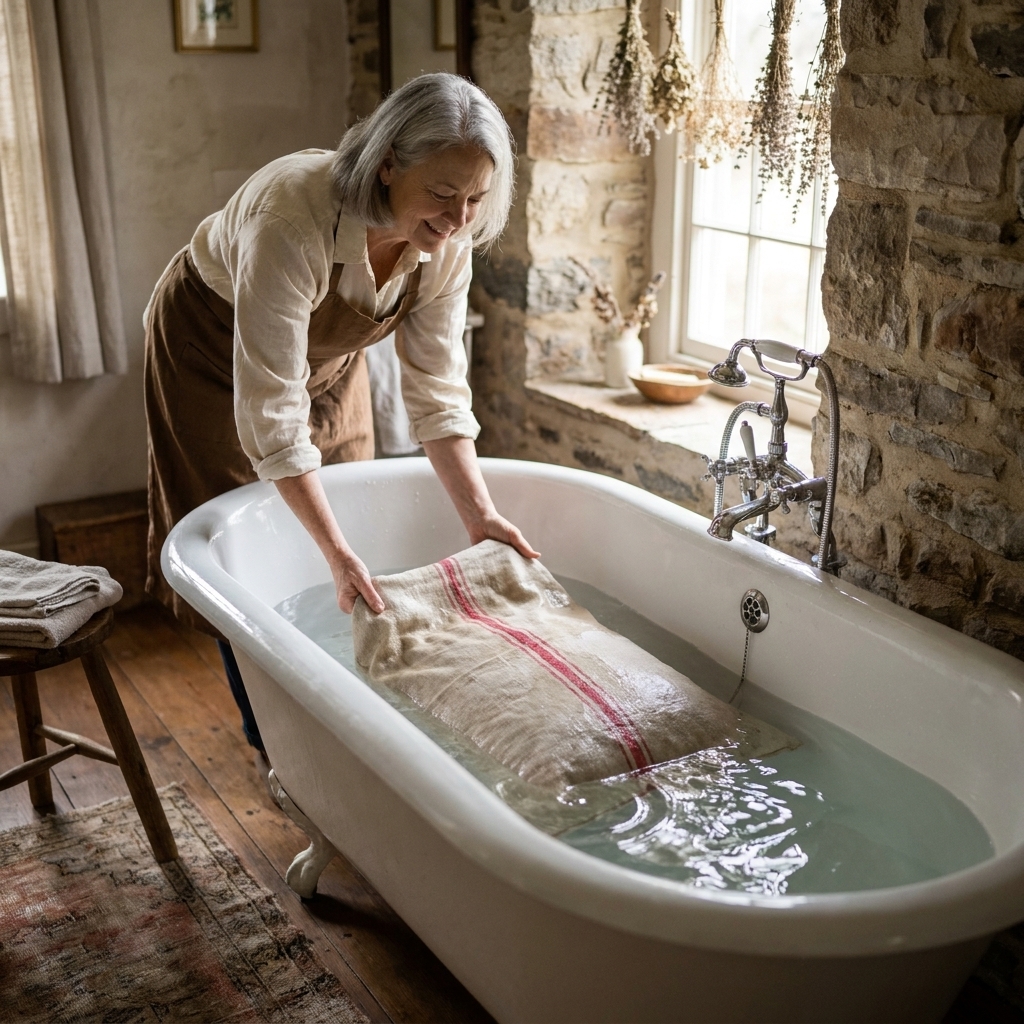
I almost always start with a cold water soak in the tub or a large bin. This helps release old dust and softens fibers.
- Fill with cold water and add a small amount of gentle detergent or a textile-safe soap.
- Let it soak 30 to 60 minutes.
- Gently swish, do not wring.
Step 3: Gentle wash
If the linen feels sturdy after soaking, you can wash it:
- Machine option: Use a front loader if possible, cold or lukewarm water, gentle cycle, mild detergent.
- Hand wash option: Wash in the tub with lukewarm water, press the water through, do not twist.
Avoid bleach. Chlorine bleach can weaken cellulose fibers like linen and hemp, and it can make old repairs fail.
Step 4: Stains and brightening
Vintage grainsacks often have flour dust shadows, storage marks, or old water stains. My approach:
- For general yellowing: repeat gentle soaks, rinse well, and let a little sunlight help as it dries.
- For specific spots: dab with a small amount of gentle soap, let sit briefly, then rinse. Repeat rather than scrub hard.
- For persistent discoloration: oxygen-based brighteners can be an option for sturdier linens, but test in an inconspicuous corner first and avoid long, aggressive soaking.
A quick caution on sunlight: a little can brighten, but too much can fade stripes and, over time, dry out older fibers. Think short sessions, not all-day baking.
Step 5: Drying
- Air dry flat or over a line if possible.
- Avoid high heat until you know how the fibers behave.
- If you use a dryer, use low heat and remove while slightly damp to reduce deep creasing.
Step 6: Pressing
Linen loves steam. Press while still a little damp for the smoothest finish. If you like the relaxed farmhouse look, a quick press on seams is plenty.
Prepping for pillows and upholstery
Once your linen is clean and fully dry, a little prep makes your finished project feel polished and last longer.
Opening a sack
- Use a seam ripper to open the long seam and any end seams.
- Press the fabric flat so you can see the full usable panel.
- Plan your cuts around thin areas and old stains. Sometimes you can hide them in seam allowances.
Upholstery realities
Grainsack linen can work beautifully on chairs, benches, and headboards, but durability varies piece to piece. Some panels are practically bulletproof. Others are better suited to pillow fronts and low-wear areas. If your home is hard on furniture, think carefully before you commit an irreplaceable textile to a daily-use dining seat.
Stabilizing for upholstery
For chairs, benches, and headboards, I like to back grainsack linen with a sturdy foundation fabric to reduce stretching and stress.
- Use a heavy cotton canvas or upholstery lining behind the grainsack panel.
- If your piece gets daily use, consider using grainsack linen on lower-abrasion areas and a tougher upholstery textile on seat tops.
- Always account for linen relaxing with tension and use. It can loosen slightly over time, so pull it taut and staple evenly.
Pillows that look right
The best grainsack pillows are simple.
- Use a down or down-alternative insert that is 2 inches larger than your cover for a full, cozy look.
- Center the stripes intentionally. If you want them perfectly straight, measure and mark before sewing.
- Add a zipper closure for practicality, especially if it will live on the sofa or porch swing.

Everyday care
This is the part that makes vintage feel livable, not precious.
Regular cleaning
- Pillow covers: wash cold gentle, air dry when possible.
- Upholstery: vacuum with a soft brush attachment and rotate cushions if you can.
- Table runners and towels: wash like linen, skip harsh detergents, and avoid heavy softeners.
Sun and fading
Direct sun can fade stripes over time. If your grainsack pillows sit in a bright window, rotate them occasionally so they age evenly.
Storage
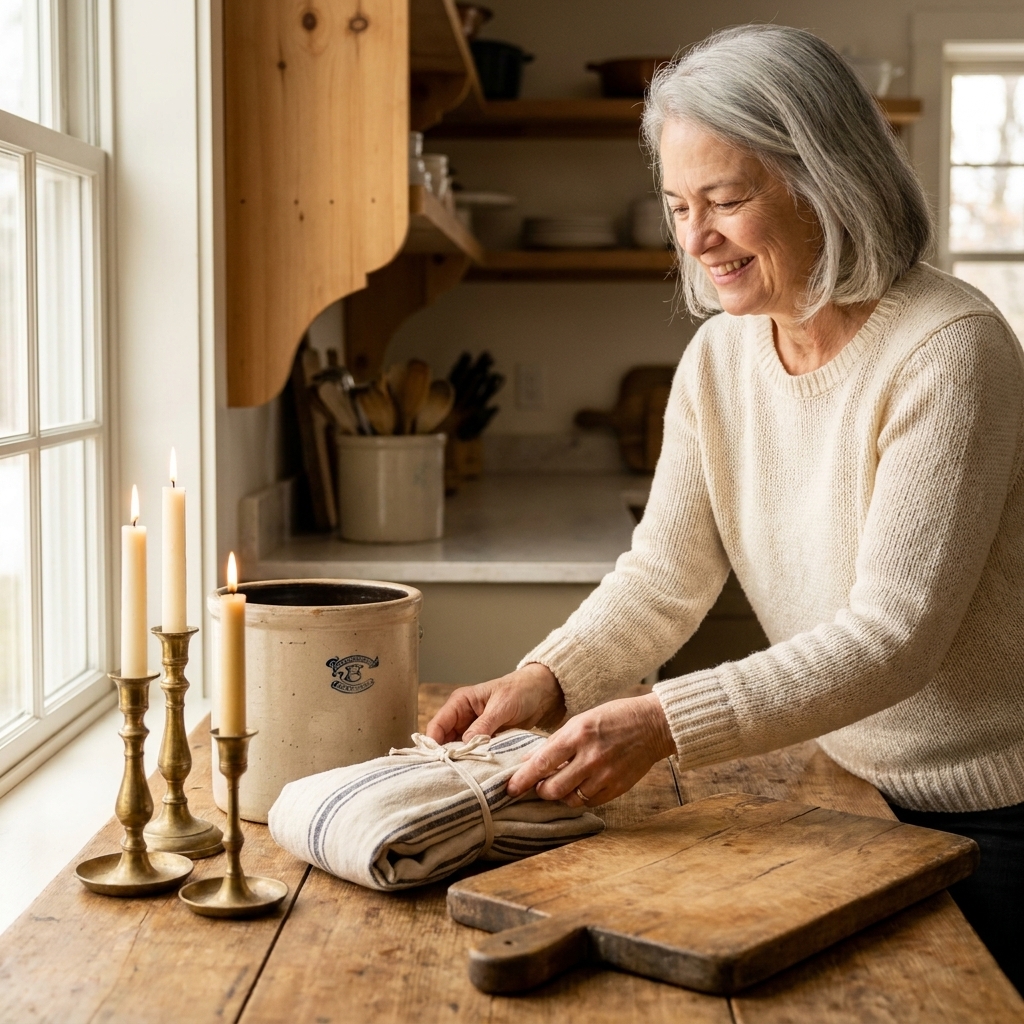
If you collect linens like I do, store them clean, completely dry, and folded loosely in a breathable bin or cotton bag. Avoid sealing vintage textiles in plastic long-term, especially in humid climates.
Mildew and safety
If a textile has active mildew (visible spotting plus a strong mildew odor), handle it outdoors if you can and consider wearing gloves and a mask while you assess it. Some pieces clean up beautifully with patience, but if the fibers are breaking down or the smell will not lift, it may be better to let that one go than bring a health headache into your home.
FAQ
Do grainsacks shrink when washed?
They can, especially if they have not been washed since their working days. Cold water and air drying minimize shrinkage. If you need to machine dry, use low heat and remove slightly damp.
Can I use grainsack linen for a dining chair seat?
Yes, if the fabric is in strong condition, but abrasion resistance varies. Backing it with a supportive fabric helps, and it is smart to reserve the most worn, thin areas for low-stress placement or pillow projects.
What if my grainsack has a musty smell?
Start with fresh air and a cold soak. Musty odor often improves dramatically after a gentle wash and thorough drying in moving air. If you see active mildew spotting, proceed cautiously and avoid spreading spores indoors.
Are hemp sacks the same as linen grainsacks?
They are cousins. Hemp often feels a touch coarser and can be incredibly durable. Both can be beautiful for farmhouse decor, just note that texture and drape may differ.
A note from my worktable
If you are new to vintage textiles, start with one piece you truly love, maybe a single grainsack panel you can turn into two pillow covers. Wash it gently, sew it simply, and let it be a little imperfect. That is where the charm lives.
And if you ever find yourself hesitating at a flea market stall, wondering if that heavy striped linen is worth carrying home, I will say what my grandmother used to tell me: if it is well-made and it makes your heart do that little happy flip, you will find a place for it.