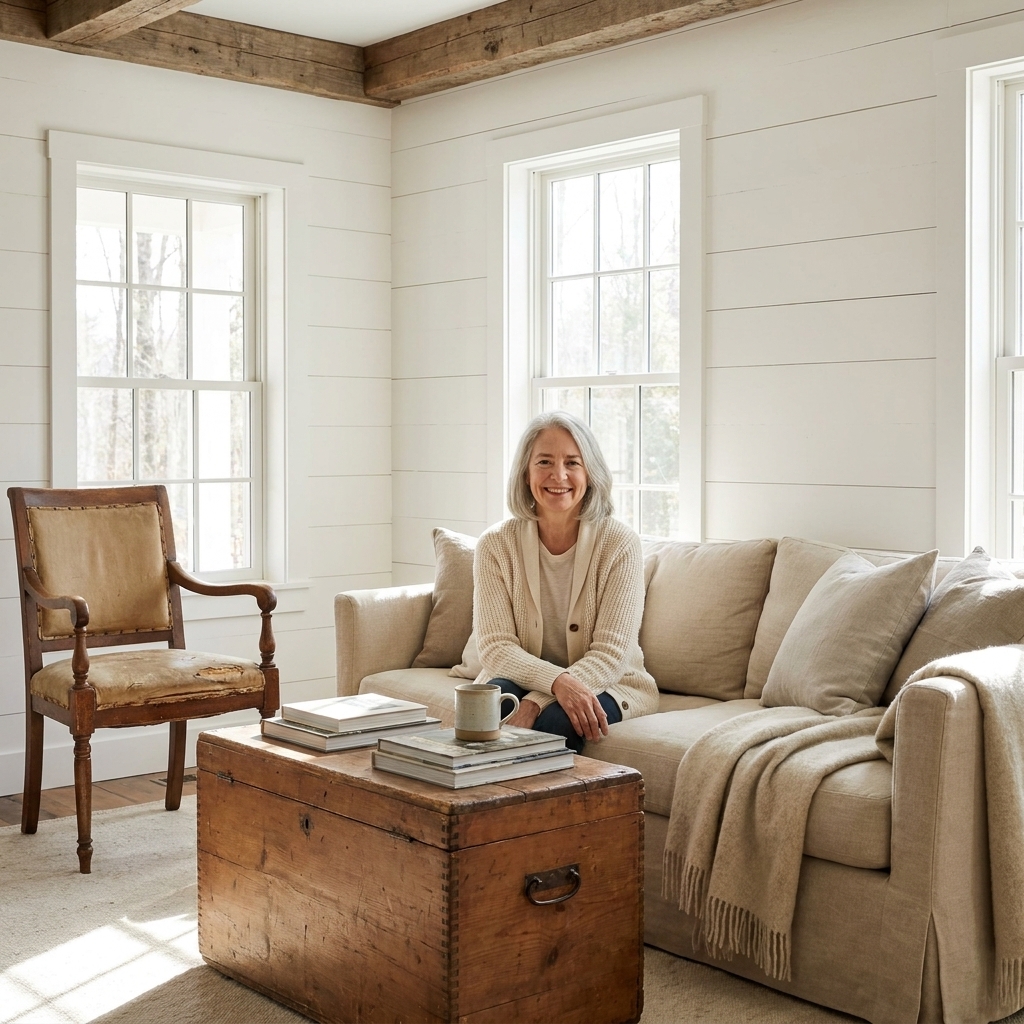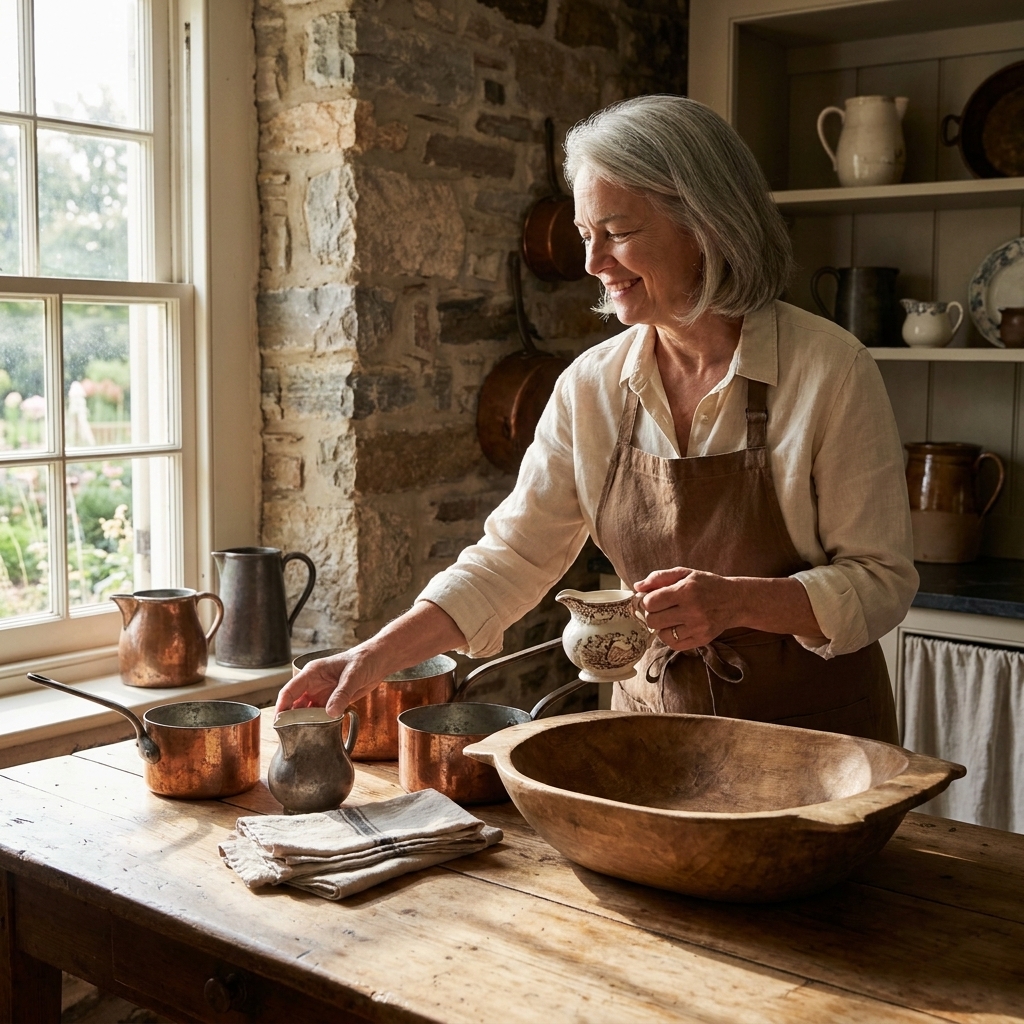
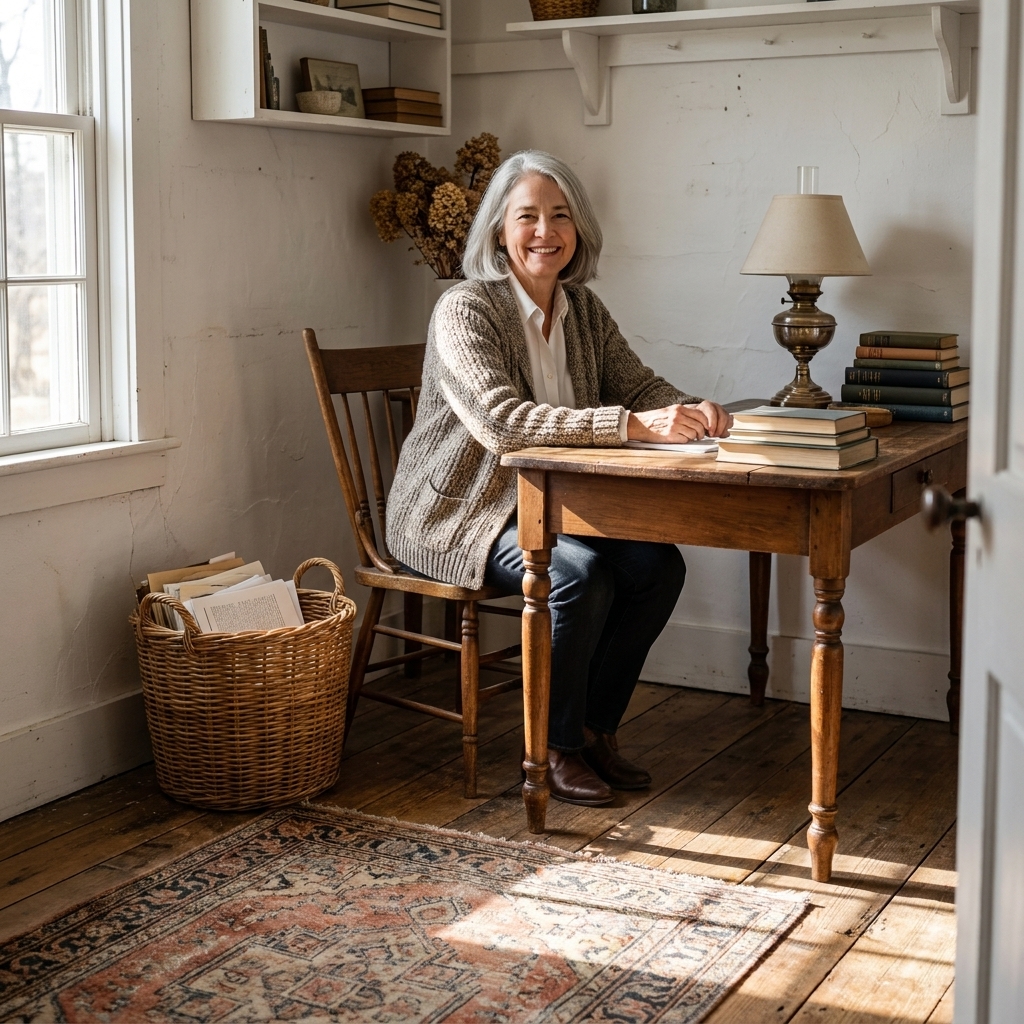
There is something about working at a desk that has a little history to it. The worn edge where someone rested their wrists, the soft sheen of old wood, the drawer that still slides with that satisfying wooden whisper. A rustic farmhouse home office can absolutely be functional, but the spaces that truly make you want to sit down and create are the ones that feel collected, layered, and personal.
If you are craving a cottage workspace that feels warm and grounded, vintage finds are your best friend. They bring instant character, and they can actually be a budget win when you know what to look for. Let me walk you through sourcing the right pieces and styling them so your office feels inspiring, not cluttered.
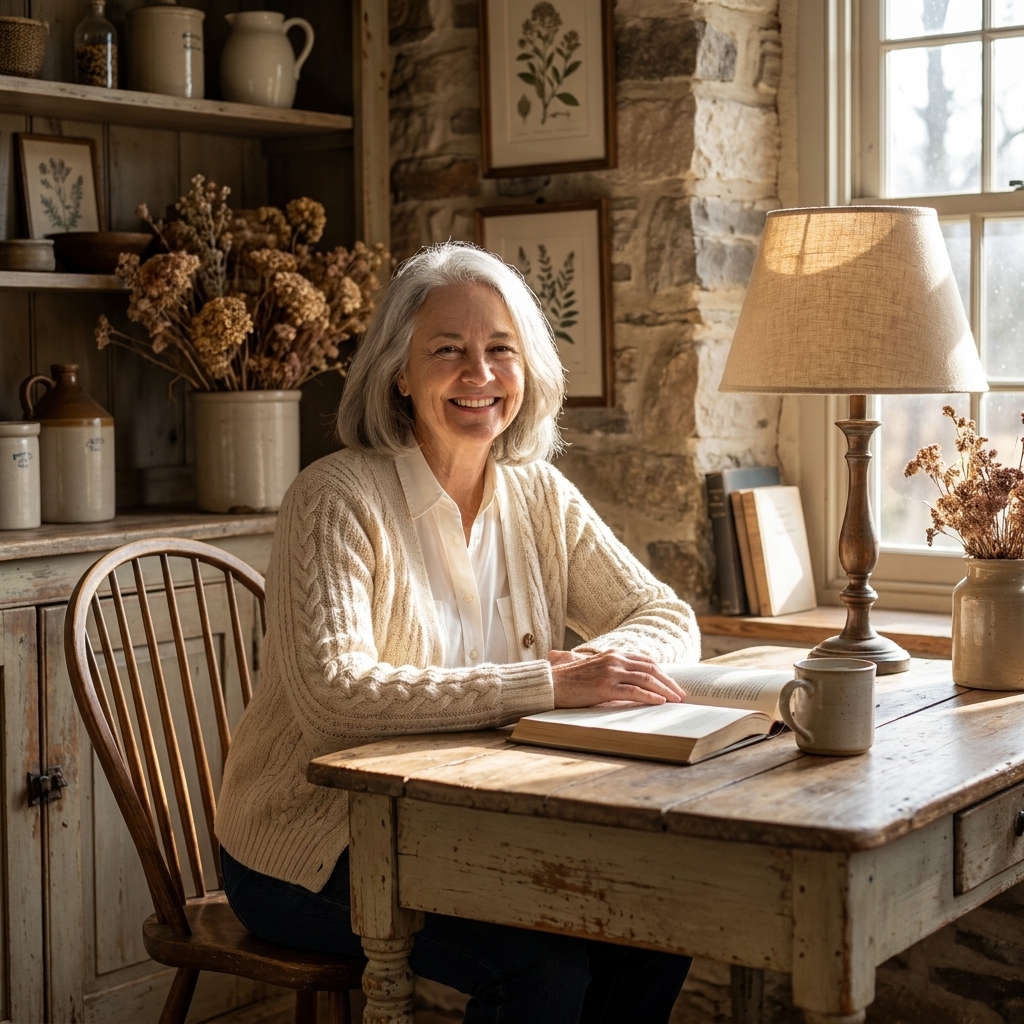
Start with one anchor piece
The easiest way to keep older pieces from feeling like a rummage sale is to choose one anchor and build out from there. In a home office, that anchor is usually the desk or the storage wall behind it.
My favorite anchor options
- An antique desk: The classic choice. Look for solid wood and good bones.
- A farmhouse table used as a desk: Perfect for spreading out paperwork or a laptop plus craft supplies.
- A vintage library table: Often long and narrow, and they play beautifully with cottage styling.
- An old dressing table: Wonderful in a smaller office, especially if you want drawers and a softer silhouette.
Once you have that one “this is the room” piece, every other find has a job to do. Either it supports function, supports style, or ideally both.
Sourcing pieces without overwhelm
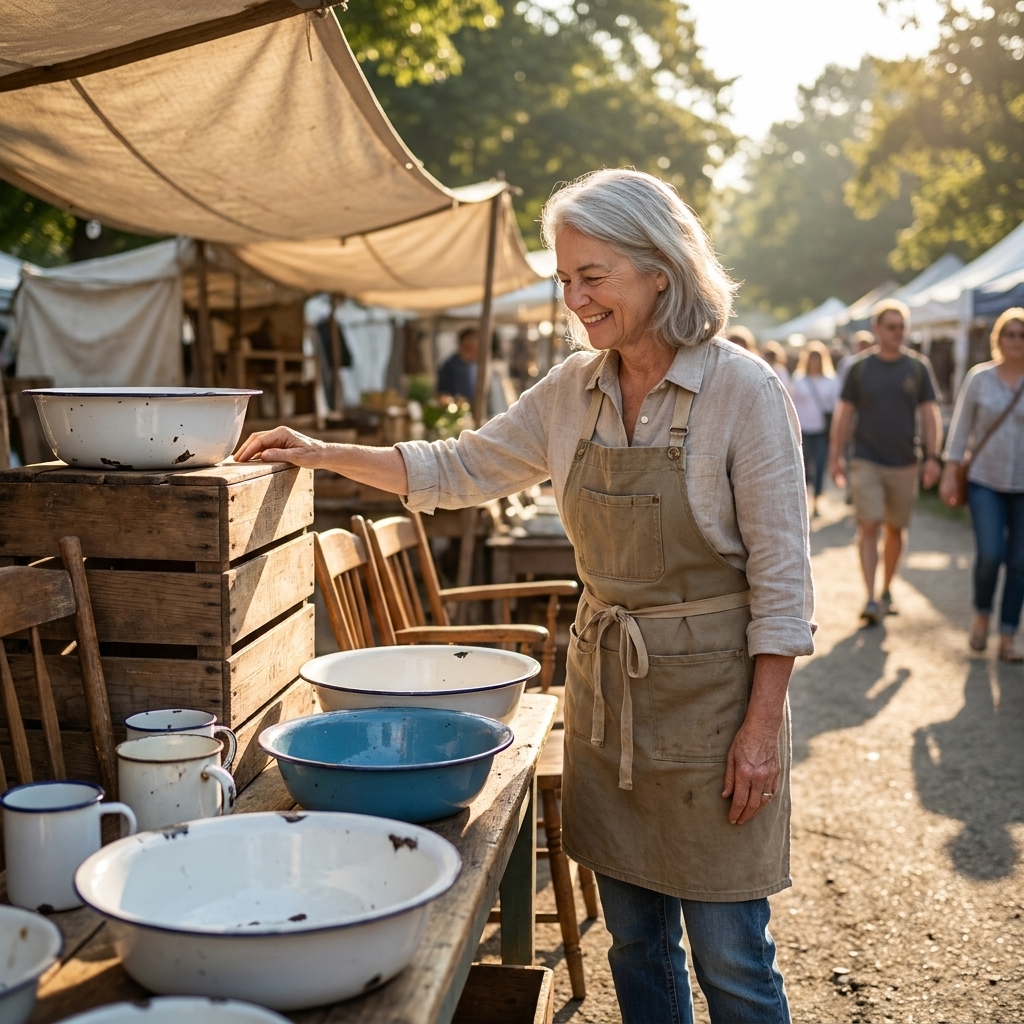
I grew up trailing behind my grandmother at estate sales, and I still use the same rule she taught me: walk the whole place once before you buy anything. It is so easy to get starry-eyed over a stack of old ledgers and forget you came for a desk.
Where to look (and what tends to be a good deal)
- Estate sales: Great for desks, lamps, frames, and paper goods like old maps or sheet music.
- Habitat ReStore: Surprisingly good for sturdy shelving, file cabinets, and lighting you can update.
- Antique malls: Best for smaller accessories when you want to browse in one spot.
- Facebook Marketplace: Ideal for bigger furniture like hutches and desks if you can pick up locally.
- Thrift stores: My go-to for baskets, crocks, brass, and the occasional solid wood chair.
Quick checklist for buying an antique desk
Before you hand over your cash, do a two-minute inspection. You do not need to be an expert. You just need to avoid heartbreak once it is in your car.
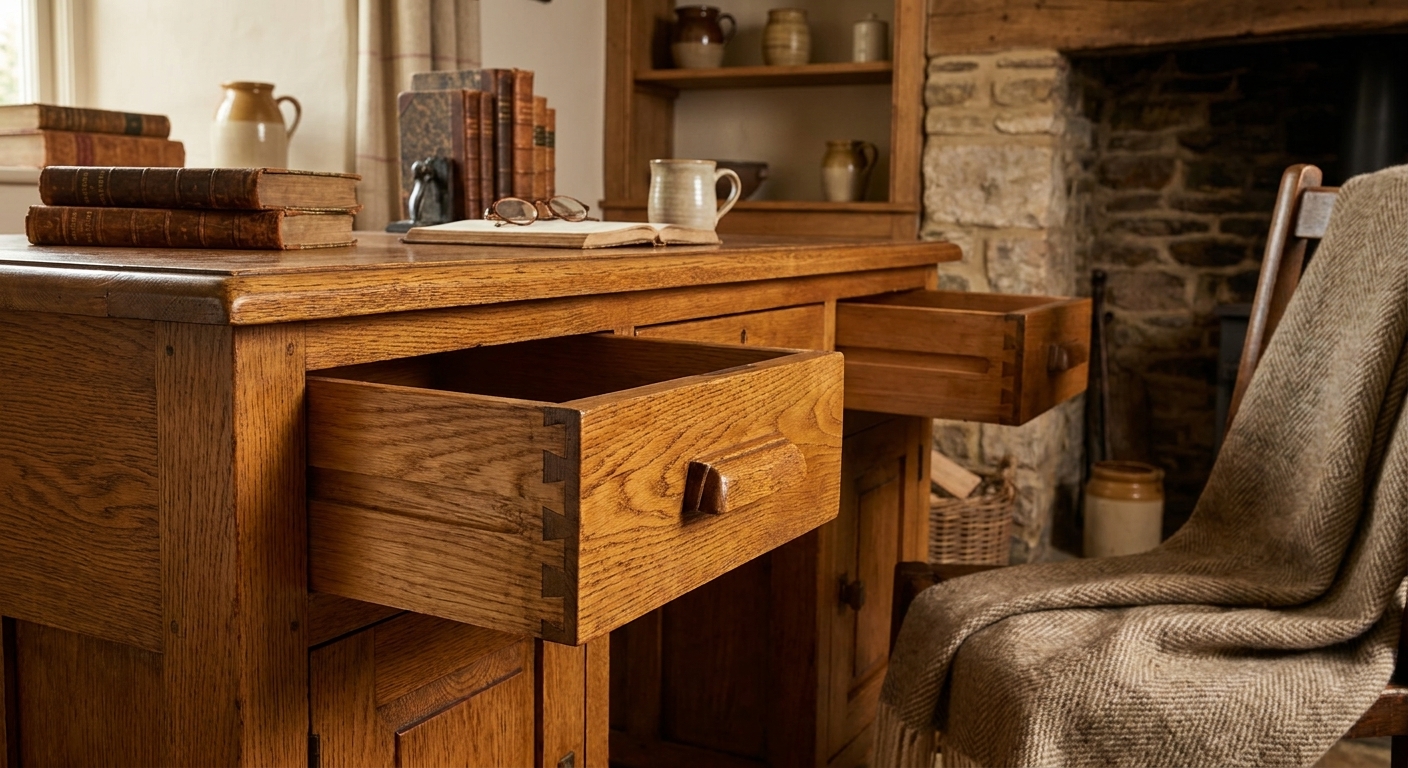
- Check wobble: A little looseness can be tightened, but major racking can be a bigger repair.
- Open every drawer: Sticky is normal. Completely jammed can mean warped wood.
- Look underneath: Fresh tiny holes or fine powder (frass) can point to active wood-boring insects. For a valuable piece, it is worth getting a pro opinion.
- Smell test: Musty smoke odors can linger, especially in drawers.
- Mind the height: Some older desks run higher or lower than what your body likes. Measure desk height and knee clearance, and think about chair height before you commit.
Comfort comes first
We can love old things and still need them to handle real life. If you are using a laptop, printer, or a second monitor, plan for modern realities so your pretty desk does not become frustrating.
Simple ways to add modern function quietly
- Hide a power strip: Screw or zip-tie a power strip under the back edge of the desk so cords drop straight down.
- Use a cord sleeve: A neutral fabric sleeve or cable box keeps the area visually calm.
- Raise your monitor: Stack two old hardcovers or use a small wood riser so your screen is at eye level.
- Add task lighting: A vintage brass lamp is beautiful, but make sure it actually lights your work area.
Then do the small ergonomics tweaks that make a big difference: aim for feet flat on the floor (or a footrest), support your lower back with a small lumbar pillow, and keep your keyboard and mouse at a height that lets your shoulders relax.
If your desk has no drawers, do not force it. Pair it with a small file cabinet or a wooden crate tucked underneath. Farmhouse style is practical at heart, like a lidded box that hides the paper clutter but still looks like it belongs.
Shelving that feels calm
Open shelving can be charming in a farmhouse office, but it can also turn into visual noise if every surface is filled. The secret is to mix storage with breathing room, and to repeat materials so it feels intentional.
Vintage-friendly shelving options
- Old pine shelves on iron brackets: The simplest, most classic rustic look.
- A salvaged cabinet top or hutch: Gives you a shelf wall plus a little architectural detail.
- Wooden apple crates: Stack them for modular storage, especially for craft supplies.
- A ladder shelf: Great in a corner and lighter visually than a bookcase.
How I style office shelving (my 60-30-10 rule)
This is just my personal guardrail, not a strict design law. Adjust it to your work style and the amount of stuff you truly need within reach.
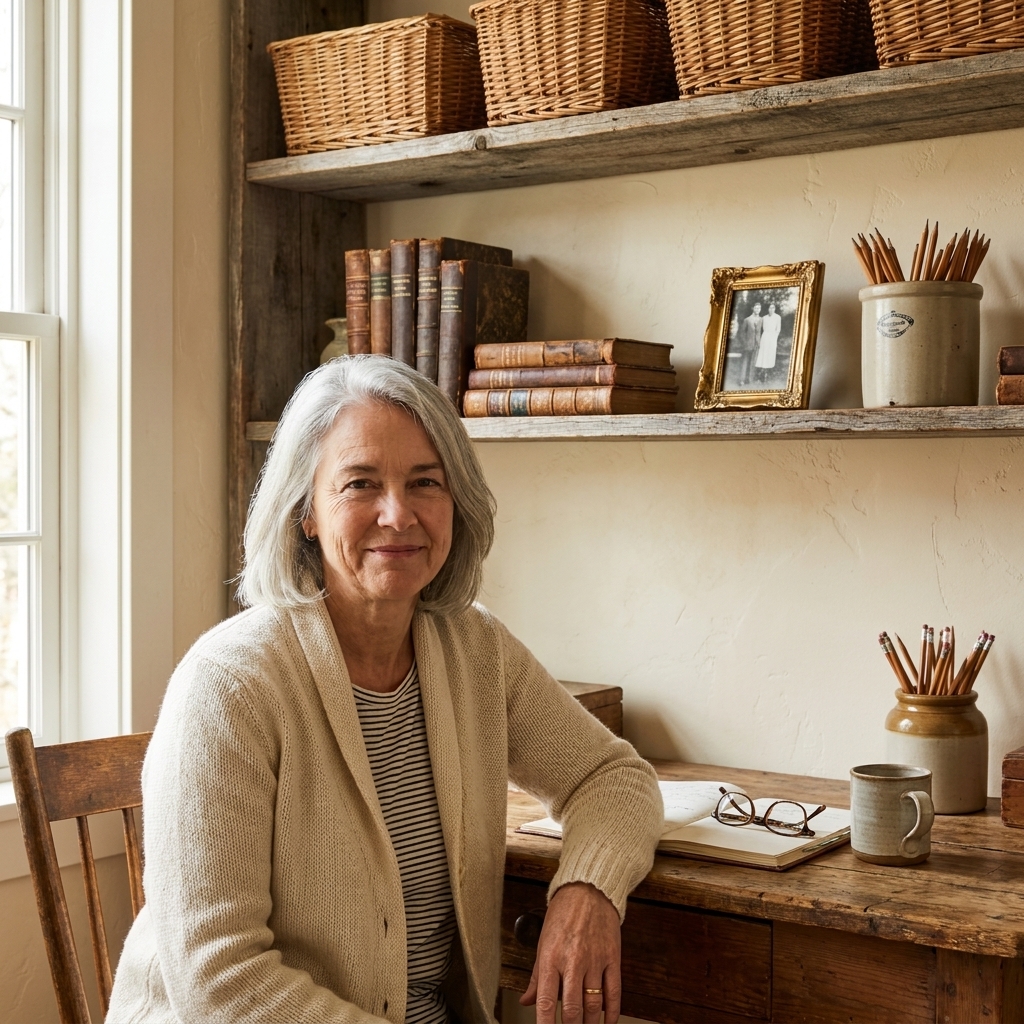
- 60% practical: Baskets, magazine files, covered boxes, binders in a calm color.
- 30% books and paper texture: Old books, notebooks, recipe cards, ledgers.
- 10% charm: One framed photo, a small crock with pens, a tiny plant, or a brass bell.
Accessories that add life
This is the fun part, and also where it is easy to overdo it. A few well-chosen accessories bring that “lived-in cottage” feeling without stealing your work surface.
My tried-and-true office finds
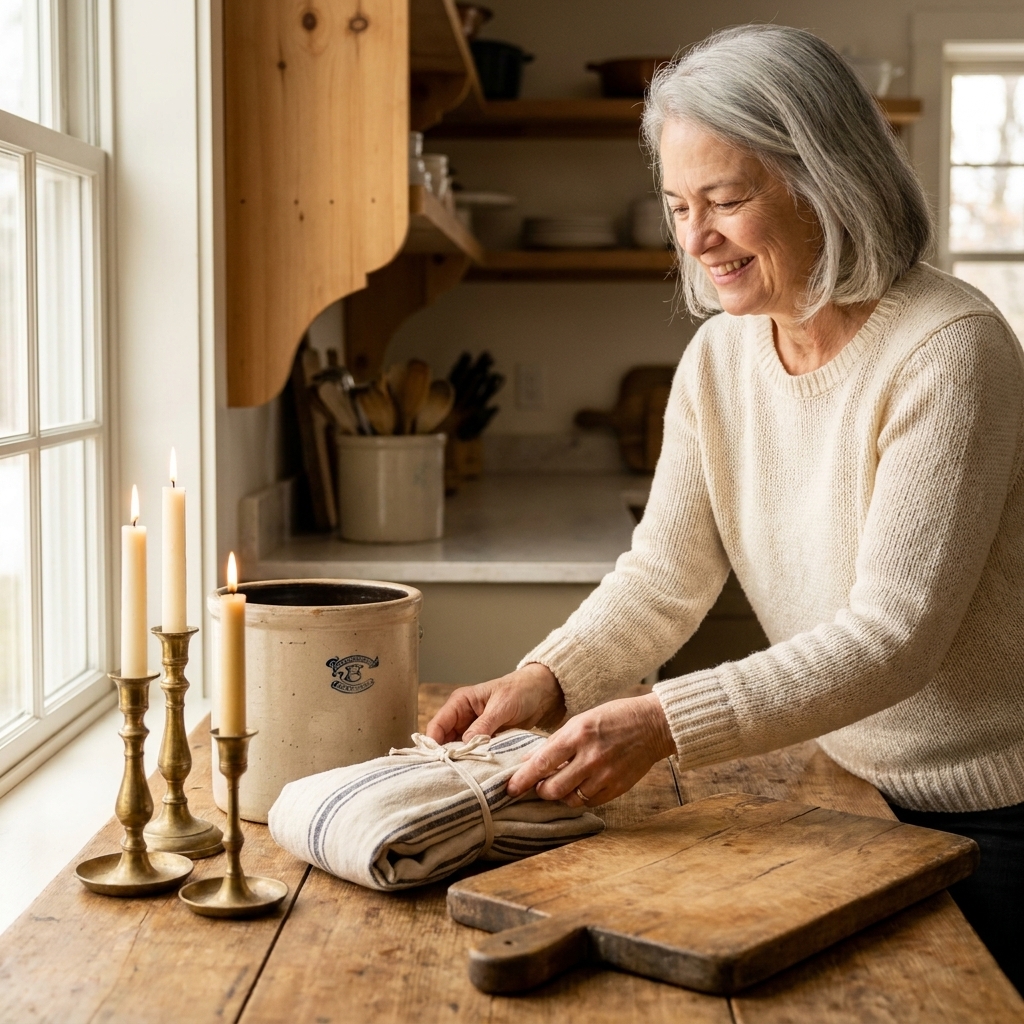
- Stoneware crocks: For pens, rulers, paintbrushes, and scissors.
- Brass pieces: A letter holder, small tray, or candlestick adds warmth against wood.
- Old baskets: They hide clutter, and they soften a room full of hard surfaces.
- Vintage books: Stack them under a lamp or use them as a monitor lift.
- Frames with patina: Perfect for family photos, pressed botanicals, or a favorite quote printed at home.
- Enamelware: A small bowl for paper clips is both useful and charming.
If you are trying to keep a calm, productive mood, limit yourself to one “tiny collection.” Maybe it is brass, or ironstone, or old botanical prints. Repetition makes the room feel settled.
Style the desktop
The desk top is where cottage charm and productivity have to get along. I like to keep the center of the desk open, then create two little zones, one for work and one for warmth.
A simple desk styling recipe
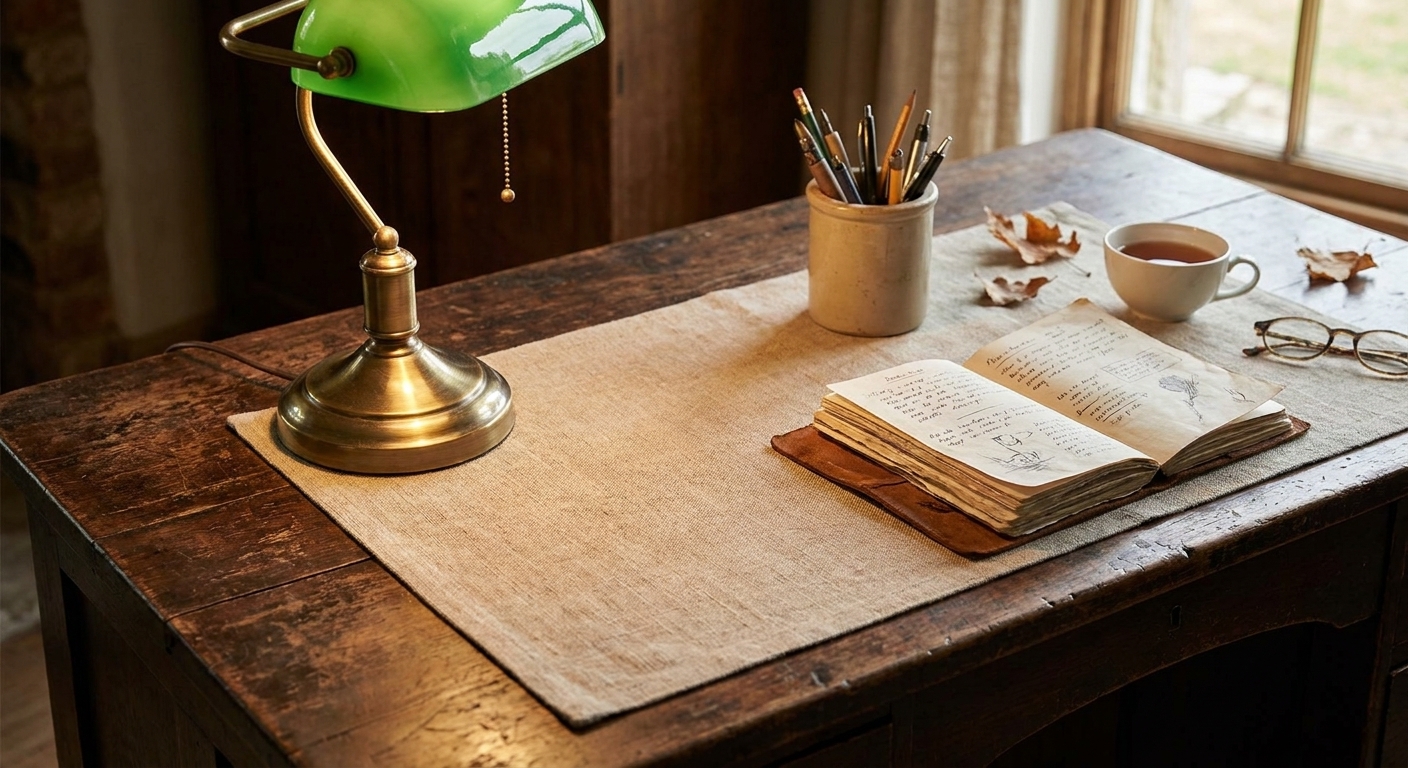
- Left zone: Lamp, plus a small tray for daily essentials (lip balm, sticky notes, paper clips).
- Center: Clear space for your laptop and notebook.
- Right zone: Crock for pens, and one living thing like a tiny pothos or a jar of dried stems.
For texture, add a soft layer under your hands. A linen desk mat, a folded grain sack towel, or even a piece of worn leather makes typing feel a little more special. If you want to protect an original finish, felt pads under accessories and a blotter-style mat are gentle and practical.
Mix old and new
Rustic farmhouse style is not about living in a time capsule. It is about comfort, honest materials, and pieces that feel like they belong together. Modern tools can live in an older office, you just want them to fade into the background.
Easy ways to integrate modern office items
- Camouflage with baskets: A basket can hide a router, cords, or printer paper.
- Choose calm colors: White, cream, black, and soft charcoal look better with warm wood than bright plastic colors.
- Swap harsh lighting: Warm bulbs can feel calmer and cozier, especially in the evenings.
- Keep tech minimal on display: Store extra chargers and gadgets in a drawer or lidded box.
One of my favorite tricks is to set your printer on a lower shelf and hang a simple curtain panel in front of it. Cottage style is gentle like that, practical but never too fussy.
If you bring home an older lamp, give it a quick safety check. If the cord feels brittle, the plug is loose, or it is not clearly rated for modern bulbs, get it rewired or replaced. It is usually inexpensive, and it buys you peace of mind.
Paint or leave it?
This is the question I get most when someone drags home an older desk. My honest answer is: let the piece tell you what it needs.
When I leave wood as-is
- The finish is worn but handsome, with character that looks earned.
- The wood grain is beautiful and still has life.
- The piece is sturdy and does not have major veneer damage.
When I paint (and feel good about it)
- The finish is heavily damaged, sticky, or uneven in a way that looks messy, not charming.
- There are multiple mismatched repairs that need unifying.
- The room needs lightening up and the desk feels too heavy.
If you do paint, farmhouse colors that play well with collected accessories include creamy white, soft black, muted sage, and warm greige. For durability, finish with a tough topcoat and follow the manufacturer’s cure time before heavy daily use since it can take days, and sometimes longer, depending on the product and humidity. If you are dealing with very old painted furniture and you are sanding, take basic precautions, especially in older homes where lead paint is a possibility.
Layout tips
Even the prettiest desk will not help if the room feels cramped or distracting. A few small layout tweaks can make an office feel peaceful and functional.
- Face a window if you can: Natural light makes wood tones glow and helps the whole room feel awake.
- Float the desk: If the room allows, pulling the desk a few inches off the wall can make it feel more intentional and can help with cord routing.
- Use a rug to anchor: A vintage-style rug or braided rug defines the office zone, especially in a multipurpose room.
- Add one soft chair: A small slipcovered chair or a vintage rocker creates a “pause spot” for reading or phone calls.
Common styling mistakes
Too many small knickknacks
Fix: Group small items on a tray, and keep the rest tucked away. Trays create instant order.
Everything is brown
Fix: Add contrast with creamy linens, a black metal lamp, or white pottery. Farmhouse style loves a little light.
Open shelves look messy
Fix: Use matching baskets or boxes for the not-pretty stuff. Leave a few shelves partially empty so your eye can rest.
The desk is charming but uncomfortable
Fix: Choose a supportive chair and add a small lumbar pillow in a grain sack stripe or neutral ticking. If the desk height is not ideal, a footrest and a thinner seat cushion can help you dial in the fit.
Quick FAQ
How do I keep an antique desk from feeling too formal?
Soften it. Add a woven basket under the desk, a linen shade on your lamp, and a relaxed chair with a simple cushion. A tiny plant or dried stems also helps the whole setup feel more casual and cottage-like.
What if my desk has no room for files?
Pair it with one hardworking storage piece. A small file cabinet, a card catalog, or even a lidded trunk can hold paperwork without ruining the look. If you want it to blend in, use a matching wood tone or paint it the same color as the desk.
Is it okay to mix wood tones?
Yes, and it often looks more authentic. Keep them in the same “temperature” family when possible, either mostly warm woods or mostly cooler, weathered tones. Then repeat one metal finish, like black iron or aged brass, to tie it together.
A quick start checklist
- Choose one anchor (desk or hutch) and commit to it.
- Measure for comfort: desk height, knee clearance, chair height.
- Plan cord control before you style the pretty things.
- Use baskets and boxes to hide the unglamorous supplies.
- Add charm last, and keep your desktop mostly open.
The finished feeling
A rustic farmhouse home office does not need to be perfect, and it certainly does not need to be expensive. When you build around one good vintage anchor and add a handful of weathered, useful pieces, the room starts to feel like it has always been yours. The goal is a workspace that welcomes you in, supports your work, and still makes you smile when you walk by with a cup of coffee in hand.
If you are starting from scratch, begin with the desk. Everything else can be gathered slowly, one story-filled find at a time.