
There is nothing quite like pulling out your fall bins and finding your cozy plaid throws still crisp and clean, your faux stems still fluffy, and your favorite hand-painted “Pumpkin Patch” sign not a bit warped. That is the dream, right?
I learned the hard way in my little 1920s cottage that seasonal decor needs a plan, especially farmhouse pieces that are often bulky, textured, and a little delicate in their own way. Think dried-looking faux florals, chippy frames, galvanized pieces, and oversized textiles that love to trap dust.
This guide will walk you through a storage system that is simple, space-smart, and kind to your decor so next year feels like shopping your own home, not doing damage control.
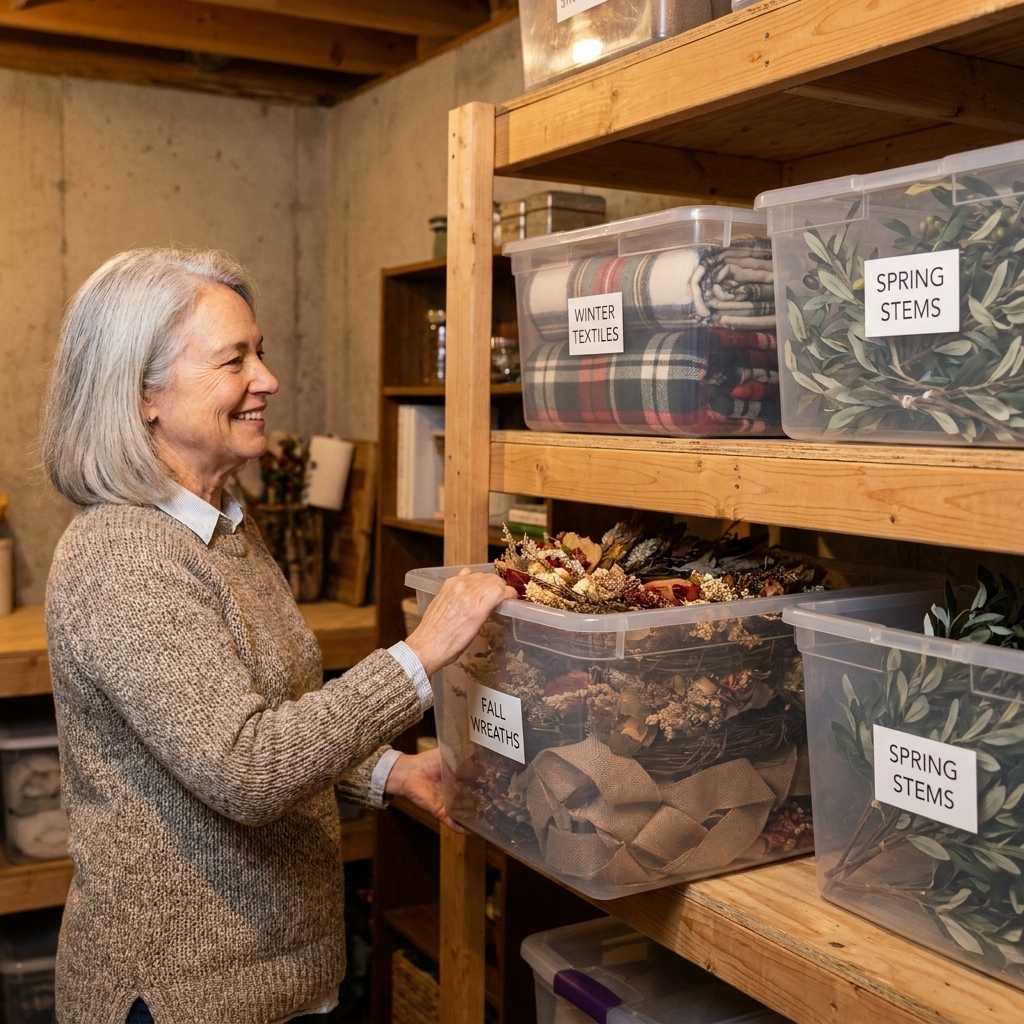
Start with a simple seasonal system
Before you buy another tote, take ten minutes to decide how you want your seasons divided. Most homes do well with four main bins, then a small “holiday add-on” bin if you go big in December. If you are short on space, you can absolutely scale this up or down.
- Spring: florals, lighter pillows, pastel eggs, garden touches
- Summer: Americana, coastal farmhouse accents, outdoor lanterns
- Fall: pumpkins, wheat, plaid, warmer candleholders
- Winter: evergreens, neutrals, knit textures, simple wood and metal pieces
- Holiday (optional): Christmas specific items like stockings, tree decor, Santas
My best tip is to store by vignette when possible, not just by item type. If your entryway always gets a small crate with stems and a sign, store those pieces together. When it is time to decorate, you can pull one bundle and be done.
Decor danger zones
Most seasonal decor damage comes from a handful of repeat offenders. If you store with these in mind, you will avoid the majority of the heartbreak.
- Moisture (basements, garages): warps wood, rusts metal, invites mildew into textiles
- Heat (attics): can soften glue, warp thin wood signs, and crush faux greenery
- Pests: mice love nesting in fabric and paper
- Dust and pressure: faux florals get flattened, wreaths lose their shape
- Friction: chippy paint and distressed finishes rub off when stacked
If you only take one thing from this article, let it be this: keep decor off concrete, allow airflow, and avoid heavy stacking on anything soft or shaped.
Pick the right containers
My go-to container lineup
- Clear latching totes for most decor. Clear wins because you can see what is inside without opening everything.
- Fabric zipper bags for textiles you want to breathe a bit, like quilted runners and pillow covers, as long as the storage space is dry.
- Shallow under-bed bins for garlands, stems, and lightweight signs.
- Plastic file totes (or a file box placed inside a larger tote) for signs and framed prints, stored upright like records.
What to avoid
- Thin, floppy totes that bow out and crush decor when stacked.
- Cardboard in damp areas. It is a moisture magnet and pest-friendly.
- Vacuum bags for anything with texture you care about. They are fine for a spare comforter, but they can leave deep creases that are hard to remove from chunky knits, faux fur, and some decorative pillows.
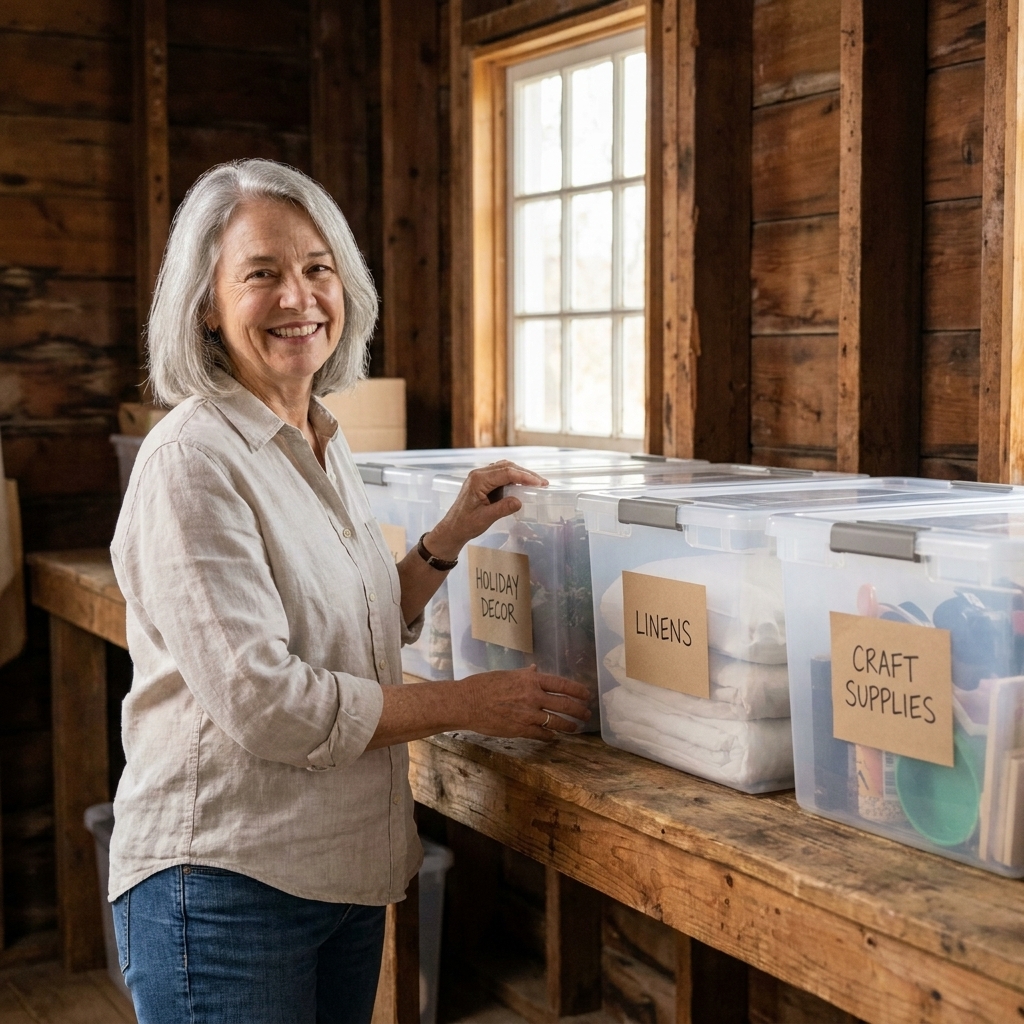
Pack signs and framed art
Farmhouse signs are usually wood, MDF, or a mix with metal hangers. The biggest issues are warping, scratches, and chipped paint rubbing off.
Safest way to store signs
- Dust first. A quick wipe prevents grit from scratching surfaces in storage.
- Wrap the face with a soft layer. A flour sack towel, old pillowcase, or kraft paper works well.
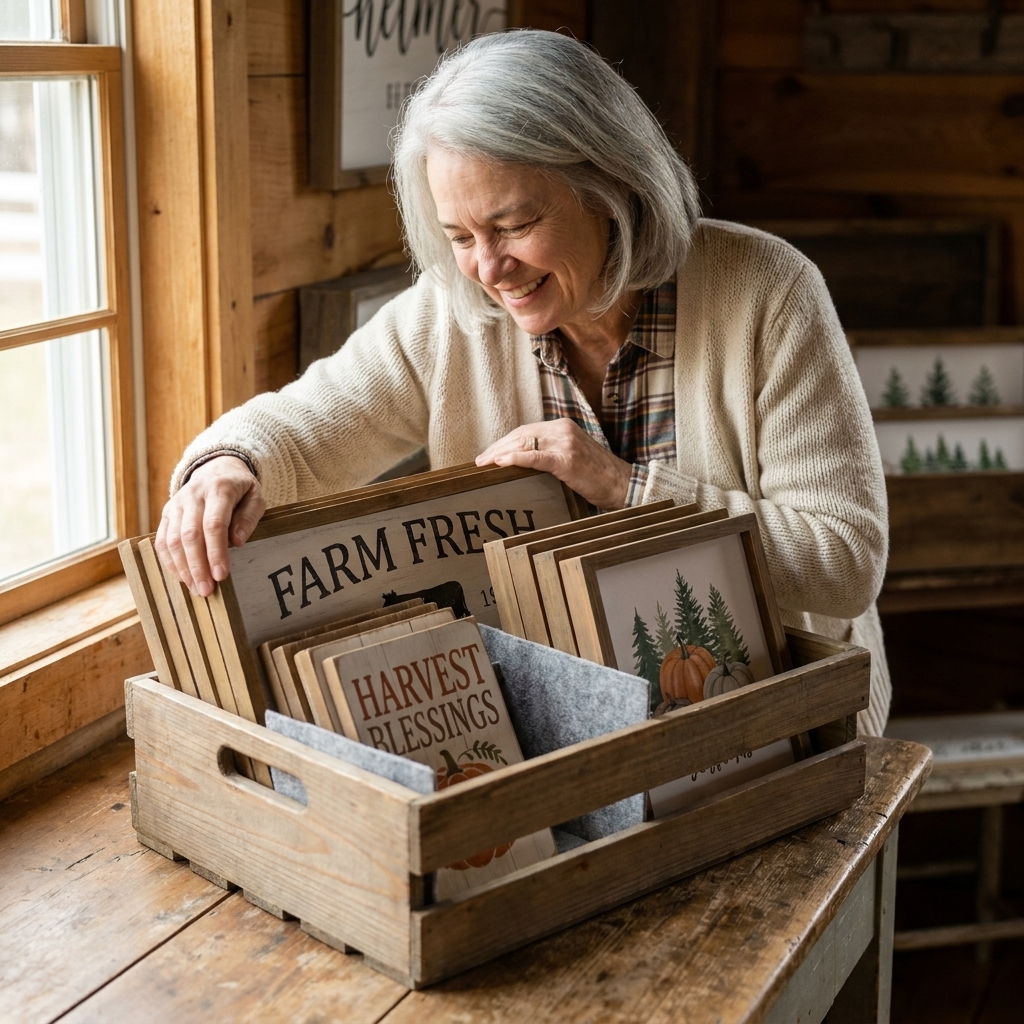
- Store upright like files, not stacked flat. Use a dish drying rack, magazine holders, or sturdy dividers inside a tote.
- Add a buffer between pieces. A towel or a sheet of bubble wrap keeps frames from rubbing.
- Keep heavy items out of the same bin. A cast iron piece or big candleholder can dent wood signs easily.
If your signs have delicate raised lettering or very chippy paint, store them in a bin with a bit more breathing room. Tight packing is where the scuffs happen.
Store faux florals
Faux stems are sneaky. They look tough, but they get flattened, dusty, and tangled faster than almost anything else.
My favorite ways to store stems
- Short stems: stand them upright in a tall bin or a clean wastebasket inside a tote so heads are not bent.
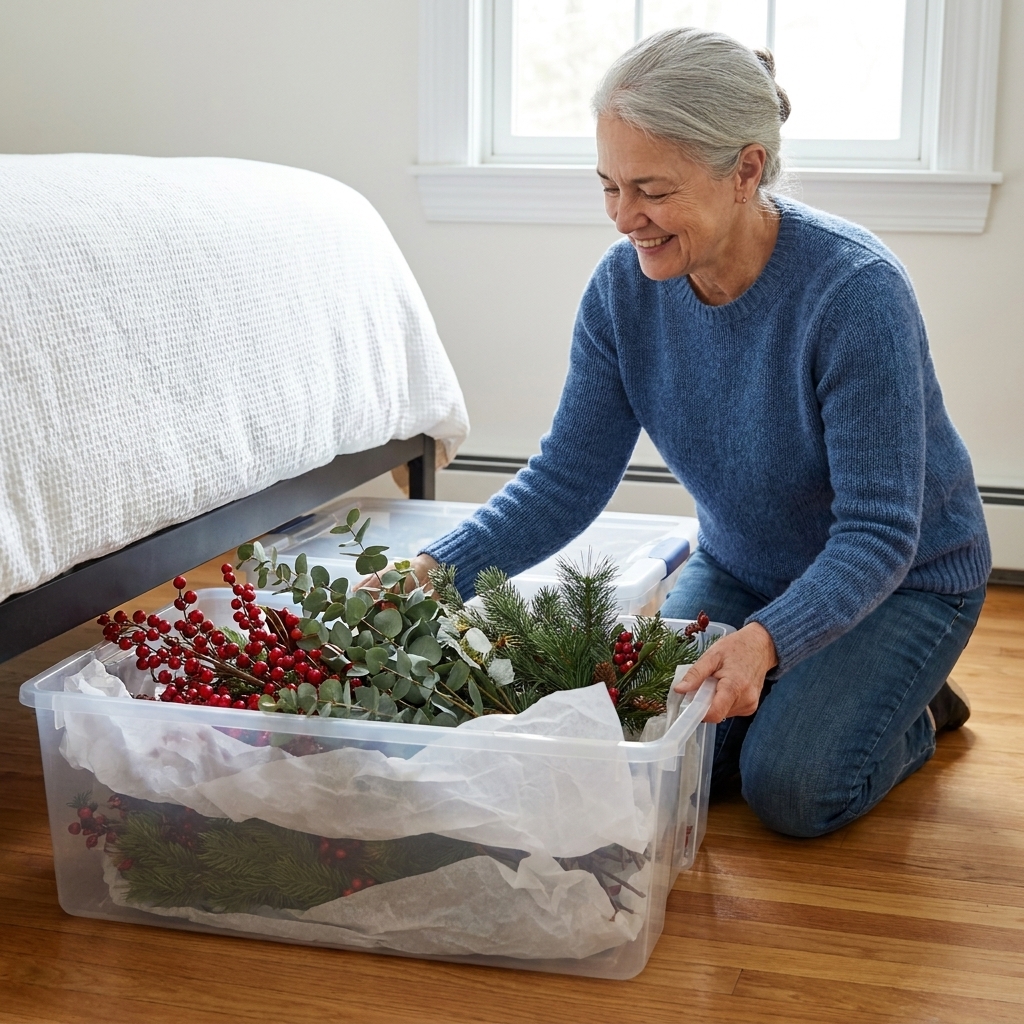
- Long stems: lay them flat in an under-bed bin with a light layer on top, or slide them into a wrapping paper storage container.
- Delicate blooms: wrap the flower heads loosely in tissue paper, especially anything with tiny buds or frosted finishes.
Fluffing trick for next year
When you pull them out, a quick hit of air from a hair dryer on cool or low and a gentle reshaping with your hands brings faux florals back to life. Skip warm and hot settings, keep your distance, and test a small spot first, especially on glittery or glued pieces.
Wreaths and garlands
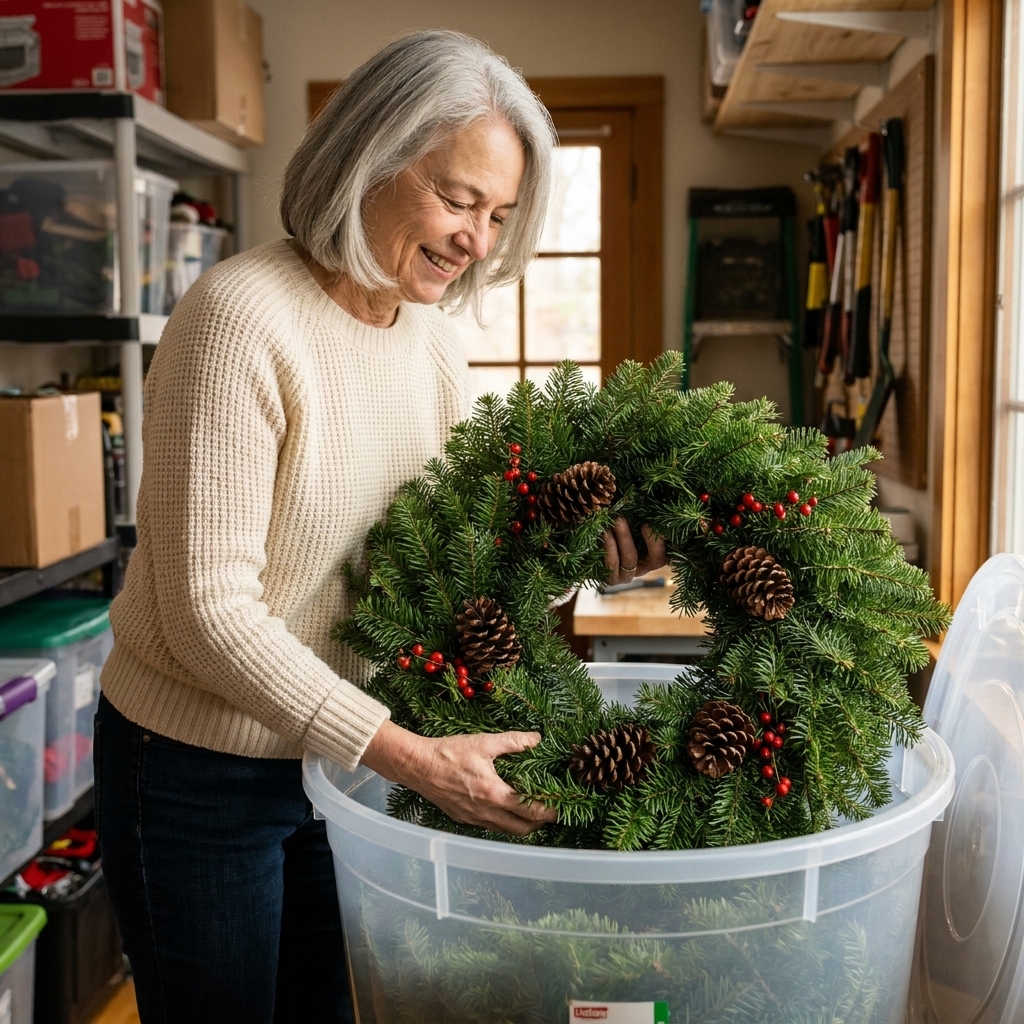
Wreaths are the heartbreakers. One heavy tote on top and suddenly your beautiful full circle is a sad oval.
Best options for wreath storage
- Wreath storage bags: great if you have closet space and can hang them on sturdy hooks.
- Wreath bins: sturdy and stackable, especially for basements.
- DIY hack: place the wreath in a large bag to keep debris contained, then set it in a shallow tote with nothing stacked on top. Only bag it once it is fully dry, and do not store it damp or tightly sealed.
Garland storage that works
- Coil loosely, do not tightly wrap. Tight wraps kink branches.
- Use a shallow tote so you are not piling garland under heavier decor.
- Try a hanger method for thin garlands: drape over a pants hanger and hang in a closet, then cover with a dry cleaning bag to keep dust off.
Bulky seasonal textiles
Textiles are where farmhouse homes really shine. A nubby throw here, a grain sack runner there. They also take up the most space, so smart folding matters.
Clean first
Even if something “looks fine,” body oils, cooking smells, and tiny spills can set over time. Launder what you can, and spot clean what you cannot. Make sure everything is fully dry before it goes away.
Space-saving storage that keeps fabrics fresh
- Fold by category: pillow covers together, runners together, throws together.
- Use breathable cotton bags in a dry closet. In a basement, stick with latching plastic totes to block moisture and pests.
- Add cedar or lavender sachets if you love that fresh linen smell. Avoid anything oily touching fabric directly, and skip strongly fragranced products that can stain or linger.
- Label “clean” on the tote once everything is washed. Next year you will thank yourself.
For big chunky knit throws, I prefer folding loosely and storing where they are not compressed. Compression is what makes those deep creases you can never quite shake out.

Fragile accents
Between hurricane candleholders, thrifted crocks, and little glass pumpkins, the breakables add up quickly.
Pack like you are moving
- Wrap each piece individually with packing paper, towels, or bubble wrap.
- Cushion the bottom of the bin with a towel or crumpled paper.
- Keep heavy items low and lighter pieces on top.
- Fill gaps so nothing shifts when you carry the tote.
Rust prevention for galvanized metal
Make sure the piece is completely dry before storing. If you are putting metal into a damp-prone space, toss a small moisture absorber into the tote and keep it off the concrete floor. A simple shelf or pallet makes a big difference.
If you use moisture absorbers, keep them away from kids and pets, and make sure the product does not touch textiles or paper items directly.
Labels that make sense
I like pretty labels as much as anyone, but storage labels need to be practical first. You want to identify a bin in five seconds while holding a cup of coffee in one hand and a tote lid in the other.
My labeling method
- Season + room: “Fall Entryway” or “Winter Mantel”
- Quick list of hero items: “wreath, lanterns, mini pumpkins”
- Fragile note in bold when needed
If you are using clear totes, put the label on the short end so you can read it like a book spine when stacked.
If you have a lot of decor, tape a simple inventory list to the inside of the lid (or keep a running note on your phone). It is a small thing that saves so much rummaging later.
Best storage spots
Most of us are not working with a dreamy storage room. Here are the spots I use in my own home and for client projects.
Best places
- Interior closets: typically the most stable temperature and humidity
- Under beds: great for shallow decor and textiles in secure bins
- Top shelves of bedroom closets: perfect for lightweight seasonal pieces
Use with caution
- Basements: use sealed bins, keep everything off the floor, add moisture absorbers
- Garages: temperature swings can damage adhesives and warp signs
- Attics: heat can crush faux greenery and distort some plastics
Quick climate check
If you store decor in a basement or garage, a cheap hygrometer is worth it. Aim for cool, dry, steady conditions. If humidity is consistently above about 60 percent, you are more likely to see musty smells, rust, and mildew, and it is time to add a dehumidifier or move anything fabric to a drier spot. Activated charcoal odor absorbers can also help with that stale basement smell, and they are a nice option if you do not want fragrance.
If the basement is your only option, do a once-a-season quick check for dampness. It takes five minutes and can save a whole tote of decor.
Reset day routine
When you are tired and taking down decor, it is tempting to just toss it all in a bin. That is how wreaths get flattened and signs get scratched. Here is the routine I stick to, even when I do not feel like it.
- 1. Take photos of vignettes you loved so you can recreate them next year.
- 2. Sort by season and room as you take things down.
- 3. Clean as you go: quick dusting now saves a bigger job later.
- 4. Pack heavy to light, cushion fragile pieces, store signs upright.
- 5. Label immediately, before the lid goes on.
Put on something cozy in the background, pour a warm drink, and treat it like caring for your home rather than a chore. It really does change the whole mood.
Quick troubleshooting
My faux greenery smells musty. What now?
Let it air out in a dry spot for a day or two. If it is washable plastic, a gentle wipe with a damp cloth and a little mild soap can help. Make sure it dries completely before storing again and consider adding a moisture absorber or charcoal packet to that bin.
My wood sign warped in storage.
Warping usually comes from moisture or uneven pressure. Next time, store signs upright, keep them away from damp walls, and avoid basements unless they are well controlled. For slight warping, you can sometimes improve it by storing it flat under gentle, even weight in a dry room for a couple weeks.
Glitter is everywhere after storage.
Before packing, lightly shake decor outdoors and wrap glittery items in tissue paper so shed glitter stays contained. Storing glitter pieces together in their own small bin also helps keep the sparkle from migrating.
A cozy final word
Seasonal farmhouse decor is supposed to feel comforting, not complicated. Once you have a simple system, storing it becomes part of the rhythm of the home. Clean, wrap, label, stack with care. Next year, when you crack open that first fall tote and everything looks just as lovely as you remembered, you will feel that little spark of joy that makes all the effort worth it.