The first time I limewashed a wall, it was in my little 1920s cottage, on a tired brick chimney that had seen decades of soot, mismatched patching, and who knows what else. I remember standing back, hands chalky, watching the bricks soften from "heavy" to "hush." It did not look painted. It looked aged in the best way, like it had always been there.
Whitewash can give you that same light, lifted cottage feeling, too, but it tells a slightly different story. If you have ever wondered which finish belongs on your wall, your brick, or your wood, let’s walk through it together in plain language.
What they are
Limewash in a nutshell
Limewash is a traditional mineral finish made with lime and water. On a porous surface, pure limewash soaks in and then cures as it reacts with carbon dioxide in the air. That is why it tends to look velvety and varied instead of flat and uniform. It is also breathable, which is a big reason it has been used for centuries on masonry and plaster.
A quick product caveat: some modern, pre-mixed “limewash” paints include binders or modifiers to improve adhesion and durability. They can behave a bit more like a coating that sits on top rather than a purely mineral wash that melts into the surface. You can still get a beautiful result, but the prep and the aging can be different.
Whitewash in a nutshell
This word is where most of the confusion lives, and honestly, it is not your fault.
Historically, “whitewash” was often lime-based. In that traditional sense, whitewash and limewash can be part of the same family. In everyday DIY talk today, “whitewash” usually means a very diluted paint or stain-like wash that lets a lot of the original surface show through.
The simplest distinction (in modern DIY terms): limewash reads like a soft, mineral veil with natural mottling, while whitewash often reads like a thinner whitening you can push more transparent and streaky, especially when it is a paint-wash.
Brick: look and aging
Limewash on brick
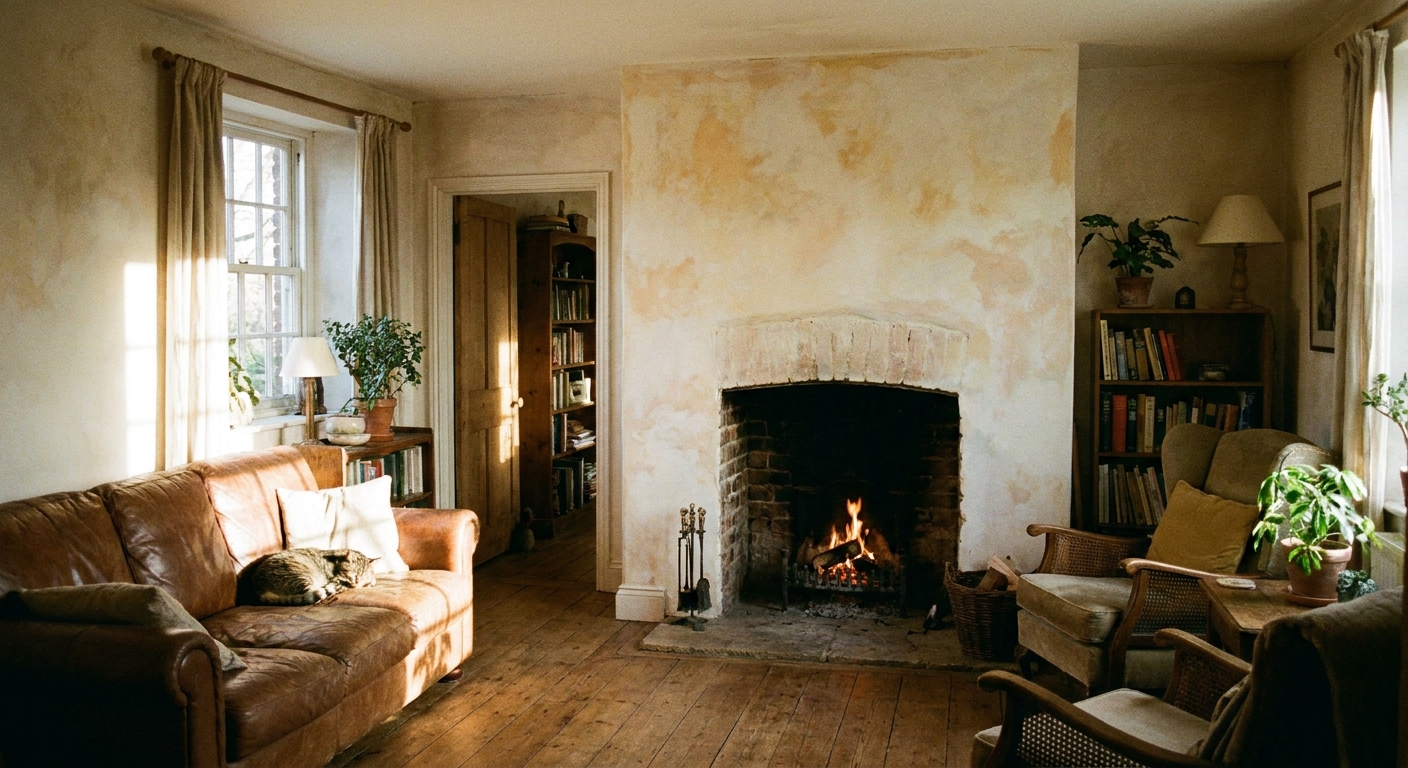
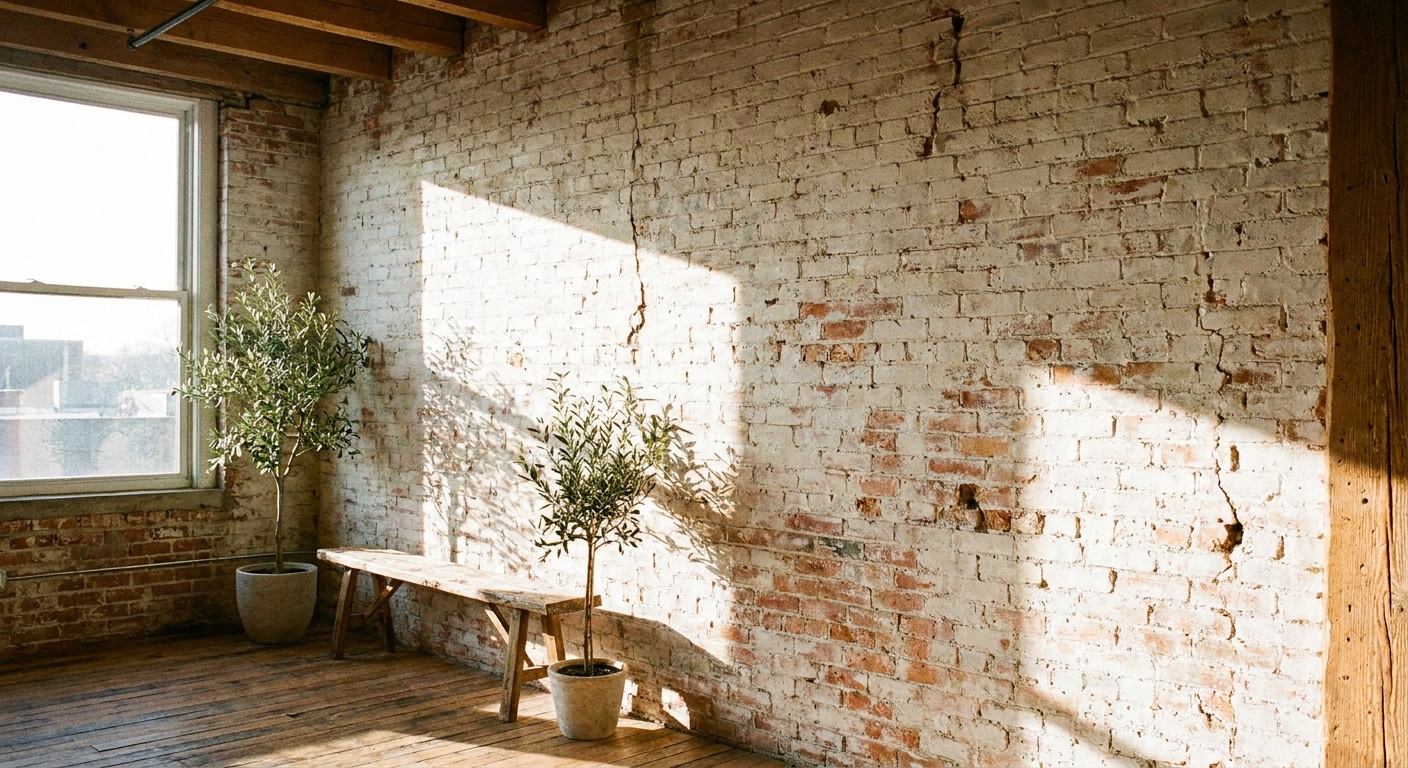
On brick, limewash tends to settle into the texture and pores, leaving highs and lows that look naturally weathered. You often get that classic “cloud” effect where some bricks look more muted and others peek through warmly.
- Look: matte, chalky, softly variegated, Old World.
- Aging: tends to wear in a gentle, believable way over time, especially in high-touch spots or areas that get mild abrasion. It often looks better as it lives a little.
- Best vibe: relaxed, historic, heritage cottage, cozy and imperfect.
Whitewash on brick
Whitewash on brick can be anything from a whisper of white that brightens mortar lines to a more noticeable whitening that still lets brick color show through. If you are doing a diluted paint wash, you can adjust coverage easily as you work, wiping back while it is still wet if you want more brick showing. If you are using a lime-based whitewash, it will behave more like limewash and wiping-back is less of a main feature.
- Look: brighter and more translucent, sometimes a bit streakier in a charming way.
- Aging: depends on what the wash is made from and how sealed or porous the brick is. It can wear unevenly in busy areas, which some people love and others find messy.
- Best vibe: fresh, sun-bleached farmhouse, casual, a little barn-inspired.
Plaster and drywall
Limewash on plaster
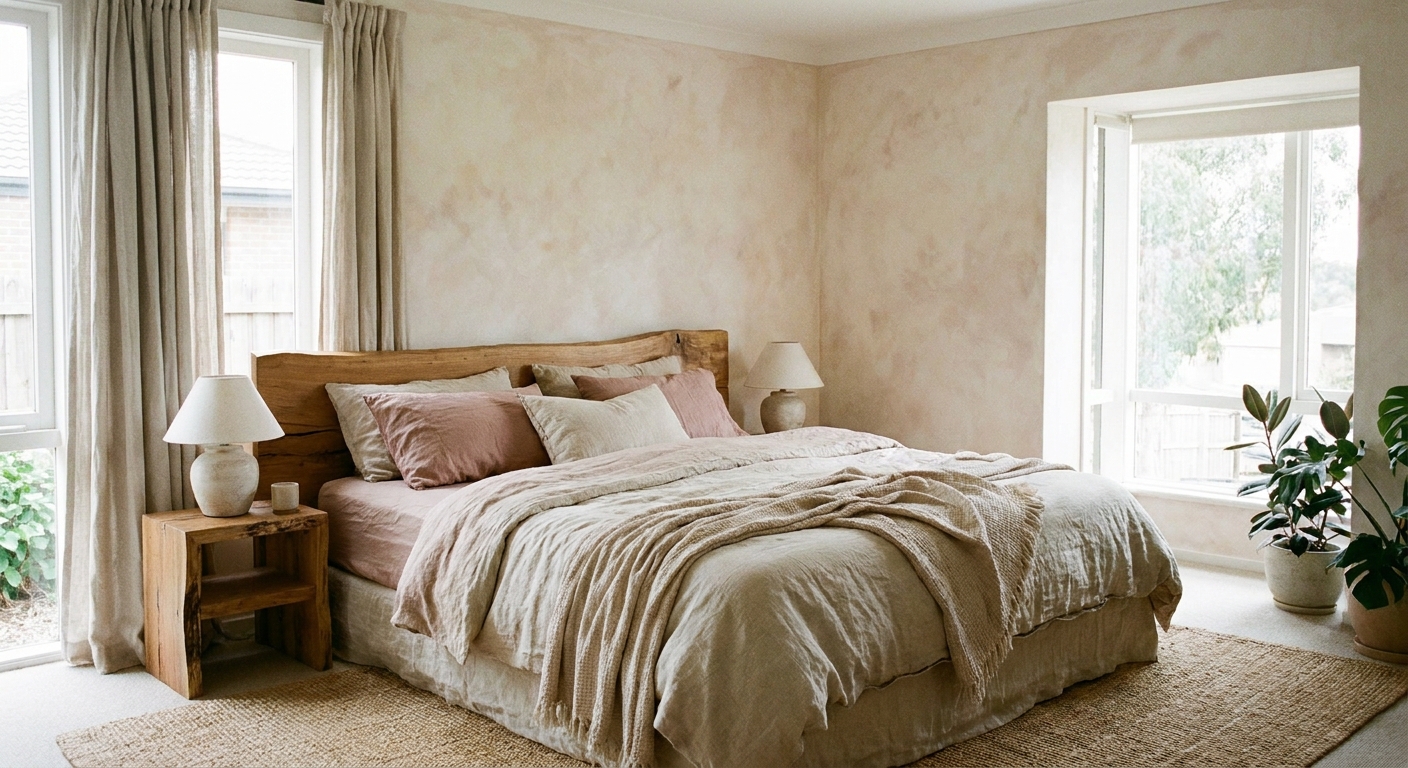
If you have true plaster, limewash can be magic. The porous, mineral nature of plaster plays beautifully with the way limewash cures. The end result is often a depth you cannot quite get from standard wall paint, like light is resting on the wall instead of bouncing off it.
- Look: soft movement, gentle tonal shifts, velvety matte.
- Aging: can patina gracefully, especially in older homes where slight imperfections are part of the charm.
Limewash on painted drywall
This is where I want you to slow down and read the label. Painted drywall is usually not porous enough for a true mineral limewash to grab. Most of the time you will need a compatible mineral or grit primer to avoid adhesion problems. Without that step, you may get patchy absorption at best and peeling at worst.
Whitewash on plaster or drywall
Whitewash can absolutely be used to soften a wall tone and add a washed, chalky feel. On very smooth drywall, it can read more like a decorative paint technique than a naturally aged finish. That is not a bad thing, just a different look.
- Look: more like a translucent paint layer, often with visible brushwork.
- Aging: typically behaves like a paint wash, so scuffs and touch-ups can be a little more noticeable if the wash was applied unevenly on purpose.
Surface note: lime-based finishes perform best on porous, mineral surfaces. Very slick, sealed, or glossy walls almost always need prep so the finish does not just sit on top and flake later.
Wood: beams and paneling
Limewash on wood
Wood is tricky because it varies so much. Raw, textured, porous wood will take limewash more readily than sealed, glossy, or resinous wood. When it works, the look can be beautifully Nordic-cottage: pale, dry, and softly worn.
- Look: pale, chalky, slightly dusty in a pretty way.
- Aging: can rub and burnish in touch zones, which may be exactly the patina you want on beams or rustic paneling.
One practical warning: limewash on wood can chalk or rub off, especially on surfaces you touch a lot. Some products require a specific primer or a sealer for durability. Sealing can deepen color a bit and reduce breathability, so it is always a tradeoff.
Whitewash on wood
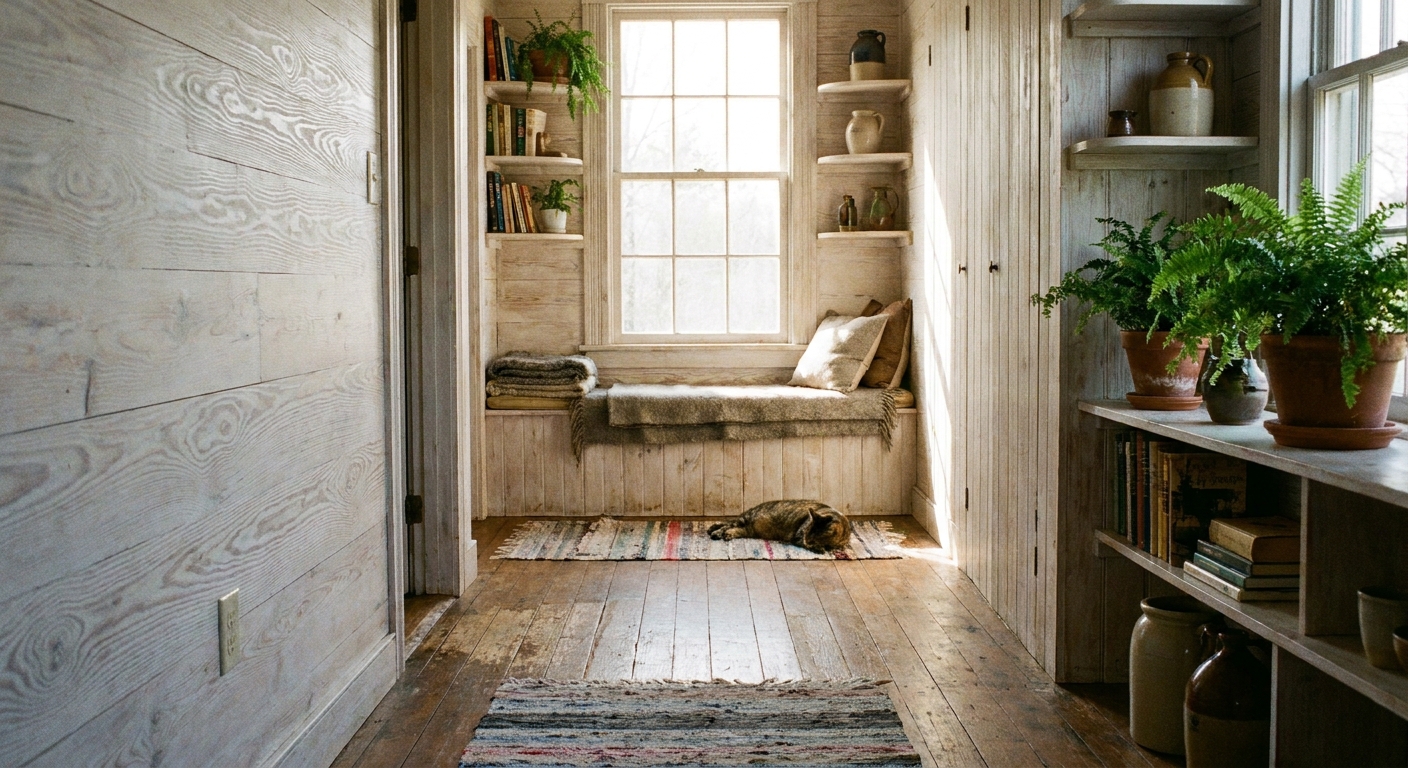
If you are after that “washed” cottage look on shiplap, tongue-and-groove, or ceiling planks, whitewash is often the easier path. It lets the grain show through and can be wiped back for a more natural finish.
- Look: brighter, more transparent, grain-forward.
- Aging: tends to wear like a thin stain or paint wash, often in a relaxed, beachy-cottage way.
Best rooms for each
Rooms that love limewash
Limewash is at its best where you want atmosphere, texture, and a “collected over time” feeling. I reach for it when a room needs softness and depth more than crispness.
- Living rooms: especially on fireplaces, chimneys, and focal walls where you want quiet drama.
- Bedrooms: limewash can make a bedroom feel like an exhale, especially in warm whites and gentle greiges.
- Entryways: it hides little imperfections and adds instant old-home character.
- Dining rooms: gorgeous with candlelight and wood furniture because it has a low-sheen, velvety glow.
Rooms that love whitewash
Whitewash is wonderful when you want the space to feel brighter and lighter, and when you want more control over how much of the original surface shows.
- Kitchens: a whitewashed brick nook wall can feel clean but still rustic. For splash zones, check durability and sealing needs.
- Mudrooms and laundry areas: the casual, forgiving look suits hardworking spaces.
- Sunrooms and porches: a thin whitewash on wood walls and ceilings feels breezy and relaxed.
My rule of thumb: if you want a wall to look like it has a history, go limewash. If you want a wall to look like it got a fresh weekend brightening, go whitewash.
Not the same as chalk or milk paint
This is where I see a lot of confusion, especially among fellow thrift-flippers who already know and love chalk paint and milk paint.
Chalk paint
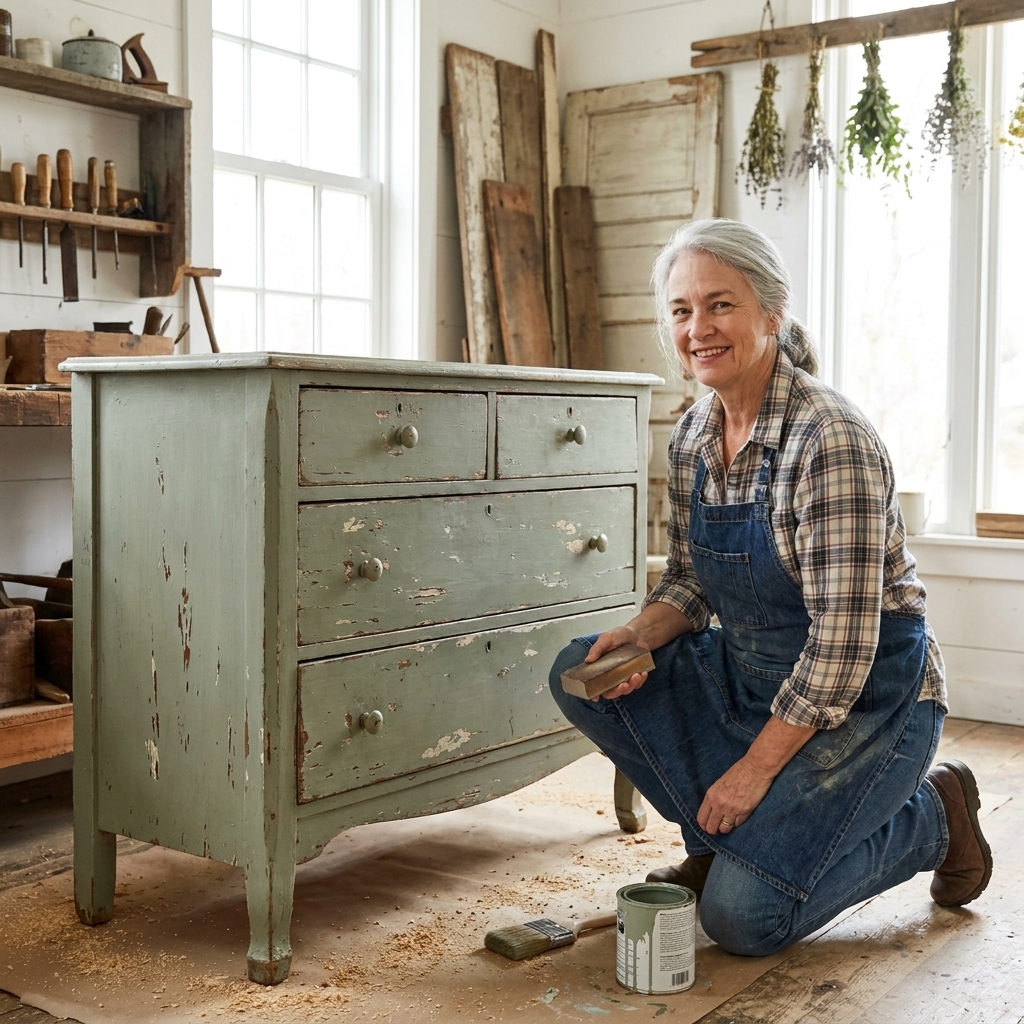
Chalk paint is a furniture paint known for its matte look and easy sanding and distressing. It is formulated to adhere well, cover evenly, and build a consistent film on top of the surface. That is the opposite of what most people want from limewash, which is prized for variation and a mineral, in-the-wall look.
- Best for: dressers, tables, cabinets, small decor pieces.
- Not the same as: a breathable mineral wash on brick or plaster.
Milk paint
Milk paint is an older, traditional paint that can bond beautifully to porous surfaces and create lovely chippy layers, especially on raw wood. Even so, milk paint is still a paint finish used most often for furniture, doors, and trim. It is not the same look as limewash on masonry, and it behaves differently across large wall expanses.
- Best for: rustic furniture flips, built-ins, trim, doors when you want an authentic, aged finish.
- Not the same as: the cloudy, mineral patina you get from a lime-based wall finish.
In plain terms: chalk paint and milk paint are designed to be paints. Limewash and whitewash are wash-style finishes prized for translucency, variation, and that soft, lived-in patina.
Prep, pitfalls, and safety
Prep basics that save projects
- Do a water drop test: sprinkle or dab water on the surface. If it darkens and absorbs, you are in good shape for lime-based finishes. If it beads up, there is likely sealer, paint, or grime blocking absorption.
- Clean first, especially fireplaces: soot and dust are the enemy of adhesion. A thorough cleaning and full dry time matter more than people think.
- Watch for sealed brick or glossy paint: limewash wants porosity. If the surface is sealed, you may need to remove the sealer or choose a different system.
- Sample in your lighting: both finishes can shift dramatically from morning to evening light, especially on textured brick.
Where I would think twice
- High-splash areas: behind a range or right at a sink, you will want a product rated for that use and a plan for cleaning. Some sealers change the look and can reduce breathability.
- Previously painted brick: you can get pretty results, but it is no longer a straightforward “soaks in and cures” situation. Expect more of a coating behavior.
- Touch-heavy wood: handrails, frequently handled trim, and kid-height wall zones can burnish fast. That may be charming, or it may drive you nuts.
Safety in plain language
Lime is alkaline and can irritate skin and eyes. Gloves and eye protection are worth it. If you are working outdoors, protect plants and nearby surfaces from splatter and rinse promptly if needed.
Day one vs. year one
Limewash aging
Limewash tends to settle into itself. Once fully cured, it often looks more natural and less “new.” If it rubs or wears in spots, it can read like authentic patina rather than damage, especially on brick and plaster.
Whitewash aging
Whitewash can age beautifully, too, but it is more likely to show its application pattern over time, particularly if it was applied with a lot of wiping or intentional streaking. Touch-ups can be easy, but matching the exact transparency can take a little patience.
If you are the kind of person who loves a finish that gets prettier when life happens, limewash is usually the safer bet.
How to choose
Step 1: choose by surface
- Old brick, porous stone, true plaster: lean limewash for the most natural, breathable, timeworn result.
- Wood paneling, beams, shiplap, ceilings: lean whitewash if you want grain to show and an easy, adjustable wash effect.
- Modern painted drywall: whitewash works like a decorative paint technique. For limewash, plan on the right primer or system so it bonds well.
Step 2: choose by the story
- You want: mottled, velvety depth and an old-world patina. Choose: limewash.
- You want: brighter, airier, more see-through character with visible grain or brick showing. Choose: whitewash.
Step 3: choose by your tolerance for variation
- If you love imperfect movement: limewash will make you happy.
- If you prefer a more predictable finish: whitewash gives you more control because you can build slowly and wipe back.
When I am torn, I ask myself one last question: do I want this wall to feel like it has been here for a hundred years, or do I want it to feel like I just opened the curtains and let the light in? That answer usually points me to the right wash.