
There is something about a wreath on the front door that makes a house feel instantly cared for. But if you have ever peeled off a sticky hook and taken a little triangle of paint with it, or noticed faint scuffs where a metal hanger rubbed all season, you know the struggle.
I have tried just about every method over the years, especially while fixing up my old cottage where the doors had more layers of paint than I like to admit. Below is a simple, door-friendly breakdown of what actually works, what to skip, and how to keep everything centered and secure even with a heavier wreath.
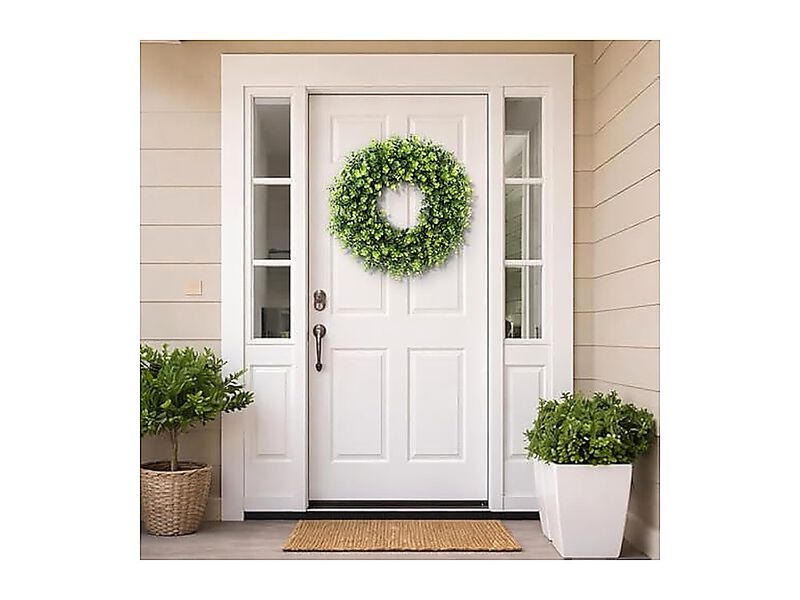
Pick your hanging method by door type
The best wreath hanger depends less on the wreath and more on what your door is made of, how it closes, and whether weather and movement will tug at your setup.
My default for protecting finishes: anywhere hardware, ribbon, or the wreath frame touches the door, I add felt pads or moleskin first. It takes two minutes and saves the paint.
Painted wood doors
- Best choice: Ribbon or twine over the top, protected with felt pads where it touches the door.
- Runner-up: Over-the-door hanger with padding where it meets the door.
- Use with caution: Adhesive hooks, only if your paint is fully cured and you use the right removal technique.
Fiberglass doors
- Best choice: Ribbon over the top with padding at contact points.
- Runner-up: A thin, padded over-the-door hanger, as long as the door still closes freely.
- Use with caution: Adhesive hooks can work on some smooth fiberglass finishes, but they are less forgiving on matte or chalky paint.
Glass-panel doors (wood or fiberglass frame with glass insert)
- Best choice: Suction cup wreath hook rated for the wreath weight, placed on clean glass.
- Runner-up: Ribbon or twine over the top, with padding at contact points.
- Usually skip: Adhesive on glass in direct sun or big temperature swings. It can soften, creep, or let go over time.
Metal doors
- Best choice: Magnetic wreath hanger designed for steel doors.
- Runner-up: Over-the-door hanger with felt backing.
- Use with caution: Adhesive hooks if the surface is smooth and clean, but avoid textured metal.
Storm doors
- Best choice: Magnetic hanger if the storm door is metal, or a suction cup hook if it has a large glass panel.
- Runner-up: Very thin ribbon or fishing line over the top if there is clearance.
- Usually skip: Thick over-the-door hangers, since they can prevent the storm door from closing properly and cause rubbing.
If your storm door is tight, always test-close it gently first. A wreath that bumps and scrapes every time the door shuts will scuff paint fast.
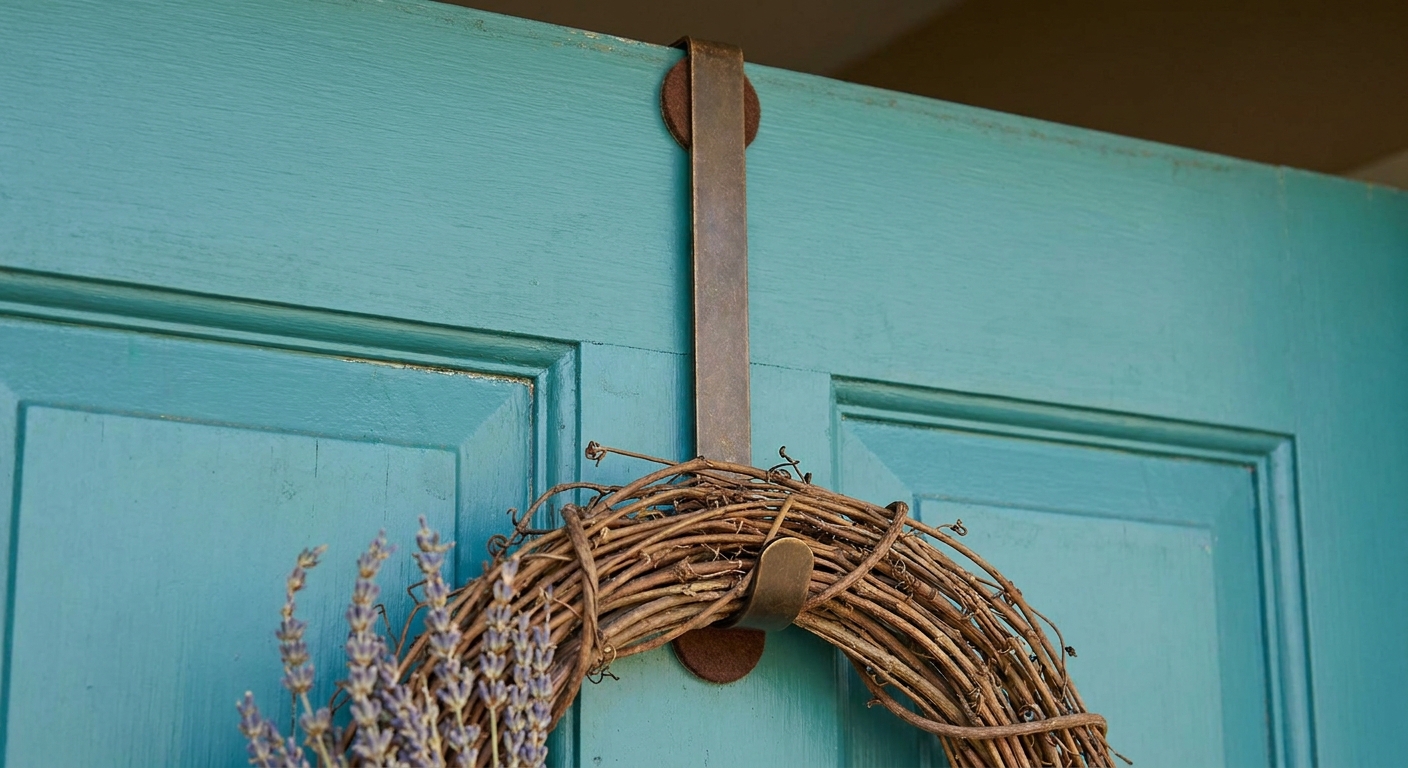
Option 1: Over-the-door hanger
Over-the-door hangers are popular for a reason. They are simple, reusable, and they hold heavier wreaths well. The downside is friction. Any metal edge that rubs your door for weeks can leave faint marks.
How to use one without scratches
- Choose a thin hanger: Especially for storm doors or snug exterior frames. A bulky hanger can cause the door to bind.
- Add soft padding: Stick felt pads or moleskin strips to every spot that touches the door and the top edge.
- Check clearance: Close the door slowly and look at the top edge from inside. If you see the hanger pressing hard, switch methods.
- Prevent swinging: If the wreath sways in wind, add a small removable bumper behind it at the lower back, like a felt dot, so it does not thump the door.
Option 2: Adhesive hooks
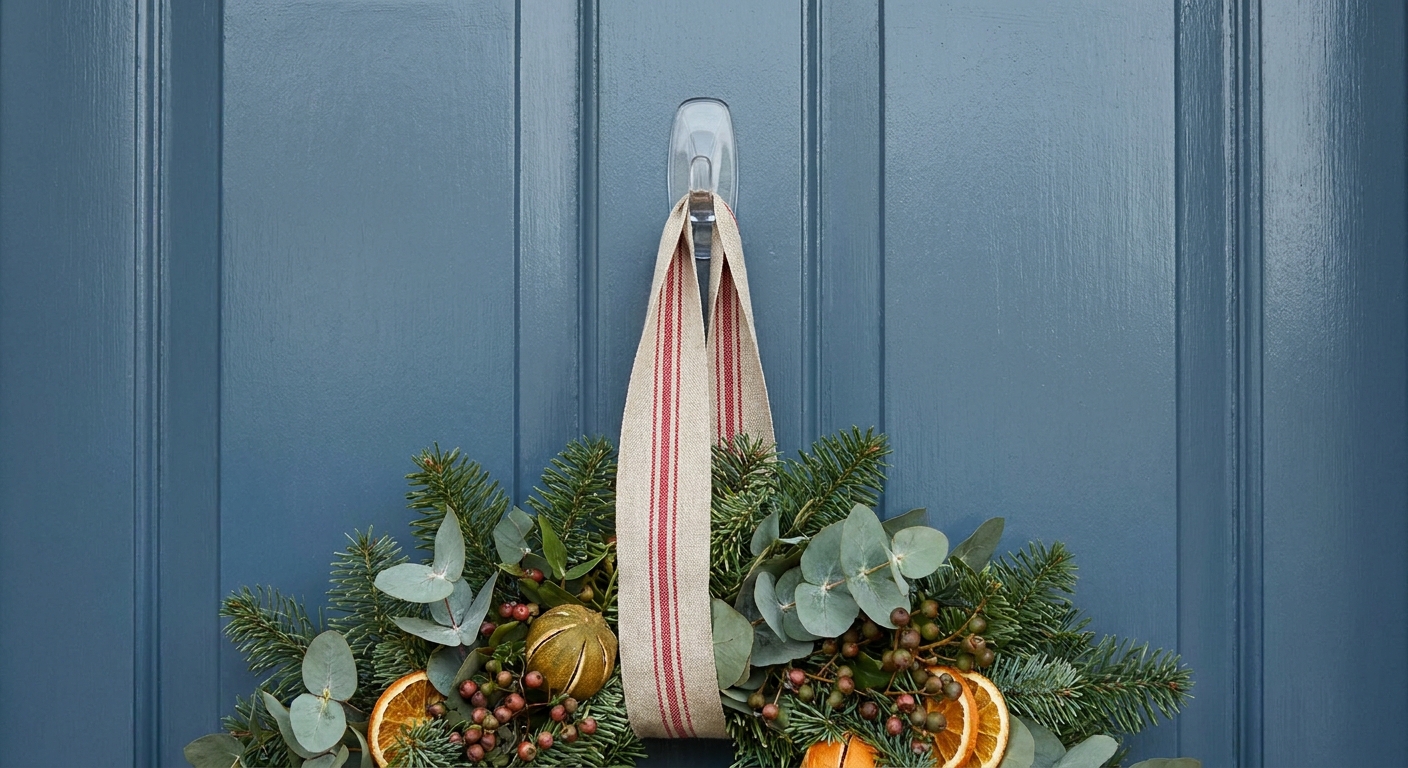
Adhesive hooks can be wonderfully invisible, but they are also the most likely to leave residue or pull paint if you rush the removal. They can fail when the surface is dusty, the paint is fragile, the temperature swings a lot, or the wreath is too heavy.
When adhesive hooks work best
- On smooth, clean, glossy surfaces that are in good condition.
- When the wreath is light to medium weight.
- When you can hang it where it is not baked by direct sun for hours a day.
How to avoid sticky residue and peeled paint
- Clean first: Wipe the spot with rubbing alcohol, then let it dry completely. Skip cleaners that leave residue.
- Wait after painting: Fresh paint needs time to cure. Dry to the touch is not the same as cured, so check your paint brand guidance if you are not sure.
- Use the right rating: Look for a hook rated well above your wreath weight. When in doubt, size up.
- Remove slowly: Do not yank. Follow the product directions for stretching the tab downward slowly. If it feels stuck, warm it slightly with a hair dryer and try again.
My personal rule: If your door paint already has chips, feels chalky, or looks matte and fragile, I skip adhesive. That is when you end up with a surprise repainting project.
Option 3: Magnetic hanger
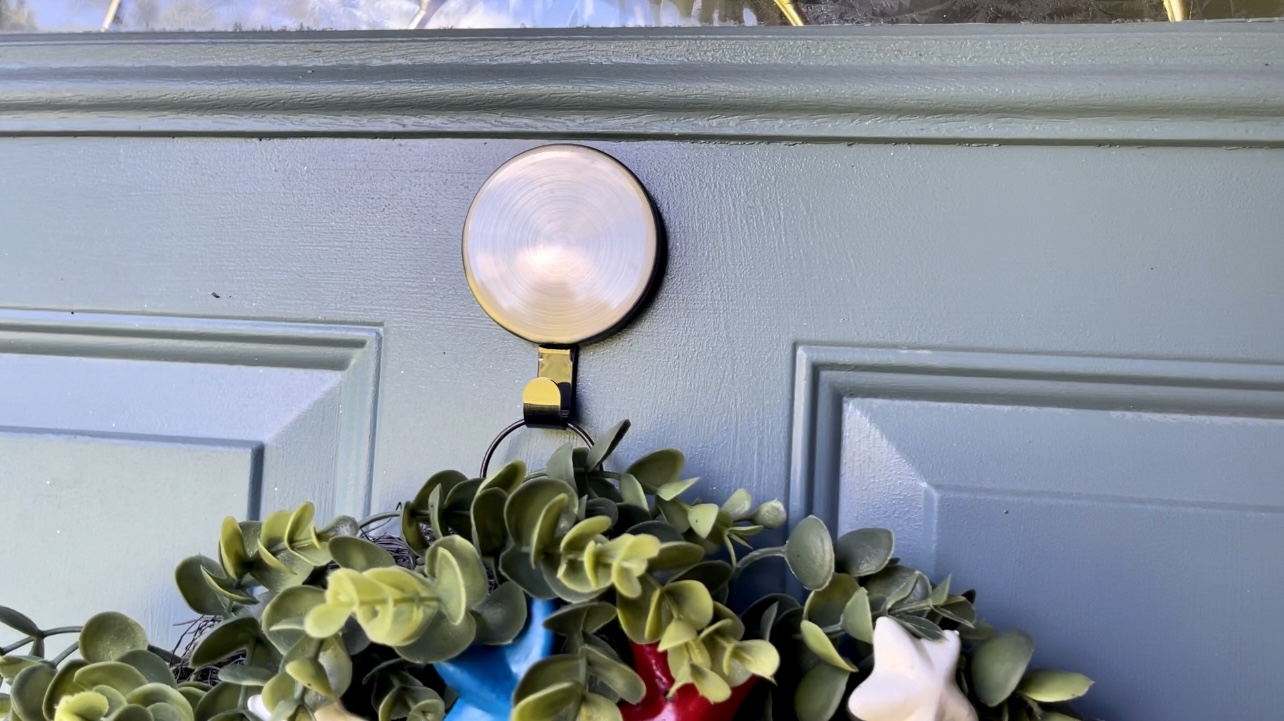
If you have a steel door, a magnetic hanger is one of the cleanest options out there. No adhesive, no rubbing at the top edge, and it is easy to reposition until it is centered.
Tips for magnets that do not slip
- Confirm your door is magnetic: Many exterior doors are steel, but some are aluminum or fiberglass and magnets will not hold.
- Know the pull can vary: Even on steel-skinned doors, decorative sections and raised panels can sometimes feel weaker than the flatter areas. If the magnet slowly creeps, move it to a flatter spot.
- Wipe the door first: Dust and grit can scratch when you slide the magnet around. Clean with a soft cloth before adjusting.
- Lift, do not drag: When repositioning, lift the magnet off and set it down again rather than sliding it.
- Go stronger for heavy wreaths: A fuller grapevine base or thick ornament wreath needs a stronger magnet, especially if the door gets slammed by wind.
Option 4: Ribbon over the top
If I am trying to protect a painted wood door, this is the method I reach for most. Done right, it is gentle, it looks charming, and it holds surprisingly well. The key is protecting the spots where the ribbon touches the door.
How to do it without rubbing or sagging
- Choose the right material: Wide velvet or grosgrain ribbon grips well. Twine looks rustic but can cut into paint if it moves.
- Add soft barriers: Place felt pads or a strip of moleskin on the top edge and on the inside face where the ribbon drops down.
- Secure the inside end: Tie it to the inside door handle or knob, to hinge-side hardware, or to a removable hook mounted on the back of the door. I avoid tape directly on painted wood.
- Stop the slide: If your ribbon slowly creeps, tie a small knot right at the top edge on the inside so it cannot slip forward.
If you love the ribbon look on a farmhouse porch, choose a ribbon color that ties into something nearby, like the doormat, planters, or porch light finish. It makes the whole entry feel intentional.
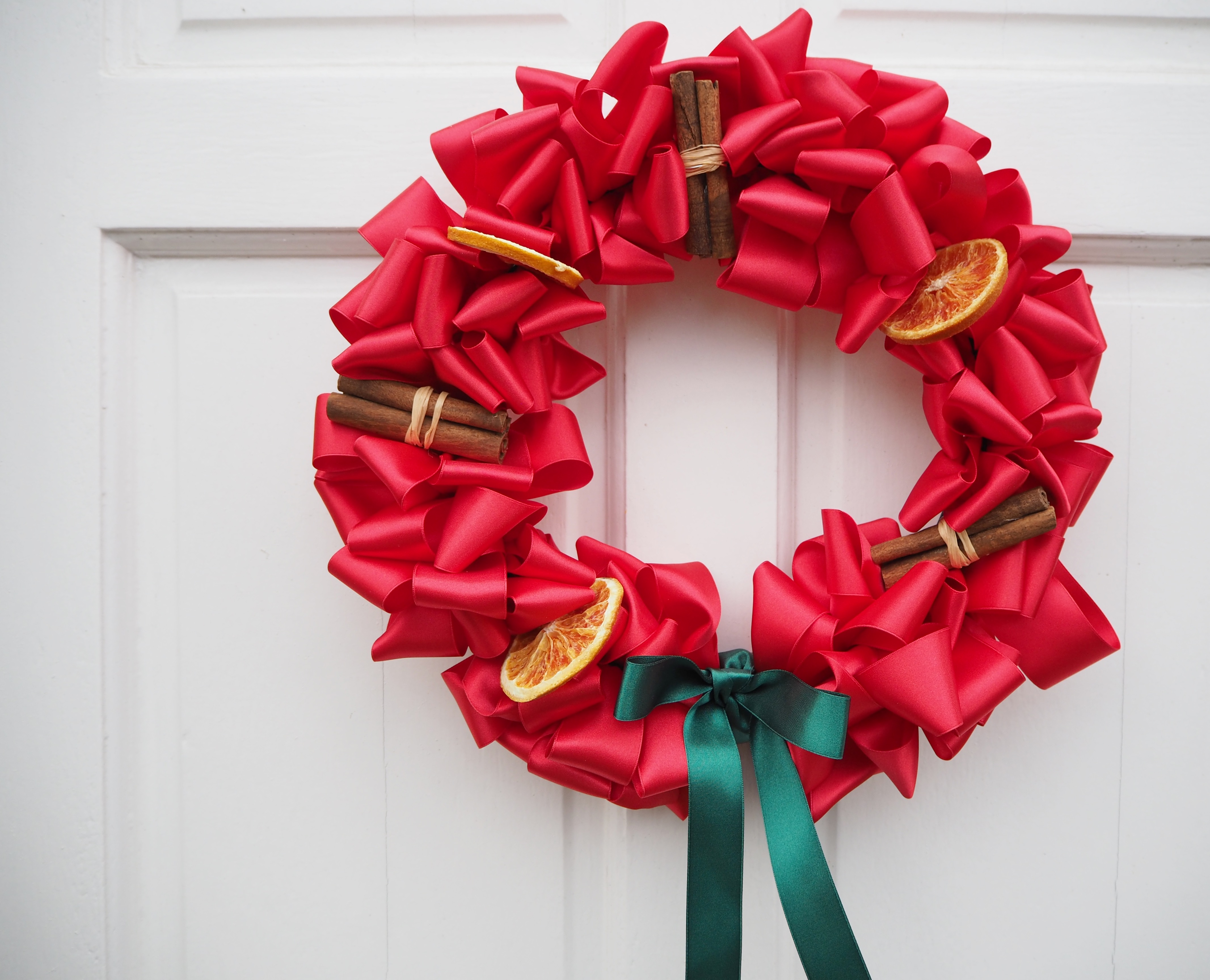
Keeping heavy wreaths from drooping
A heavier wreath tends to do two annoying things: it tilts forward at the top and it slowly creeps downward over time. Here are a few fixes that keep it sitting pretty.
- Use two contact points: Hang from the top, then add a small removable support behind the lower half, like a soft bumper pad, so it stays flat against the door.
- Upgrade your hardware: Heavy grapevine and ornament wreaths need stronger hooks and stronger magnets. If it is rated “up to 5 pounds,” I treat that as “best for 2 to 3.”
- Plan for weather: Cold snaps can make some adhesives less forgiving, humidity can weaken suction, and wind adds extra tugging. If your entry gets hit with all three, lean toward a mechanical method (padded over-the-door, ribbon, or magnets on steel).
- Check movement: If the wreath is outside and gets wind, it will tug and sway. A quick tie at the bottom to a discreet anchor point can help, but avoid anything permanent on painted wood.
- Don’t hang from a delicate bow: Thread your hanger through the wreath frame itself, then add your bow after. Bows are for pretty, not for load-bearing.
Height and centering
Here is the simple trick I use so the wreath looks centered from the curb, not just centered to my face standing close up.
My two-step “stand back” method
- Start with a good baseline: Hang the wreath so the center sits around 57 to 60 inches from the porch floor. Think of it as a starting point, since eye level and porch slopes vary. Another easy guide is placing it roughly at or slightly above the door’s midline.
- Back up to the end of your walkway: Stand where a guest first sees the door, then nudge the wreath up or down a couple inches if needed. If you have sidelights or a big porch light, your eye may want it slightly higher than you expected.
Centering shortcut: Instead of measuring the whole door, measure the width between the door’s vertical panels (or between the glass frame rails) and center the wreath within that “visual frame.” It reads calmer and more balanced, especially on farmhouse style doors with molding.
Troubleshooting
The hanger scratched my paint
- Switch to a padded over-the-door hanger or ribbon method.
- Add felt pads anywhere hardware touches the door.
- Clean grit off the back of the wreath frame, especially wire ends, which can act like little sandpaper.
I have sticky residue from a hook
- Try warm water with a drop of dish soap first, using a soft cloth.
- If it is stubborn, a small amount of rubbing alcohol on a cloth can help, but spot-test in a hidden area first.
- Avoid scraping with anything sharp. That is when paint gets damaged.
My wreath keeps tilting forward
- Move the hanger point slightly higher on the wreath frame.
- Add a small bumper pad behind the lower back edge of the wreath to stabilize it.
- Make sure your hanger is not bending outward under weight.
My storm door will not close with the hanger
- Swap to a magnetic hanger (for metal storm doors) or suction cup hook (for glass panels).
- Use a thinner ribbon and protect contact points with felt.
My quick recommendations
- Painted wood door: Ribbon over the top with felt protection, or a padded over-the-door hanger.
- Fiberglass door: Ribbon or a thin, padded over-the-door hanger. Use adhesive only if the finish is smooth and sturdy.
- Steel door: Magnetic hanger, lifted and repositioned gently.
- Glass panel: Suction cup hook rated for the weight, on squeaky-clean glass.
- Storm door: Magnetic or suction cup, and avoid thick hangers that rub.
When you take a couple extra minutes to protect the paint and choose the right hanger, you can swap wreaths all season long without slowly sanding down your door. That is the kind of cozy habit I can get behind.